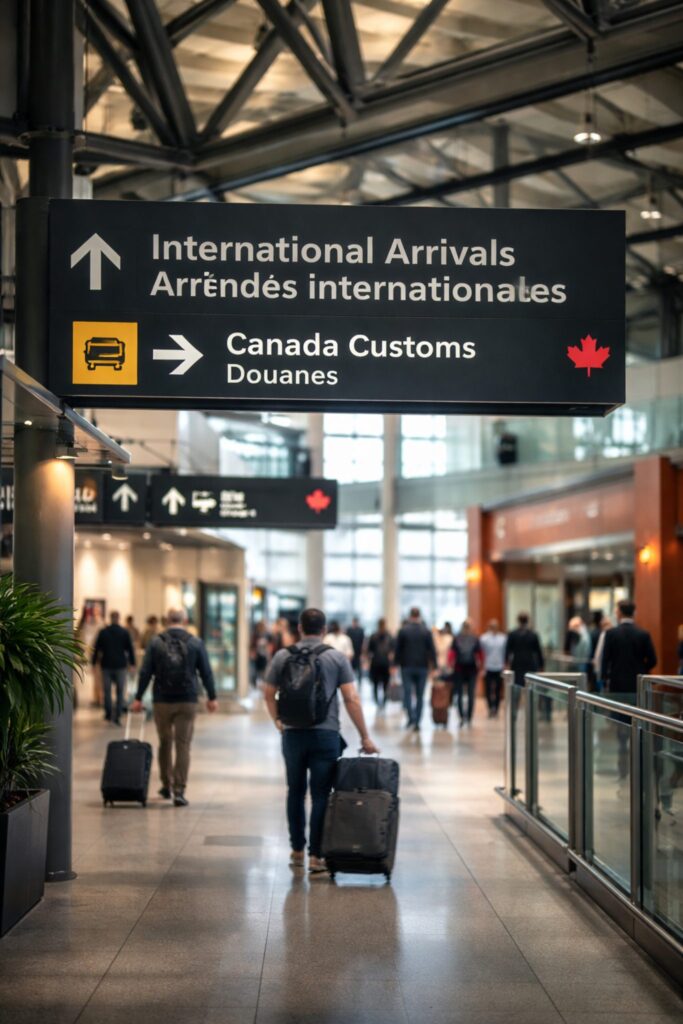

A routine international arrival at Ottawa’s main airport turned into an uncomfortable headline after passengers coming into Ottawa, Canada were misdirected inside the terminal and left the secure arrivals flow without completing customs processing. The mix-up, involving an international flight from Mexico, has sparked questions about how clearly airports separate international and domestic passenger routes—and how quickly staff can catch a mistake once it happens.
According to reporting from CTV News Ottawa, Air Canada said travellers “were inadvertently misdirected when leaving the aircraft” and were not sent toward the customs area as intended. Coverage aggregated from CBC Ottawa described the incident as passengers skipping customs after an international flight landed in Ottawa.
What happened at Ottawa Airport?
The core issue wasn’t a system outage or a paperwork loophole—it was a routing problem inside the terminal. International arrivals are typically funnelled into a controlled pathway leading to border checks and customs declaration. In this case, passengers were directed the wrong way and ended up in an area that allowed them to continue as if they had arrived on a domestic flight.
Reports indicate the flight originated in Mexico (with multiple outlets noting Cancun) and arrived in Ottawa on a Sunday night. The number most frequently cited is 10 passengers who left without completing customs processing, though the exact scope depends on how “missed” is defined—some travellers may have been stopped later inside the terminal, while others exited before the error was identified. Yahoo’s coverage emphasized the confusion created when international passengers were treated like domestic arrivals. (See: Yahoo Creators.)
Why “misdirected” matters more than it sounds
Airports run on choreography: doors, corridors, signage, staff instructions, and one-way access points are designed to keep people moving in the right sequence. When a single link fails—an incorrect door opened, unclear directions at the gate, or a temporary barrier moved—passengers can end up in the wrong stream quickly.
Ottawa International Airport (YOW) is built to handle different passenger types—Canada/domestic, U.S. transborder, and international—each with its own routing rules and checkpoints. That separation is a big part of airport security and border compliance. YOW’s own traveller guidance explains how distinct screening and passenger flows operate in the terminal. (Reference: Travelling from YOW.)
What happens next?
When passengers miss customs processing, the response is usually administrative first: identify who exited, confirm luggage handling, and determine whether anyone needs follow-up screening. In Canada, border processing and enforcement falls under the Canada Border Services Agency (CBSA). Airlines and airports typically coordinate with CBSA when an arrival flow breaks down, especially if passengers have entered the public side of the terminal.
The bigger outcome may be procedural: airports often respond to incidents like this with immediate on-the-ground changes—updated gate briefings, clearer temporary signage, staff reminders, and “belt-and-suspenders” checks that ensure international arrivals physically cannot reach domestic exits. Even if the number of affected travellers is small, the story resonates because it challenges a basic public assumption: that an international arrival has multiple layers of checks that cannot be bypassed by a simple wrong turn.
What travelers should know if you’re flying into Ottawa
If you’re arriving internationally—especially during late-night operations when staffing can be thinner—these tips help you avoid confusion:
- Follow the signage first, not the crowd. If you arrived from outside Canada, you should be moving toward customs/border processing.
- Ask immediately if something feels off. “Domestic baggage claim” or “Exit” signs are a red flag for international arrivals.
- Keep your documents ready. Passport, visa/eTA as applicable, and your declaration info should be accessible even after a long flight.
- Don’t assume you’re done just because a door opens. One-way doors are common, but operational mistakes can happen.
Why this story is trending across Canada
Travel stories trend when they combine a relatable setting (airports) with an unexpected twist (a process everyone assumes is airtight). Add in a recognizable brand name, a “how could this happen?” question, and a short, punchy keyword—misdirected—and you have a story that spreads quickly across Canadian feeds.
There’s also a practical reason it’s gaining traction: Canadians fly internationally for winter travel in huge numbers, and Mexico is one of the most popular destinations. So even readers who weren’t on that flight recognize the scenario instantly—landing tired, following the nearest exit, trusting the airport’s directions—then realizing later the system may not always work as cleanly as promised.
For more Canada travel updates and explainers, browse Swikblog and our Travel and Canada pages.
Note: Airports and airlines may update details as reviews continue. If you’re travelling internationally, always follow the marked route to border processing and ask an airport staff member if directions appear unclear.

Make Swikblog your go-to source on Google for reliable updates, smart insights, and daily trends.