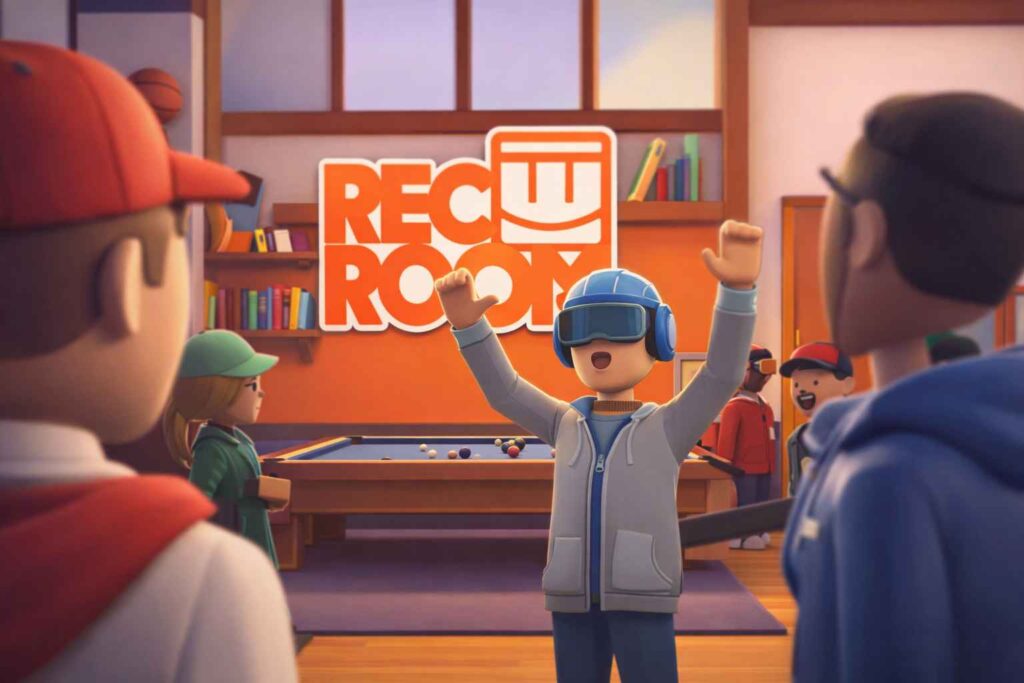

Rec Room is shutting down on June 1, 2026 — and the news has left millions of players stunned.
The social gaming platform, once valued at over $3.2 billion and often positioned as a Roblox competitor, is calling it quits despite building a community of more than 150 million users worldwide. For a game that became a digital hangout for friendships, creativity, and even emotional escape during difficult times, the decision feels abrupt, even shocking.
The Seattle-based developer confirmed the shutdown in an official statement, making it clear that the core issue wasn’t a lack of players — it was money. “We never quite figured out how to make Rec Room a sustainably profitable business,” the company said. “Our costs always ended up overwhelming the revenue we brought in.”
That single line explains the collapse of what many believed was one of the strongest names in social VR gaming.
At its peak in 2021, Rec Room rode a wave of investor optimism. The platform raised multiple funding rounds, pushing its valuation past $3.2 billion (and even close to $3.5 billion by some estimates). It positioned itself as a creative, user-generated world where players could build games and experiences — similar to Roblox, but with a deeper focus on virtual reality and social interaction.
But behind the scenes, the economics never worked out.
Running a platform like Rec Room isn’t cheap. Infrastructure, live servers, moderation, development, and creator tools all come with ongoing costs. Even with millions of active users, the company struggled to generate enough consistent revenue to offset those expenses. The result was a widening gap between growth and sustainability — a problem that ultimately became impossible to ignore.
The situation worsened as broader industry conditions shifted. The company pointed to changes in the VR market and wider “headwinds in gaming” as key factors behind the decision. VR, once seen as the next big frontier, has grown more slowly than expected, and engagement hasn’t always translated into spending.
At the same time, the gaming industry itself has entered a tougher phase. Major companies have announced layoffs, rising development costs have squeezed margins, and even giants have admitted they are spending more than they are earning. Rec Room was not immune to that pressure. In fact, it had already laid off around half of its staff in August, a move that signaled deeper financial strain well before the shutdown announcement.
Even then, there was hope internally that the company could stabilize. CEO and co-founder Nick Fajt had suggested the layoffs would give Rec Room “years, not months of funding.” But as it turns out, the path to profitability never materialized.
The company’s valuation also tells its own story. From a peak above $3 billion, estimates suggest Rec Room’s value had dropped to around $1.4 billion in recent times — a sharp fall that reflected both market realities and internal challenges.
For players, though, the financial narrative is only part of the story.
The reaction online has been immediate and emotional. Fans have flooded social media with messages describing how much the game meant to them. Some recalled how Rec Room helped them stay connected during the COVID-19 lockdowns. Others spoke about friendships formed inside the game — people they met, talked to, and spent years interacting with in virtual spaces that felt surprisingly real.
“It’s how I survived most of covid,” one player wrote. Another said, “I grew up with this game and made so many memories.” A VR content creator described it as “the first social Lego-style experience,” while another simply said the shutdown left them “speechless.”
Those reactions highlight what made Rec Room different. It wasn’t just a game — it was a social layer, a creative platform, and for many, a place to belong. That kind of connection doesn’t disappear easily, which is why the shutdown feels more like the loss of a community than the end of a product.
Still, the closure raises bigger questions about the future of social gaming and virtual worlds.
Rec Room isn’t alone in facing these challenges. Meta has already shifted focus away from expanding VR experiences in Horizon Worlds, while Epic Games recently cut over 1,000 jobs amid declining Fortnite engagement. Across the industry, companies are being forced to confront a difficult truth: building large, immersive digital worlds is one thing — making them profitable is another entirely.
For all its scale and popularity, Rec Room couldn’t bridge that gap.
And now, as June 1 approaches, players are preparing to say goodbye. Some are logging in for the final time, revisiting old rooms and reconnecting with friends. Others are sharing clips, screenshots, and memories, trying to preserve a digital world that won’t exist much longer.
The company hasn’t yet clarified what will happen to its employees or whether any part of the business will continue in another form. For now, Rec Room remains its only product — and when it shuts down, an entire ecosystem built around it will disappear as well.
That’s what makes this moment feel significant. A platform with millions of users, billions in valuation, and years of cultural impact is shutting down not because people stopped showing up — but because the business behind it never worked.
In the end, Rec Room’s story is a reminder that in today’s gaming industry, scale and popularity are no longer enough. Without a sustainable model, even the most loved platforms can vanish.
Read the company’s full statement on Rec Room’s official blog and detailed reporting via The Verge.

Make Swikblog your go-to source on Google for reliable updates, smart insights, and daily trends.