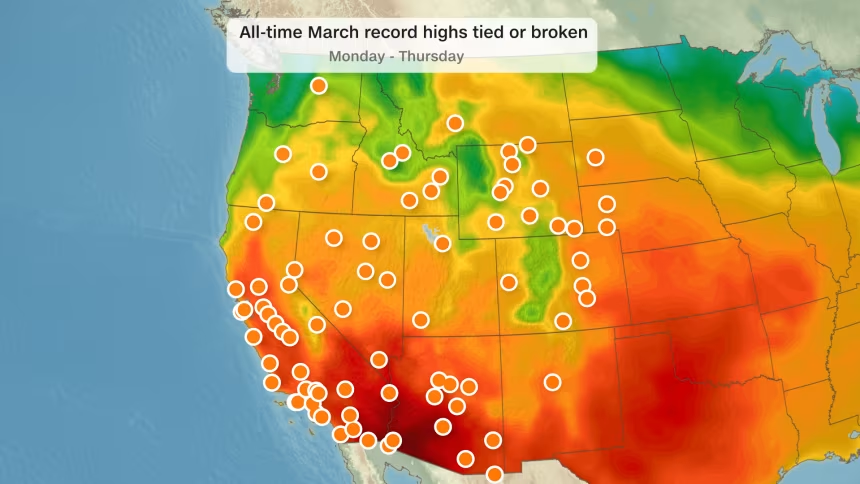

A historic and record-shattering heat wave has gripped the Southwestern United States, sending temperatures soaring to an astonishing 110°F (43.3°C) in March—a level experts say should not be possible this time of year. From California to Arizona and Nevada, millions of people are experiencing dangerous heat conditions typically seen in peak summer, not early spring.
This extreme event is now being described by scientists as a defining example of climate change in action. According to new research, the heat wave would have been “virtually impossible” without human-caused global warming, signaling a dramatic shift in how weather behaves in today’s climate system.
30°F Above Normal as 140+ Cities Smash Records
The scale of this heat wave is unprecedented for March. Temperatures across the Southwest have surged up to 30°F (17°C) above seasonal averages, breaking records in more than 140 cities stretching from California to Missouri. Forecasters warn that by the end of the week, 100 cities could set all-time March temperature records.
In Arizona, temperatures reached a staggering 110°F, marking the highest March temperature ever recorded in the United States. What makes this even more alarming is that such extremes are arriving months earlier than expected, catching communities off guard.
Scientists warn that early-season heat is especially dangerous because people are not yet acclimatized, making heat-related illnesses more likely.
‘Virtually Impossible’ Without Climate Change
A rapid analysis by World Weather Attribution found that this heat wave would have been nearly impossible in a world without human-induced climate change. The study analyzed weather patterns between March 18–22 and compared them with historical data and climate model simulations.
The findings are striking:
- This type of heat event is now 4 times more likely due to climate change
- Global warming added approximately 4.7°F to 7.2°F to current temperatures
- Even compared to 2016, this event would have been about 1.4°F cooler
Climate scientist Friederike Otto stated that these findings leave “no room for doubt” that climate change is pushing weather into extremes that were once unthinkable.
Heat Dome Triggers Extreme Conditions
The immediate cause of the heat wave is a powerful high-pressure system, or “heat dome,” trapping hot air over the region. This system prevents heat from escaping and allows temperatures to build rapidly over several days.
Under this heat dome, clear skies and intense sunlight have created relentless heating across the Southwest. Meteorologists warn that such patterns are becoming more frequent and more intense as global temperatures rise.
States including California, Nevada, and Arizona have already issued extreme heat warnings, with the heat expected to expand further into the plains and southern United States.
Part of a Bigger Pattern of Extreme Weather
This heat wave is not an isolated event. Scientists say it belongs to a growing category of “ultra-extreme” weather events seen in recent years, including:
- The 2021 Pacific Northwest heat wave
- The 2022 Pakistan floods
- Major hurricanes like Sandy and Harvey
- Record heat waves across Europe and Asia
According to data from NOAA, the area of the United States affected by extreme weather has doubled compared to 20 years ago. The country is now breaking 77% more heat records than in the 1970s and significantly more than even the 2010s.
Additionally, billion-dollar weather disasters are now occurring at twice the rate of a decade ago and nearly four times more often than 30 years ago.
“We Are Operating Outside the Historical Playbook”
Former FEMA chief Craig Fugate warned that extreme weather is now pushing beyond the limits of existing systems and planning models.
“We were operating outside the historical playbook more and more,” Fugate said. “Flood maps, heat records, and disaster models are no longer reliable guides.”
He also highlighted a key economic signal: insurance companies are beginning to withdraw from high-risk areas, showing that the financial system is already reacting to rising climate risks.
Deadliest Weather Threat and Rising Health Risks
Heat is the deadliest form of extreme weather in the United States, and this early-season event is increasing health risks nationwide. Officials warn of rising cases of heat exhaustion, dehydration, and heatstroke.
Vulnerable populations—including outdoor workers, elderly individuals, and those without access to air conditioning—are at the highest risk. Authorities are urging people to stay hydrated, remain indoors, and avoid exposure during peak heat hours.
Economic and Environmental Impact Growing
The heat wave is already disrupting local economies. In California and the Tahoe region, several ski resorts have been forced to shut down early due to rapid snowmelt, impacting tourism and seasonal employment.
At the same time, rising temperatures are accelerating drought conditions, increasing wildfire risk, and putting additional strain on water resources in the Southwest.
Energy demand has also surged as residents turn to air conditioning earlier than usual, raising concerns about grid stability.
A Clear Signal of Climate Reality
Scientists say this event is one of the clearest real-time examples of climate change. As global temperatures rise, extreme events are becoming more frequent, more intense, and more unpredictable.
“This is what climate change looks like,” said climate experts, emphasizing that what was once considered rare is now becoming part of a new normal.
The record heat wave in the Southwest is not just a weather anomaly—it is a warning sign. A future with earlier, hotter, and more dangerous heat waves is already unfolding.

Make Swikblog your go-to source on Google for reliable updates, smart insights, and daily trends.