
By Swikriti Dandotia
England has officially entered a new era of waste management. From March 31, 2026, the government’s “Simpler Recycling” rules are now in force, aiming to fix one of the biggest long-standing issues in the country’s environmental system — inconsistency. For years, recycling rules have varied widely between councils, leaving households confused and recycling rates stuck at around 44%. With the new system, policymakers are targeting a major jump to 65% by 2035, and the changes are already being felt across millions of homes.
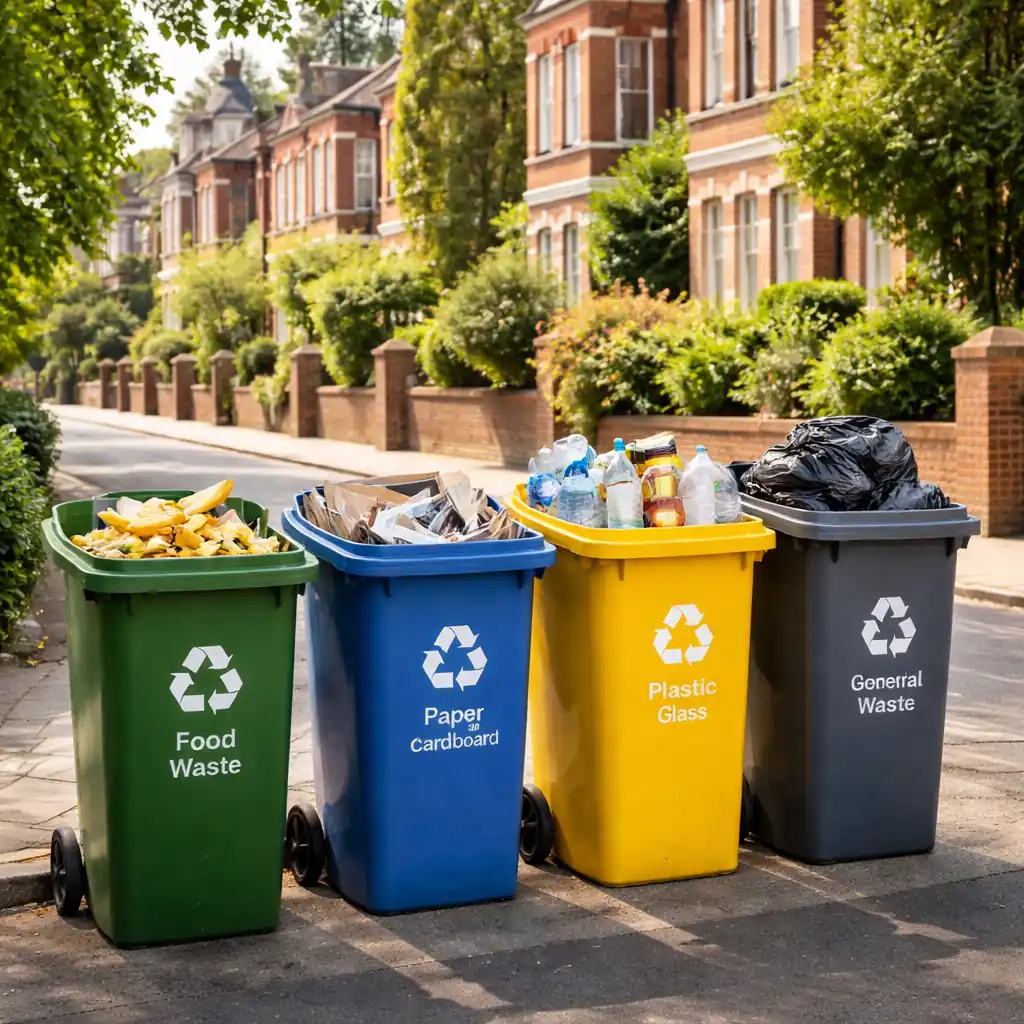
The reform introduces a standardized four-bin system across England. Households must now separate waste into food and garden waste, paper and card, dry recyclables such as glass, plastic, metal and cartons, and non-recyclable waste. The goal is simple: eliminate the “postcode lottery” where recycling rules differed depending on where you lived, and replace it with a consistent, easy-to-follow system that improves both participation and efficiency.
Weekly food waste collection becomes mandatory
The most significant shift under the new rules is the introduction of universal weekly food waste collection. Every household is expected to receive a small kitchen caddy and a larger outdoor bin, with councils required to collect food waste free of charge. This change is not just about convenience — it is a major environmental intervention.
When food waste is thrown into general rubbish, it typically ends up in landfill, where it decomposes and releases methane, a greenhouse gas more than 80 times more potent than carbon dioxide. By separating food waste, it can instead be processed through anaerobic digestion, producing renewable energy and biofertiliser for farming. The government hopes this shift will not only cut emissions but also make households more aware of how much food they waste.
What happens after you recycle
Once collected, recycling does not simply disappear. It is transported to materials recovery facilities, where advanced systems using magnets, optical scanners and air jets sort waste into paper, plastics, metals and glass. These materials are then baled and sent to reprocessors to be turned into new products.
However, the system faces a critical challenge. Around half of the plastic collected for recycling in the UK is exported overseas, mainly to countries such as Turkey, the Netherlands and Malaysia. At the same time, exports of plastic waste to developing countries have risen sharply, raising concerns about sustainability and oversight.
This reliance on exports has also impacted the domestic recycling industry. In the past two years alone, 21 plastic recycling and processing facilities across the UK have shut down, citing low prices for virgin plastic and competition from cheaper imports. Industry experts argue that reducing exports and strengthening local processing capacity could unlock a £2 billion opportunity and support around 5,000 jobs.
Why recycling rules are changing now
The push for reform comes after years of stagnant recycling performance. England has lagged behind Wales, which has achieved recycling rates of around 57%, and Northern Ireland at about 50%. One of the key reasons has been fragmented local systems. Some councils collected waste weekly, others fortnightly. Some required strict separation, while others allowed mixed recycling. Not all areas collected food waste or the same types of plastics.
This inconsistency made it harder for households to develop clear recycling habits. The new policy aims to fix that by simplifying the system nationwide and ensuring that all councils follow the same core structure.
Rollout challenges and transition period
While the new rules officially begin from March 31, not all councils will implement every change immediately. Around 31 councils have been granted transitional arrangements, allowing them to delay full food waste collection rollout. However, all councils must comply with the new standards for dry recycling, covering paper, card, glass, plastic and metal.
This phased rollout means some households may experience changes sooner than others, but the long-term direction is clear — a fully standardized recycling system across England.
Common recycling mistakes that could cost the system
Even with a simplified system, correct usage remains crucial. One of the biggest issues is contamination. If compostable or biodegradable plastics are mixed with standard recyclable plastics, they can disrupt the recycling process and contaminate entire batches.
Similarly, when recyclable materials like paper and cardboard are thrown into general waste, they are likely to end up in landfill or incineration, increasing greenhouse gas emissions instead of being reused.
Some everyday items still create confusion. Toothpaste tubes, for example, have traditionally been difficult to recycle due to mixed materials. However, newer designs are now largely recyclable, although acceptance still depends on local council systems. Retailers like Boots have also introduced collection points to support recycling of such items.
The bigger picture: beyond household bins
While the new rules focus on households, the broader goal is much larger. England is attempting to shift toward a circular economy, where materials are reused rather than discarded. But for that vision to succeed, improvements are needed beyond collection systems.
Export dependency, weak domestic infrastructure and market pressures continue to challenge the recycling sector. The European Union has already moved toward banning exports of plastic waste to developing countries, while the UK has yet to adopt a similar policy despite ongoing discussions.
For now, the success of the recycling revolution will depend heavily on public participation. Clear rules, consistent systems and better awareness could finally push England beyond its long-standing 44% recycling plateau.
For more details on the policy framework, visit the official UK government update on Simpler Recycling.

Make Swikblog your go-to source on Google for reliable updates, smart insights, and daily trends.