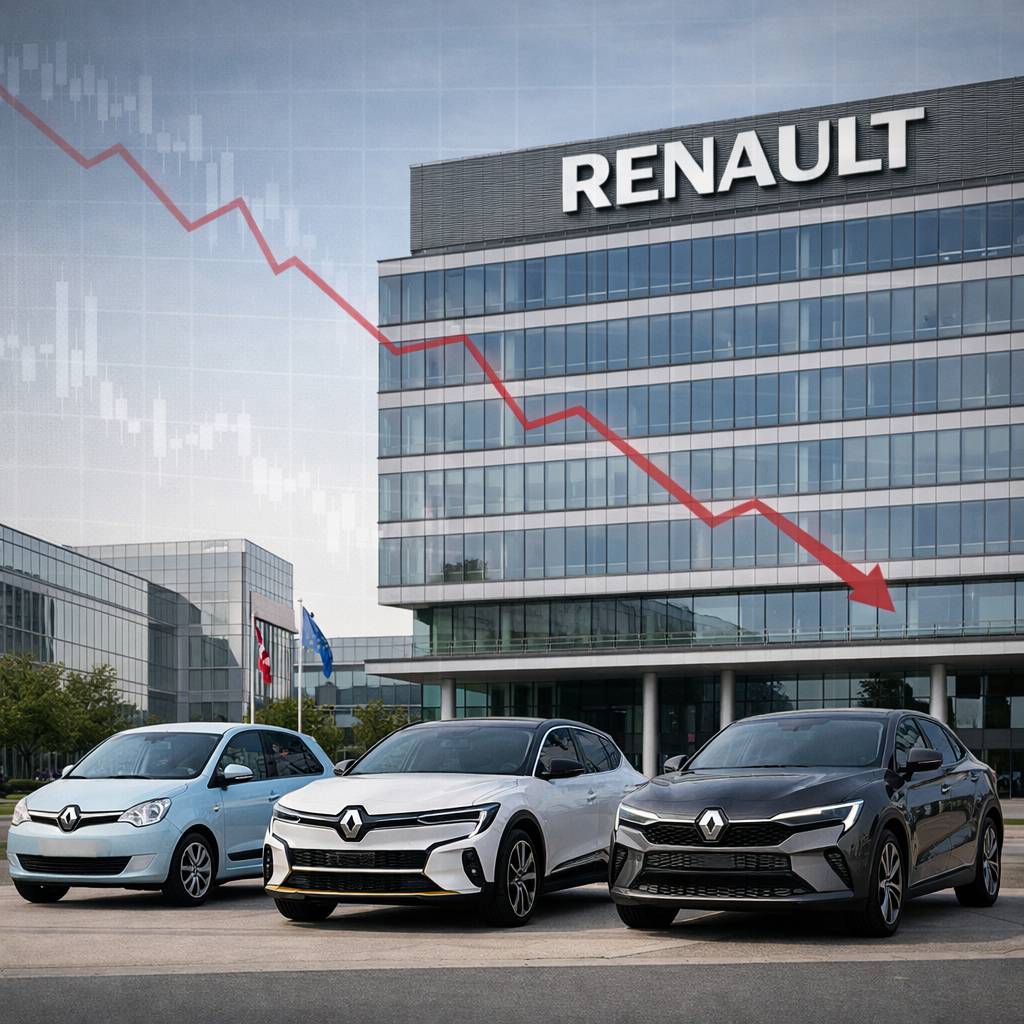

Renault shares have plunged roughly 20% this year, pushing newly appointed CEO Francois Provost into aggressive cost-cutting mode as the French automaker attempts to defend its position in a rapidly changing global car market.
The company is now preparing a strategic reset that will be unveiled to investors near Paris, with Provost signaling that Renault must adopt the speed and efficiency of Chinese rivals while tightening spending across research, development, and mobility projects.
The shift comes at a moment when European automakers are facing fierce pressure from low-cost electric vehicle producers expanding rapidly across the continent.
Renault Share Slump Puts Pressure on Leadership
Renault SA stock has fallen sharply this year, reflecting investor concern about slowing sales growth and rising competition. The drop follows a period when Renault had been one of the fastest-growing automakers in Europe, thanks to new vehicle launches and a turnaround strategy implemented under former CEO Luca De Meo.
However, the company’s momentum has cooled dramatically in early 2026. Sales across several key markets declined in January and February, leaving investors questioning whether Renault can maintain profitability while funding the transition toward electric vehicles and software-defined cars.
Provost, who previously served as Renault’s procurement chief, has built a reputation as a strict cost manager. Analysts expect his strategy presentation to emphasize cost discipline and operational efficiency as the company attempts to stabilize margins.
Market analysts say the strategy will need to go beyond simple spending cuts if Renault hopes to regain investor confidence.
Chinese Automakers Reshape Global Competition
The biggest challenge confronting Renault comes from China. Automakers such as BYD and other emerging manufacturers have rapidly expanded into Europe with competitively priced electric vehicles that threaten traditional European brands.
According to industry estimates cited during internal Renault discussions, Chinese companies are capable of developing software-defined vehicle platforms at a fraction of the cost incurred by European manufacturers.
Renault executives say projects that can cost the French group about €1.5 billion can sometimes be delivered by Chinese competitors for around one-fifth of that amount. Even more concerning for European automakers is the speed of development.
While Renault may take about two years to integrate new digital vehicle systems into production models, Chinese companies have demonstrated the ability to complete similar development cycles in less than six months.
This efficiency gap has become a central talking point inside Renault as the company evaluates how to streamline engineering and manufacturing.
Strategic Partnerships and Technology Decisions
Renault has already been collaborating with Chinese partner Geely to share technology and reduce development costs. The partnership forms part of a broader industry trend in which traditional automakers seek alliances to cope with rising electric-vehicle investment demands.
At one stage, Renault leadership considered adopting a Geely vehicle architecture instead of continuing development of its own platform with supplier Valeo. Ultimately the company chose not to pursue that option, partly because of political sensitivities in France.
The French government holds roughly 15% of Renault, making technological independence a strategic priority for policymakers who view the automotive sector as critical to national industry.
Even so, Renault is increasingly looking toward Chinese supply chains for cost savings.
The company’s upcoming electric Twingo, priced below €20,000, has already incorporated research and development from Renault’s Chinese operations.
Executives say lessons from that project may influence future vehicle programs.
Project Cuts and Operational Changes
Provost has spent the early months of his leadership reversing several initiatives launched under his predecessor.
Among the most notable changes:
• The Ampere software and EV entity has been unwound, reversing a major restructuring effort.
• Renault exited endurance racing programs, shifting focus toward Formula One branding.
• Several mobility services have been discontinued as the company trims non-core operations.
• Fast-charging infrastructure investments have been paused while spending is reassessed.
Inside the company, executives have also reviewed costs linked to the new Renault 5 electric car, exploring the possibility of replacing certain components with lower-cost Chinese alternatives.
The Dacia brand, known for budget vehicles, has also seen investment adjustments as Renault re-evaluates capital allocation.
Investors Await Renault Strategy Day
Provost is expected to reveal more details during Renault’s upcoming strategy presentation at the Technocentre complex west of Paris.
The event marks the first major investor update since he took over as chief executive in July.
Industry observers will be closely watching for signals about Renault’s approach to electrification, software development, and cost discipline in a market where technological disruption and geopolitical competition are reshaping the automotive landscape.
Chairman Jean-Dominique Senard has publicly backed the new CEO, expressing confidence that Renault’s leadership team can navigate the industry’s rapid transformation.
Yet investors remain cautious. For Renault, the challenge now is proving that tighter cost control and faster development cycles can restore momentum in one of the world’s most competitive industries.
More information on Renault’s corporate strategy and financial performance can be found on the Bloomberg markets coverage of global automakers.

Make Swikblog your go-to source on Google for reliable updates, smart insights, and daily trends.