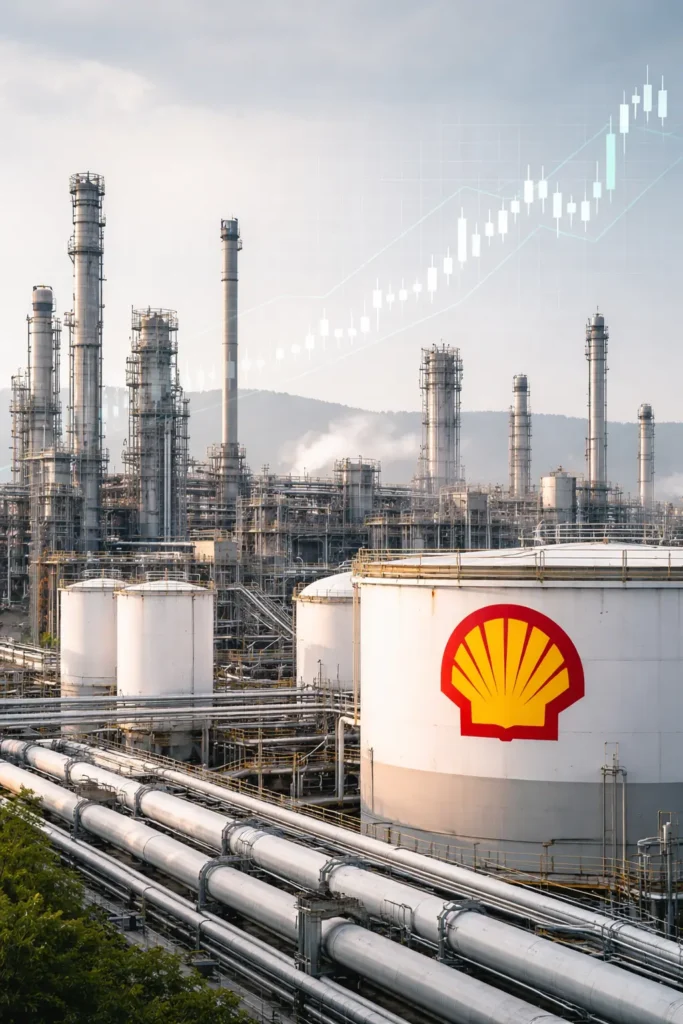

Shell shares are back in the spotlight as the oil shock sweeping through global markets lifts sentiment across the energy sector. With investors scrambling to reposition around higher crude prices and the risk of longer-lasting supply disruption, Shell plc has once again become one of the most closely watched names in London. For FTSE 100 investors, the appeal is straightforward. When oil rallies hard, large integrated producers with deep trading, LNG and upstream exposure often move to the front of the queue.
That is exactly the backdrop now helping Shell. The stock has been trading around 3,133p, and the broader market mood around oil majors has strengthened as crude prices surged on fears that instability in the Middle East could tighten supply and keep energy prices elevated for longer. In periods like this, Shell is not viewed simply as another oil stock. It is often treated as a global cash-generation machine with multiple earnings levers, from crude production and refining to gas, LNG and trading operations.
Market focus: The current Shell story is being driven by one big theme — higher oil and gas prices can quickly improve revenue visibility, cash flow expectations and investor appetite for large-cap energy shares.
The renewed attention on Shell comes at a time when the entire energy complex is being repriced. Rising oil prices do more than push up the headline value of each barrel sold. They can also reshape the outlook for producer margins, shareholder returns and sector leadership inside major stock indexes. That matters for Shell because the company remains one of the largest and most influential energy names in the UK market. When investors want exposure to the oil trade through a liquid blue-chip stock, Shell is usually near the top of the list.
One of the strongest parts of Shell’s investment case is that it is not dependent on only one energy stream. The company has spent years building an integrated portfolio that stretches across upstream production, marketing, trading and, most importantly, LNG. That LNG presence gives Shell added relevance during a period when natural gas security and cargo flexibility are becoming just as important as crude output. If buyers are forced to pay more to secure supply, Shell’s global footprint can become a meaningful advantage.
Also read: Follow broader market coverage and finance updates on Swikblog for more stock-market and energy-sector stories.
This is one reason Shell tends to attract investor attention whenever geopolitical stress pushes energy markets into a fresh volatility cycle. Smaller producers may offer more dramatic percentage moves, but large institutions often prefer a company that combines scale, diversification and established capital return policies. Shell fits that profile. The group has positioned itself as a disciplined operator that can reward shareholders while still leaning into segments where long-term demand remains resilient.
The stock’s appeal also grows when inflation worries return. A sharp rise in oil can cloud the outlook for interest rates, squeeze consumers and unsettle the broader equity market. But for energy giants, that same environment can improve near-term earnings expectations. Shell can therefore benefit from a setup that hurts many other sectors. That relative strength is part of what makes the shares so important during oil-driven market shocks. Even if the wider FTSE 100 is under pressure, energy heavyweights can still act as support.
There is another element working in Shell’s favour: valuation. Even after periods of strength, the stock is often not priced like a high-growth technology company or a richly valued consumer brand. Instead, many investors still see it as a cash-return story backed by hard assets and global energy exposure. In uncertain markets, that profile can become more attractive. The possibility of stronger free cash flow, continued dividends and future buybacks often encourages investors to stay interested when momentum builds.
At the same time, the rally is not risk-free. A de-escalation in geopolitical tensions could cool crude prices quickly, and any reversal in the oil market would likely take some urgency out of the Shell trade. Investors also know that windfall-tax debates, regulatory pressure and energy-transition politics can return to the foreground whenever producer profits rise sharply. Those issues are not new, but they remain part of the investment discussion around every major oil company operating in Europe.
Even so, the current market mood remains supportive. Traders are focusing less on distant policy debates and more on immediate pricing power in the energy market. As long as crude and gas prices stay elevated, Shell is likely to remain a focal point for investors looking for FTSE 100 exposure tied directly to the global energy cycle. The company’s blend of oil production, LNG scale and trading capability gives it a stronger narrative than many sector peers when supply risks dominate the market conversation.
That is why Shell shares are being watched so closely today. This is not only a reaction to a single stock move. It is a reflection of how investors are thinking about the next phase of the market. If the oil rally has more room to run, Shell could remain one of the clearest large-cap ways to play it. And if energy stays at the centre of global risk sentiment, the stock may keep drawing attention from both income-focused investors and short-term traders searching for strength inside a volatile market.
For readers who want to track the company more closely, Shell’s own quarterly results and investor materials remain the best place to monitor how management is framing cash flow, buybacks, Integrated Gas performance and the broader strategy.

Make Swikblog your go-to source on Google for reliable updates, smart insights, and daily trends.