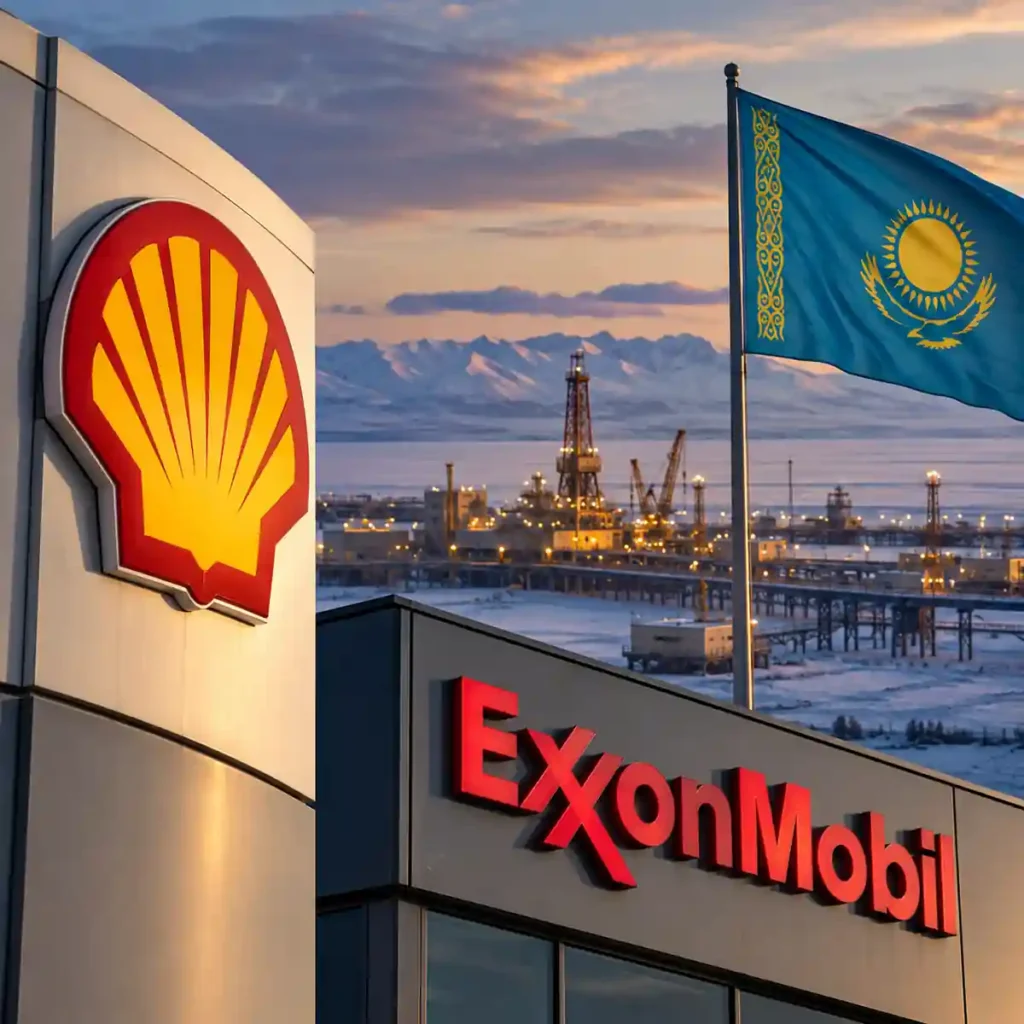

LONDON — Shell (SHEL) shares rose in London trading on Wednesday, September 9, with the stock at 3,536.50p, up 36p or 1.03%, as investors assessed a new turn in Kazakhstan’s roughly $5.06 billion Kashagan environmental dispute.
The move followed a strong US session for Shell plc (NYSE: SHEL), which closed at $95.32, up $2.37 or 2.55%. Shell outperformed the broader market as the S&P 500 fell 0.58%, the Dow dropped 1.18% and the Nasdaq declined 0.32%.
London ticker: SHEL.L
Price: 3,536.50p
Change: +36.00p (+1.03%)
Previous close: 3,500.50p
Open: 3,523.00p
Day range: 3,522.50p–3,545.50p
52-week range: 2,553.77p–3,758.50p
Market cap: about £202.4 billion
US ticker: SHEL
US close: $95.32 (+2.55%)
Next earnings: October 29, 2026
Shell trades near the top of its morning range
Shell opened at 3,523p, above the previous close of 3,500.50p, before climbing to 3,545.50p. At 3,536.50p, the shares were only 9p below the session high.
3,522.50p Current
3,536.50p High
3,545.50p
The morning high represented a gain of about 1.29% from the previous close. Shell also remained just under 6% below its 52-week high of 3,758.50p.
The stock has been sensitive to both company news and broader energy-market moves. Investors have also been watching reports involving Shell’s US chemicals portfolio and potential interest from ExxonMobil.
Kazakhstan suspends enforcement in Kashagan dispute
The legal issue involves North Caspian Operating Company (NCOC), operator of the giant Kashagan oil field. Kazakhstan has suspended enforcement proceedings linked to a 2.3 trillion tenge environmental penalty, equal to roughly $5.06 billion.
The suspension does not mean the fine has been cancelled. Kazakhstan’s Justice Ministry said NCOC challenged actions by the judicial enforcement officer and the Administrative Court of the Atyrau region requested the enforcement materials.
An update citing Kazakhstan’s Justice Ministry said efforts to recover money for the state would continue through the established legal process.
Shell, Exxon and TotalEnergies all have exposure
The Kashagan consortium includes some of the world’s biggest oil companies. Reported ownership includes KazMunayGas 16.88%, Shell (SHEL) 16.81%, Exxon Mobil (XOM) 16.81%, TotalEnergies (TTE) 16.81%, Eni (E) 16.81%, CNPC 8.33% and Inpex 7.56%.
Applying Shell’s 16.81% stake mechanically to $5.06 billion gives a figure of about $850 million. That is not Shell’s confirmed liability. Any eventual financial burden would depend on court decisions, arbitration and consortium arrangements.
Nike Removed From S&P 100 After 18 Years: What It Means for NKE Stock
Energy stocks finished higher
Equinor (EQNR): $43.39, +3.09%
Shell (SHEL): $95.32, +2.55%
Eni (E): $54.94, +2.54%
BP (BP): $44.88, +2.44%
TotalEnergies (TTE): $90.10, +1.70%
Exxon Mobil (XOM): $160.66, +0.75%
Shell’s 2.55% US gain was stronger than Exxon Mobil and TotalEnergies and close to the gains posted by Eni and BP. Earlier this year, Shell shares also climbed as higher oil prices lifted energy stocks.
Earnings and valuation stay in focus
Consensus estimates supplied with the market data project Shell’s next quarterly earnings at $2.85 per share, up 53.23% year over year, with revenue forecast at $78.38 billion, up 11.32%.
Full-year estimates stand at $10.53 EPS and about $380.07 billion in revenue. Shell carried a Zacks Rank #3 (Hold), with a cited forward P/E of 8.83 and PEG ratio of 0.85.
The London snapshot showed a trailing P/E of about 10.59, a forward dividend of 116p and an indicated yield of 3.32%. The displayed one-year analyst target was 3,807.67p, around 7.7% above the 3,536.50p market price.
October 29 is the next major date
Shell’s next scheduled earnings release is October 29, 2026. Investors will be watching earnings, cash generation, oil and gas prices and further developments in the Kashagan legal dispute.
The latest Kazakhstan move reduces immediate enforcement pressure, but the approximately $5.06 billion dispute remains unresolved, leaving Shell, Exxon Mobil, TotalEnergies, Eni and other consortium members exposed to continuing legal and financial uncertainty.

Make Swikblog your go-to source on Google for reliable updates, smart insights, and daily trends.