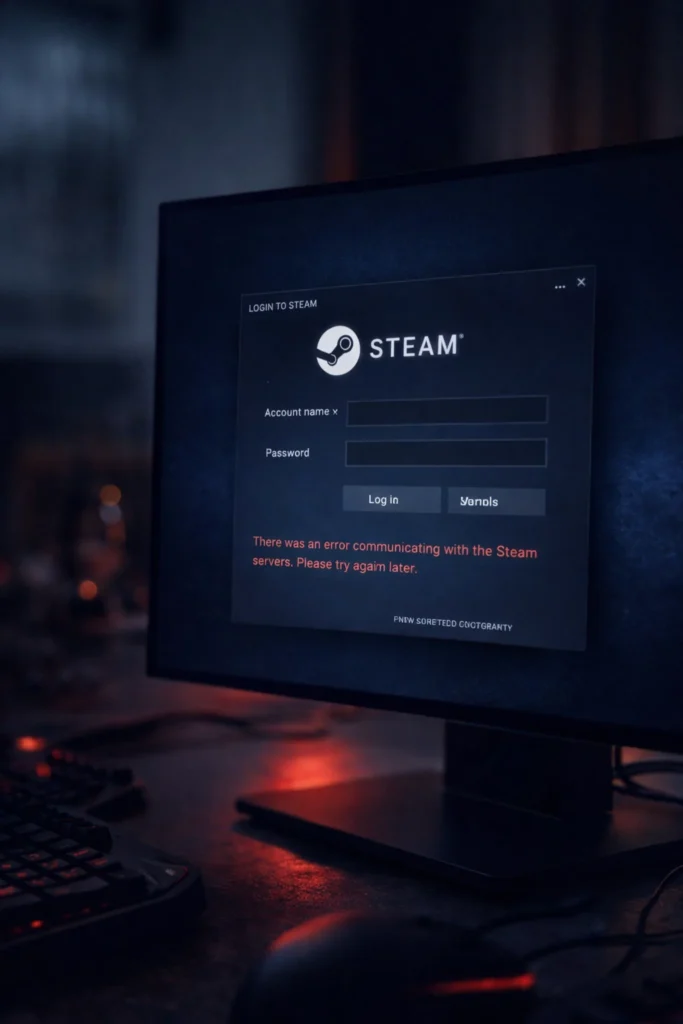

Steam experienced a widespread outage on Friday, leaving thousands of players unable to access their accounts, launch games, or connect to online services. The disruption quickly spread across the PC gaming community as users reported login failures, unstable server connections, and problems syncing cloud saves.
According to Downdetector, outage reports began rising sharply around 1:00 p.m., eventually surpassing 11,000 user reports. At the height of the incident, Valve—the company behind Steam—had not released an official explanation or provided an estimated timeline for full service restoration.
Most reported Steam problems
The outage affected several core Steam services simultaneously, suggesting a broader authentication or network issue rather than a problem with a single feature. Users reported difficulty signing in, launching installed games, accessing cloud saves, and joining multiplayer sessions.
Downdetector data showed that approximately 43% of reports involved server connection failures, while 26% related to login issues. Another 17% of users said games would not launch correctly. Because Steam’s online services are closely connected, authentication problems can quickly affect cloud syncing, matchmaking, and community features.
Which areas appeared most affected?
Live outage maps indicated a higher concentration of reports in parts of Texas, particularly around Dallas and Houston. However, users across multiple countries also reported similar issues, indicating the disruption was not limited to one region.
Regional differences during large outages are common because internet traffic can follow different network routes depending on location and internet service provider. That means some players may regain access sooner than others while recovery is still underway.
Was the problem connected to internet infrastructure?
Valve did not immediately identify the cause of the outage. Independent Steam monitoring services suggested that wider internet connectivity issues may have been under investigation during the disruption.
Cloudflare, one of the world’s largest internet infrastructure providers, publishes live updates whenever network incidents affect customer services. Although this did not confirm that Steam’s outage was directly caused by Cloudflare, it highlighted how broader internet infrastructure problems can impact multiple online platforms at the same time.
For verified infrastructure updates, users can monitor the official Cloudflare Status page.
When will Steam be working again?
As no official recovery timeline was announced during the outage, players were left waiting for services to stabilize. Large online platforms often recover gradually, with account logins returning first, followed by cloud synchronization, downloads, and multiplayer connectivity.
If Steam continues showing connection errors, restarting the Steam client and waiting before attempting another login is generally recommended. Repeated sign-in attempts rarely resolve server-side outages and can occasionally trigger temporary security checks. Many single-player games may still work through Offline Mode if the client was previously authenticated.
Why Steam outages have such a large impact
Since its launch in 2003, Steam has become the world’s leading PC game distribution platform. Beyond selling games, it manages software updates, user authentication, multiplayer matchmaking, achievements, cloud storage, and community services for millions of players.
Because so many games rely on Steam’s account systems, even a temporary disruption can prevent users from accessing features they use every day. The impact extends beyond desktop computers to devices such as the Steam Deck, where account authentication and online services are equally important.
If you want to follow previous Steam service disruptions and troubleshooting guidance, you can read our coverage of Steam login and connection issues.

Make Swikblog your go-to source on Google for reliable updates, smart insights, and daily trends.