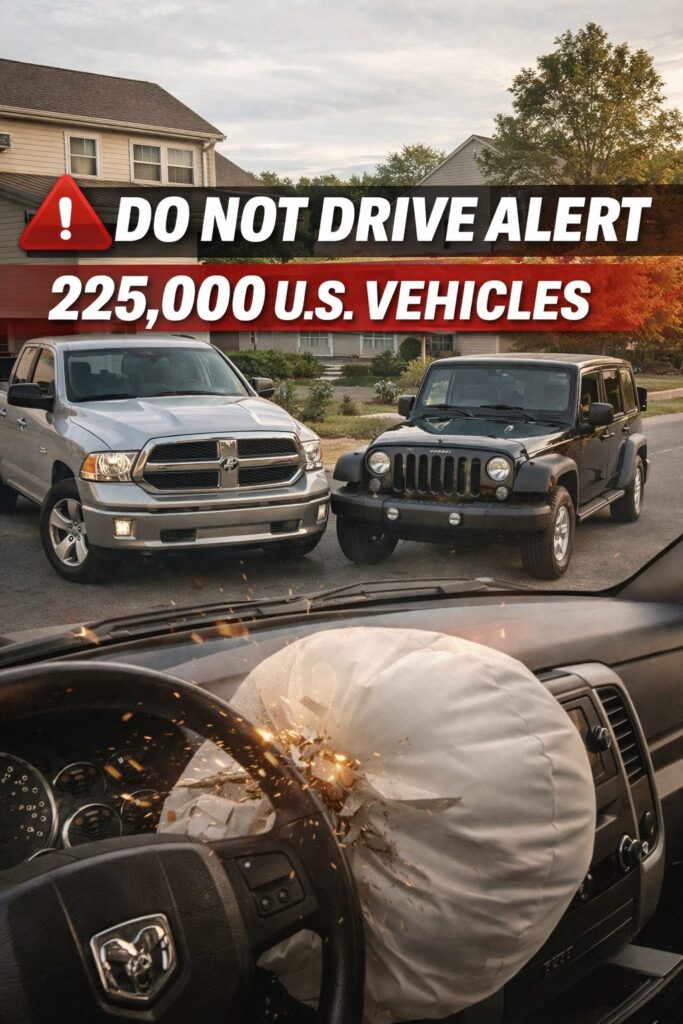

Stellantis has issued an urgent “Do Not Drive” warning for approximately 225,000 older vehicles in the United States that still have unrepaired Takata airbag inflators. The company says owners of affected vehicles should stop driving them immediately until the defective airbags have been replaced.
The latest advisory is aimed only at vehicles with an open recall that have not yet received the free repair. Safety officials say the defective inflators can rupture during deployment, sending sharp metal fragments into the passenger compartment and causing severe or fatal injuries.
Which vehicles are affected?
The warning covers certain unrepaired vehicles from model years 2003 through 2016. Stellantis identified the following models as part of the advisory:
- Dodge Ram
- Dodge Durango
- Dodge Dakota
- Dodge Magnum
- Dodge Challenger
- Chrysler Aspen
- Chrysler 300
- Jeep Wrangler
- Mitsubishi Raider
Not every vehicle from these model lines is included. The warning applies only to vehicles that still have an open Takata airbag recall and have not undergone the required repair.
Why the Takata airbag recall remains critical
Takata airbag inflators use a chemical propellant that can deteriorate over time, particularly in regions with prolonged heat and humidity. As the inflator ages, it becomes more likely to rupture when the airbag deploys during a collision.
Instead of inflating safely, a defective inflator can explode and send metal fragments toward vehicle occupants. Federal safety officials have warned that this can happen even in relatively low-speed crashes.
According to the National Highway Traffic Safety Administration (NHTSA), defective Takata airbag inflators have been linked to dozens of deaths and hundreds of injuries in the United States, making this one of the most significant automotive safety recalls ever undertaken.
Why Stellantis is renewing the warning
Although the Takata recall began years ago, many affected vehicles remain on the road because owners have not completed the repair or the vehicles have changed ownership several times. As these vehicles continue to age, the risk associated with the defective inflators increases.
Stellantis continues to contact owners through recall notices and public safety alerts, encouraging them to schedule repairs before the airbags fail during a crash.
What owners should do now
Owners should immediately check their vehicle identification number (VIN) using the official recall lookup tools provided by Stellantis or NHTSA. If an open recall appears, they should arrange the free repair without delay.
For vehicles covered by the “Do Not Drive” warning, Stellantis recommends leaving the vehicle parked and contacting an authorized dealership for instructions. Depending on the circumstances, dealerships may assist with transportation or towing to complete the repair safely.
Ignoring an open recall means continuing to drive with a known safety defect that regulators have repeatedly identified as capable of causing catastrophic injuries.
The recall is still an active safety issue
Despite years of recall campaigns across multiple automakers, millions of vehicles worldwide have required Takata airbag replacements. Safety experts continue to stress that older recalled vehicles become increasingly dangerous if the defective inflators are left in place.
Vehicle owners who are unsure whether their car has already been repaired should verify its recall status instead of assuming previous owners completed the work. Since the repair is free, completing it remains the safest course of action.
For more verified breaking news and transportation updates, visit the latest news section.

Make Swikblog your go-to source on Google for reliable updates, smart insights, and daily trends.