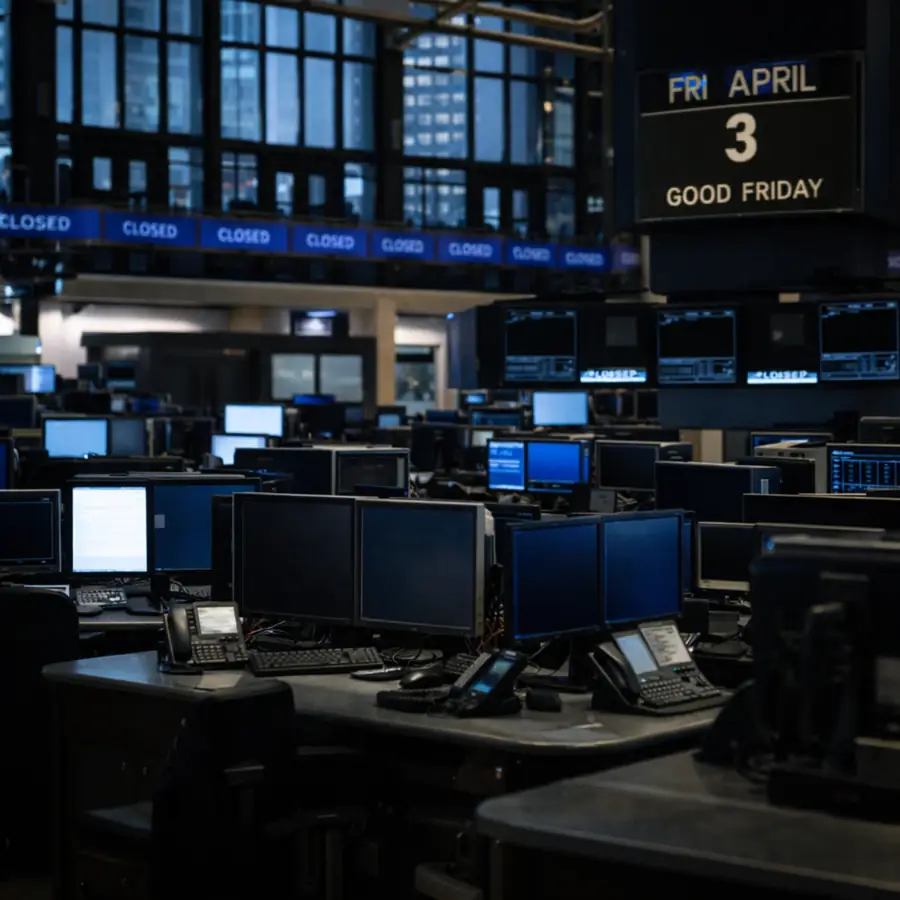

Stock market activity has come to a complete halt today as major global exchanges shut for Good Friday, leaving investors without access to live trading. Anyone searching “Is the stock market open today?” is getting the same answer — no. U.S. markets including the NYSE and Nasdaq are closed, keeping Wall Street dark while financial centers like London also pause trading. For investors used to constant price movement, the sudden silence across markets stands out.
In the United States, the New York Stock Exchange and Nasdaq are both closed today in observance of Good Friday. That means no regular trading in listed stocks, ETFs, or options on the main U.S. exchanges. The shutdown is one of the best-known non-federal holiday market closures on the financial calendar, and every year it triggers a wave of searches from traders, retirement investors, and anyone checking whether they can place live equity trades before the weekend.
The timing matters because Good Friday falls at a moment when investors are still digesting inflation signals, rate expectations, corporate updates, and shifting sentiment across global assets. A full-day closure can briefly drain liquidity from the broader financial system, slow price discovery, and push attention toward futures schedules, bond-market notices, and the next reopening session. For many retail investors, though, the question is simpler: stocks are not trading today.
Wall Street is closed, and the holiday pause stretches beyond the U.S.
Today’s closure is not limited to one exchange. Alongside the NYSE, Nasdaq’s market holiday notice also confirms that U.S. equities and options markets are closed for Good Friday. In practical terms, that means investors will not see the usual opening bell, midday price swings, or late-session moves that often dominate financial coverage.
The pause also reaches Europe. The London Stock Exchange is closed for Good Friday, which means one of the world’s most closely watched markets is also offline. That creates a broader international slowdown in equity trading volumes, especially for investors who track cross-listed names, multinational companies, and global risk sentiment. Because the Easter holiday calendar in the UK extends into Monday, London’s market break lasts longer than the U.S. shutdown, adding another layer to global trading rhythm next week.
In fixed income, the picture is also quieter than usual. Bond-market participants typically watch the holiday recommendations issued for Good Friday because they shape activity in Treasuries and related products. So while many investors focus first on whether stocks are open, the wider message across finance today is that this is a genuine market holiday, not just a light-volume trading session.
For retail investors, that means portfolio values may still update based on previous closes or delayed pricing across broker platforms, but live equity trading is not taking place. Orders entered today generally wait for the next regular session unless routed to products or venues operating on different schedules.
When trading resumes and why this closure gets so much attention
The next live U.S. equity session arrives on Monday, when Wall Street returns to normal trading hours after the Good Friday break. That reopening often draws extra attention because investors come back from a three-day market pause with fresh headlines, new geopolitical developments, and any weekend macro surprises ready to be priced in quickly.
This holiday closure gets outsized search interest because it catches casual investors off guard. Good Friday is not a standard federal shutdown across all parts of daily life in the United States, so banks, stores, offices, and delivery services can appear mixed depending on location. That contrast leads many people to assume markets may also be partially open. In reality, the stock market follows its own well-established holiday calendar, and Good Friday remains one of the clearest full-stop dates for U.S. equities.
It also tends to arrive at a time of heightened market curiosity. Investors are already watching earnings expectations, recession odds, Federal Reserve messaging, and sector rotation. So when the market suddenly goes quiet, search volume surges as people try to work out whether the silence is technical, seasonal, or holiday-related. This year, the answer is straightforward: the closure is calendar-based, broad, and fully expected.
That makes today less about price action and more about positioning. For long-term investors, the pause is a chance to step back from intraday noise and refocus on bigger themes. For active traders, it is a reminder that liquidity windows matter and that holiday calendars can shape everything from execution timing to weekend risk. And for anyone typing the question into Google today, the short verdict remains the same: the stock market is closed today for Good Friday, and Wall Street reopens on Monday.
For the official holiday schedule, investors can check the NYSE trading calendar before the next market-moving session begins.

Make Swikblog your go-to source on Google for reliable updates, smart insights, and daily trends.