
Updated: Jan 15, 2026 • By Swikriti
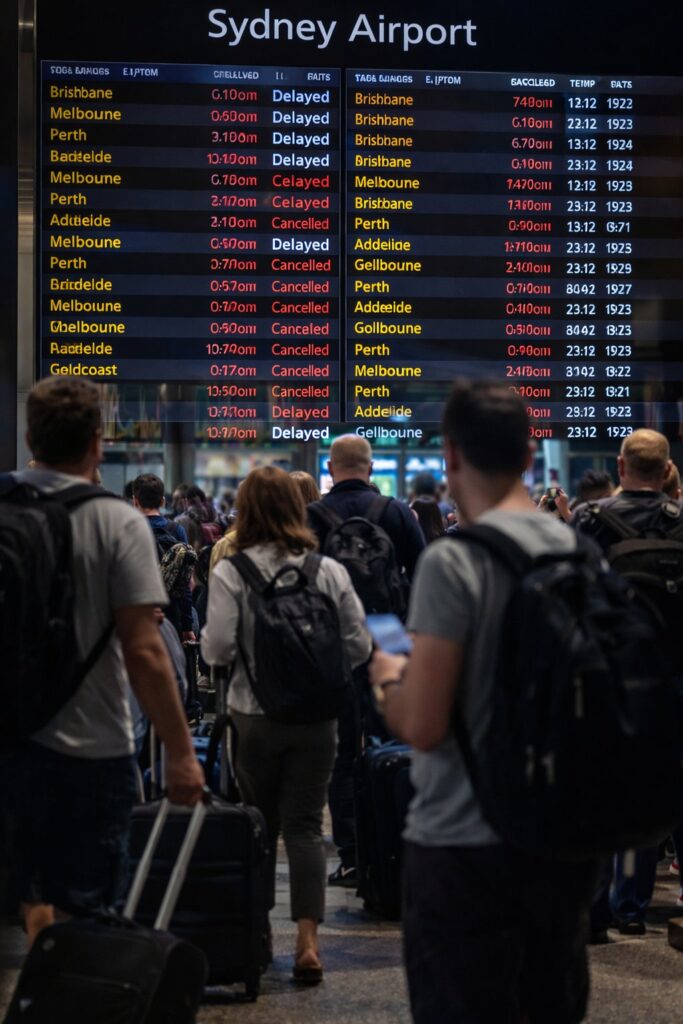
Sydney travellers are facing heavy delays and cancellations, with flow-on disruption expected across Australia’s network as airlines and air traffic control manage reduced capacity.
If your flight in or out of Sydney Airport is running late today, you’re not imagining it — the country’s busiest airport has been hit by a sharp operational squeeze linked to air traffic control staffing. The result has been a messy mix of cancelled services, long tarmac waits, and delays that ripple across the entire national network.
The key point: this isn’t being driven by weather. The disruption is tied to how many aircraft can be safely spaced for take-off and landing when local staffing levels drop. When Sydney slows down, the knock-on effects can be felt everywhere — Brisbane, Melbourne, Perth, and beyond — because aircraft rotations and crew schedules are tightly connected.
What caused the Sydney Airport delays?
Australia’s air traffic control provider, Airservices Australia, has told airlines that controllers needed to implement spacing intervals for arriving and departing aircraft to safely manage operations while a number of local staff were on short-notice sick and carer’s leave. In practical terms, that means fewer aircraft movements per hour — and once the day’s schedule falls behind, it can take many hours to recover.
For background on aviation operations and updates, travellers can check official sources such as Airservices Australia and the airport’s live information at Sydney Airport.
How bad is it?
The disruption has hit major carriers hardest. Services operated by Qantas, Jetstar and Virgin Australia have been affected, with dozens of flights cancelled and many more delayed. Some aircraft have reportedly waited on the tarmac for extended periods, adding to passenger frustration and making tight connections difficult — especially for travellers transiting through Sydney to reach other states.
Airline industry representatives warn this kind of bottleneck is particularly damaging because Sydney sits at the centre of Australia’s domestic network. Even if your flight isn’t bound for Sydney, you can still be impacted if the aircraft or crew were scheduled to arrive from Sydney earlier in the day.
When could normal service return?
The honest answer: it depends on how quickly the operation stabilises. When air traffic flow restrictions are imposed, airports often need hours of smoother running just to “catch up” — and if congestion persists into peak travel windows, the recovery can stretch into the evening and sometimes the following day.
A useful rule of thumb for travellers: even after cancellations stop, residual delays can continue as airlines reposition aircraft, reassign crews, and rebook passengers. If you’re flying today or tomorrow, check your flight status frequently and expect last-minute gate changes.
What passengers should do right now
- Check your flight status before leaving home (and again on the way). Look for alerts inside your airline app, not just third-party trackers.
- Arrive early if your flight still shows “on time” — delays can trigger sudden gate reshuffles and longer lines at bag drop.
- If you have a connection, consider calling the airline as soon as the first delay appears. Rebooking options are usually better early.
- Keep receipts for essential out-of-pocket costs (food, transport, accommodation) if disruption strands you unexpectedly.
- Pack essentials in carry-on (medication, chargers, a change of clothes) in case checked bags are delayed or rerouted.
For direct help, use official airline support channels: Qantas flight status, Jetstar flight status, and Virgin Australia flight status.
Are you entitled to compensation?
Compensation rules can vary depending on your ticket type, airline policies, and what caused the delay. In Australia, consumer protections are often framed through the Australian Consumer Law and airline conditions of carriage. If you believe you weren’t provided the service you paid for (or weren’t offered reasonable alternatives), you can review guidance from an official source like the ACCC. Always check your airline’s specific terms and ask what options are available: rebooking, travel credit, or refund.
Practical tip: when disruptions are system-wide, airlines may prioritise rebooking first. If you need a refund or alternative routing, be clear about your preferred outcome and ask for confirmation in writing (email or app message) where possible.
Why this could keep happening
Air traffic control is a specialised workforce. Even when agencies recruit, training takes time — and sudden spikes in sick leave can cause immediate operational gaps. Airservices Australia has said it has been recruiting additional controllers over the past year, but unpla

Make Swikblog your go-to source on Google for reliable updates, smart insights, and daily trends.