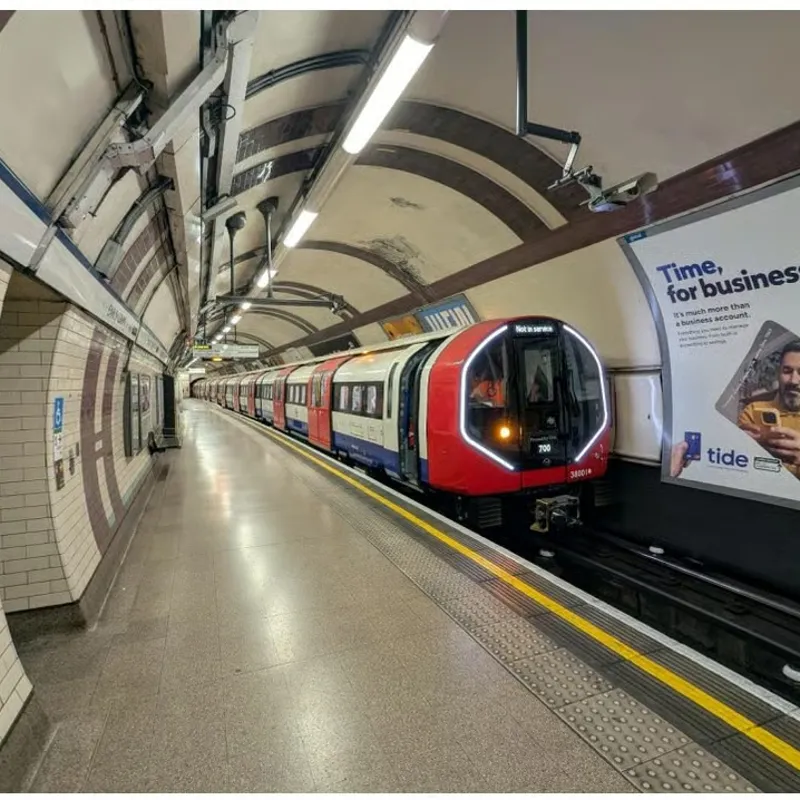

London’s transport network is set for renewed disruption as planned strike action on the Underground threatens to affect millions of journeys, while also raising fresh concerns about passenger safety and accessibility. The walkouts, led by members of the Rail, Maritime and Transport (RMT) union, come amid an ongoing dispute over shift patterns and working conditions, placing pressure on Transport for London (TfL) during a critical period for commuter travel.
Strike action is scheduled to begin at 12pm on Tuesday April 21 and continue for 24 hours, before a second 24-hour walkout begins at the same time on Thursday April 23. TfL has warned that disruption is likely to extend beyond the strike windows, meaning services could be affected across four working days. Further strikes are already planned in May and June, underlining the risk of prolonged instability across the network.
The immediate impact will be felt across Tube services, but the knock-on effects are expected to spread across buses, roads and pedestrian routes as passengers seek alternatives. For many commuters, this means longer journeys and overcrowded routes. For others, particularly blind and partially sighted passengers, the disruption could significantly affect both safety and independence.
Who’s affected and why it matters
Guide Dogs UK has warned that the strike could create “unpredictable or unsafe” travel conditions for people with sight loss. The Underground is a familiar and structured environment for many visually impaired passengers, and sudden changes to routes or station access can make navigation more difficult. When services are disrupted, alternative journeys often involve unfamiliar interchanges, crowded pavements and busier public spaces.
The impact is not limited to stations. Tube closures typically lead to heavier road traffic, packed buses and increased use of e-bikes and e-scooters. Campaigners say poorly parked bikes and cluttered pavements can become serious hazards, particularly during periods of disruption when footfall rises sharply. In such conditions, even short journeys can become challenging.
For some passengers, the uncertainty alone may be enough to deter travel altogether. That loss of mobility highlights a wider issue: while strike action is part of an industrial dispute, its consequences are often unevenly distributed, affecting vulnerable groups more sharply than the general commuting public.
Dispute, disruption and the wider debate
The RMT has said the strike is driven by concerns over proposed changes linked to a four-day working week, which it argues could negatively affect drivers. TfL maintains that any changes would be voluntary, but talks have so far failed to produce a breakthrough. While further discussions may take place, no formal agreement has been reached, and the strike is expected to go ahead.
The disruption has also reignited debate over whether London should move towards driverless trains. TfL commissioner Andy Lord has firmly ruled out the idea, stating there is “no business case” for introducing fully automated services on the Underground. He pointed to the high cost of new signalling systems and infrastructure, as well as the limited financial benefits.
According to TfL, more than 60% of the network already operates with automatic systems, meaning the additional gains from removing drivers entirely would be minimal. Officials have also stressed that staff presence remains essential for customer service and emergency situations, making full automation less practical than it may appear.
The issue remains politically sensitive, particularly during strike periods when calls for automation tend to resurface. However, transport authorities argue that investment priorities are better focused on upgrading infrastructure and improving reliability rather than pursuing costly structural changes.
More broadly, the disruption comes at a time when London’s transport habits are still adjusting after the pandemic. Passenger numbers have stabilised at around 92% of pre-Covid levels, with hybrid working continuing to influence travel patterns. At the same time, cycling infrastructure has expanded significantly, offering alternatives but also contributing to more complex and crowded street environments during major disruptions.
Passengers planning to travel during the strike period are being advised to check live updates via TfL service status, allow extra time for journeys and consider alternative routes where possible. For those who rely on consistent and accessible travel, however, the challenge is not just delay—but navigating a system that becomes far less predictable when disruption takes hold.

Make Swikblog your go-to source on Google for reliable updates, smart insights, and daily trends.