A split-screen Super Bowl halftime is exposing the limits of political power in shaping what the country actually watches, shares, and celebrates.
The Super Bowl halftime show has always carried a kind of cultural authority: it’s the rare moment when sports, celebrity, and music collapse into one shared ritual. This year, that ritual is being deliberately fractured. As the official Apple Music halftime show prepares to air, an alternative broadcast backed by Turning Point USA is asking viewers to choose sides in a culture war that has migrated from cable panels and campaign rallies onto America’s biggest screen.
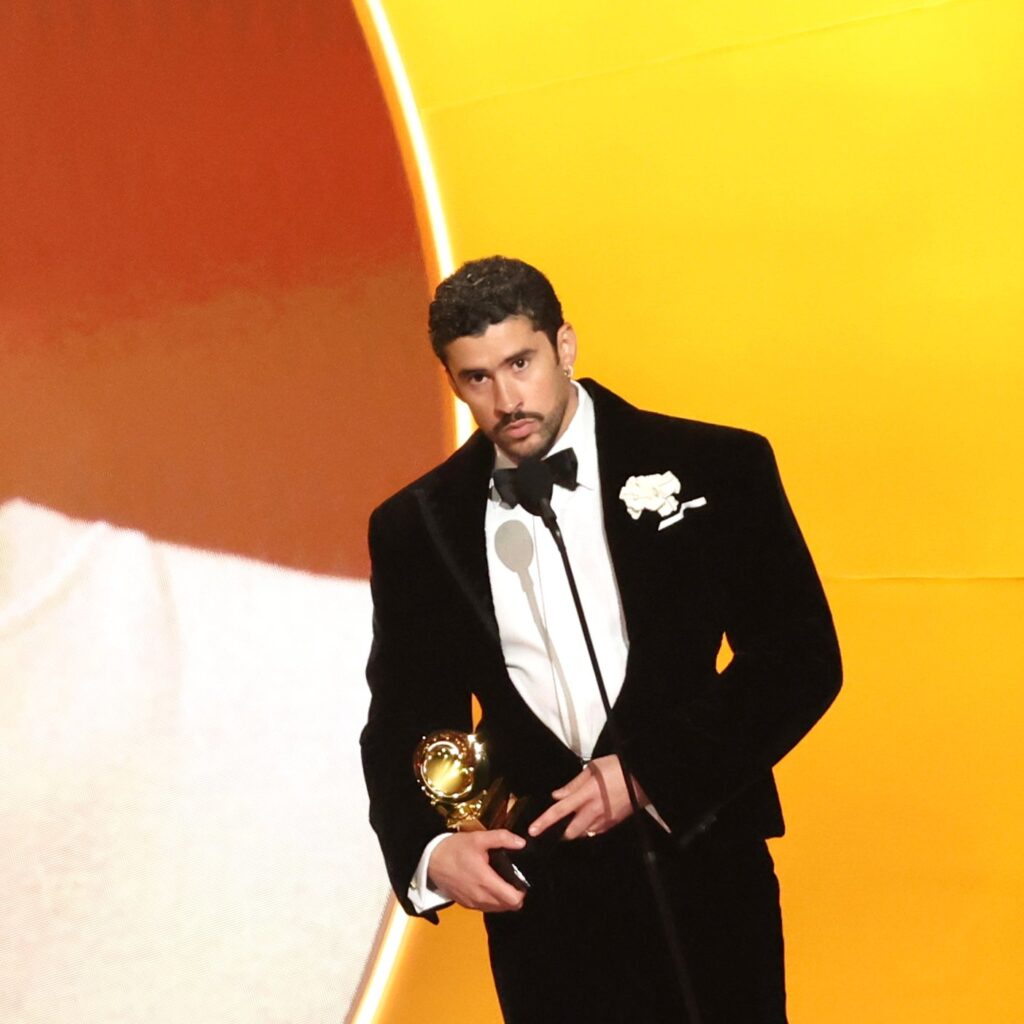
On the main stage is Bad Bunny, the Grammy-winning global superstar whose Spanish-language dominance has made him a symbol of where pop culture is heading, not where it used to be. On the other stage is a counterprogrammed “All-American” halftime lineup headlined by Kid Rock, paired with country acts promoted as an antidote to what conservatives describe as a mainstream entertainment industry captured by the left. That the competing shows exist at the same time is not a coincidence. It is the point.
The political framing has been unusually direct. Allies of President Donald Trump have amplified Turning Point’s event as a corrective to the NFL’s official choice, praising it as a “values” alternative and treating halftime as a loyalty test. The attention has also pulled the White House into the story, not because the administration programs the Super Bowl, but because the broader strategy is recognizable: portray mainstream culture as hostile, then build a parallel pipeline and call it a renaissance.
Trump’s own rhetoric has reinforced the idea that this is about cultural power, not just taste. His circle has portrayed the official halftime show as a provocation and the Turning Point event as a counterweight. The online chatter that followed — including celebratory posts from prominent conservatives — has turned a music booking into a political signal: who counts as “real” America, which languages are welcome in prime time, and whether entertainment should be a shared space or a battleground.
The backlash has been swift because many viewers see the alternative show as less a concert than a campaign-style maneuver. Critics argue it hijacks a communal event and rebrands it as factional content. Supporters respond that the split proves their complaint: that mainstream institutions no longer reflect them. Either way, the mere fact that halftime is now being “counterprogrammed” reveals a deep anxiety at the center of modern politics — the fear that winning elections does not guarantee cultural relevance.
That anxiety has played out before, and not only in sports. Over the past year, Trump and his allies have repeatedly framed cultural institutions as territory to be reclaimed. The most visible example was the attempt to impose a conservative makeover on a major performing-arts institution in Washington, complete with leadership shakeups and branding theatrics. The result, instead of a triumphant “takeover,” looked like cultural retreat: high-profile artists and organizations distanced themselves, and the city braced for a quieter, thinner cultural calendar.
The White House’s broader cultural messaging has also collided with the hardest rule of entertainment: you can’t command cool. A glossy cultural project can be funded, promoted, and packaged — but it cannot be willed into relevance if audiences and critics don’t respond. That mismatch helps explain why the Super Bowl moment has become so combustible. If the mainstream stage won’t validate a political brand, the temptation is to build a rival stage and declare it the new center.
But the official halftime show is designed to broadcast the opposite message. The NFL’s selection signals that the audience it’s chasing is multilingual, international, and generationally diverse — and that a performer who can turn the stadium into a dance floor can also carry cultural meaning. Bad Bunny’s appeal is not confined to one demographic, and that’s exactly why the booking matters: it suggests that the “mainstream” has moved, and no amount of political messaging can drag it back to a narrower definition.
Why this is sparking backlash
It’s a split-screen moment
Turning Point USA isn’t critiquing the halftime show from afar — it’s staging an alternative at the same time, turning a shared ritual into competing streams.
Trump politics is part of the pitch
The lineup is being promoted by Trump-aligned voices as a “values” rebuttal, making halftime feel like a referendum rather than entertainment.
Language and identity are in the frame
Bad Bunny’s Spanish-language stardom is being treated by critics as political provocation, while supporters see it as the reality of modern American culture.
None of this means viewers will stop watching the game. It does mean the halftime show is now carrying more symbolic weight than it can comfortably hold. The Super Bowl has historically been one of the few spaces that still feels “national,” even for people who don’t agree on much else. Counterprogramming breaks that spell. It asks audiences to treat entertainment like a badge — and it pressures artists and brands to pick a side, even when the public mostly wants a spectacle, a hook, and a beat.
In the end, the strongest signal isn’t who shouts the loudest online. It’s where attention goes when the lights go down and the cameras pan to the stage. Cultural dominance can’t be declared; it has to be earned in the only way entertainment recognizes — by pulling people in, including the ones who didn’t arrive looking for a fight. That’s why this moment feels like a tell: the attempt to seize culture by building a rival halftime show looks less like a takeover and more like an admission that the takeover isn’t working.
Related reading on Swikblog: Super Bowl coverage and explainers.
Official halftime hub: Apple Music’s Road to Halftime

Make Swikblog your go-to source on Google for reliable updates, smart insights, and daily trends.