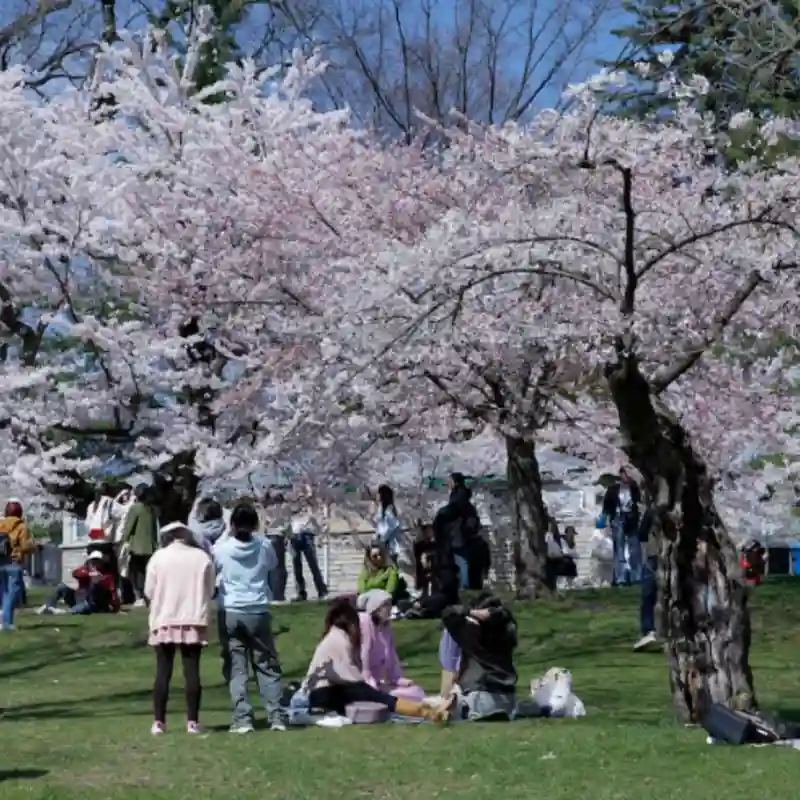

Toronto’s High Park is once again at the centre of the city’s spring calendar as its famous cherry blossoms reach peak bloom, drawing visitors to one of the most photographed natural displays of the season.
The bloom, which usually arrives sometime between mid-April and mid-May, has opened across the park’s hillside after weeks of anticipation. With cool and calm weather expected, visitors may get a longer-than-usual viewing window, with the flowers likely to remain visible for several days before petals begin to drop.
The annual cherry blossom season is brief, which is why crowds tend to build quickly once peak bloom is confirmed. Families, photographers, students, seniors and newcomers have already started gathering beneath the trees, turning the hillside into a busy spring meeting place.
High Park has also closed its roads to vehicles during the bloom period, a move aimed at managing the heavy foot traffic and keeping the area safer for pedestrians. Visitors are being encouraged to use public transit, walk or cycle where possible, especially during peak weekend hours.
Why High Park’s cherry blossoms attract so much attention
High Park’s cherry blossoms are more than a seasonal photo backdrop. For many Torontonians, they mark the unofficial start of spring — a moment when the city moves outdoors again after a long winter.
The trees create a short-lived canopy of pale pink and white flowers, and that temporary beauty is part of the appeal. Unlike many spring attractions, cherry blossoms do not stay at their best for long. A few windy or rainy days can quickly change the scene, making timing important for anyone hoping to see the bloom at its fullest.
This year’s peak has brought together a wide mix of visitors. Some return every spring as part of a personal tradition, while others are experiencing High Park’s Sakura season for the first time. Students have arrived after finishing exams, families are posing for photos, and community groups are using the bloom as a chance to gather outdoors.
One of the most noticeable scenes on the hillside has been the presence of community groups, including seniors and new immigrants, many of whom are visiting the park during peak bloom for the first time. For them, the outing is not only about the blossoms but also about feeling connected to the city and sharing a public space with others.
The popularity of the bloom also reflects Toronto’s multicultural character. Cherry blossom viewing has roots in Japanese hanami traditions, but in High Park it has become a broader city event, bringing together people from different backgrounds around the same seasonal moment.
For official bloom updates, visitors can check the High Park Nature Centre’s Cherry Blossom Watch before making the trip.
Visitors urged to protect the trees and watch for wildlife
As crowds grow, park staff and conservation volunteers are reminding visitors that the blossoms are fragile. Pulling branches down for photos, climbing trees or stepping into protected areas can damage the trees and make them more vulnerable to disease.
The concern is not only about one branch or one photo. When thousands of people repeat the same behaviour, the impact can build up over time. Soil around the trees can become compacted, roots can be stressed, and future blooms may be affected.
Visitors can help by staying on marked paths, keeping hands off the branches and respecting barriers around sensitive areas. The best photos can still be taken without touching the trees or stepping into restricted sections.
There is another reason to move carefully through the park this season. While most people are looking up at the blossoms, baby turtles are emerging from nests in the same hillside area. Some are extremely small, making them difficult to notice in grass or near walking routes.
Volunteer groups are monitoring nesting areas, placing protective covers where needed and helping guide hatchlings safely toward water. Their message to visitors is simple: enjoy the blossoms, but remember to look down as well.
The overlap between cherry blossom season and turtle hatching season shows why High Park needs careful visitor behaviour during peak bloom. The park is not just a scenic backdrop; it is also a living habitat shared by birds, turtles, trees and other wildlife.
Anyone planning a visit should expect crowds, especially on weekends and during late afternoon hours. Early morning may offer a calmer experience, though the park is still likely to be busy while the bloom remains strong.
Comfortable shoes, patience and extra travel time are recommended. Visitors should also avoid bringing vehicles into the area and check transit routes before leaving.
The cherry blossoms will not last long, but that is what makes them one of Toronto’s most memorable spring sights. For a short window, High Park becomes a place where nature, community and city life meet under flowering trees — as long as visitors help protect what they came to see.
You may like: UAE resumes limited flights as Middle East airspace crisis disrupts travel

Make Swikblog your go-to source on Google for reliable updates, smart insights, and daily trends.