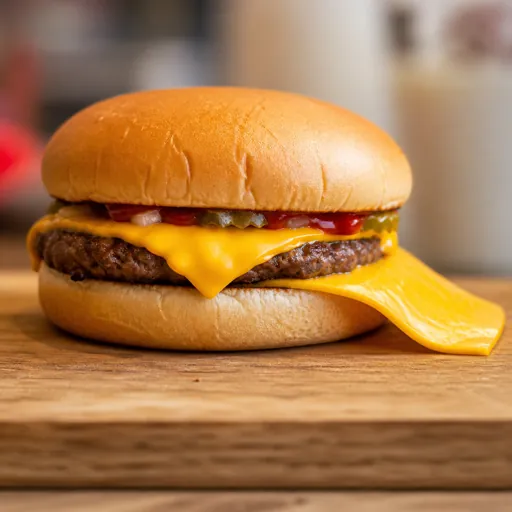

McDonald’s has turned a simple cheeseburger into one of the most talked-about fast-food moments of 2026. The viral “McMullet” burger, recently introduced by McDonald’s New Zealand, caught attention because of one small but memorable detail: an extra slice of cheese hanging out from the back of the burger.
The idea plays on the famous mullet hairstyle, often described as “business in the front, party in the back.” In burger form, that means a regular cheeseburger up front and a dramatic cheese “tail” at the back. It is unusual, funny, easy to understand, and perfect for social media — which is exactly why the McMullet became a viral food story.
But for McDonald’s fans in the United States, there is a catch. The McMullet was a limited-time item in New Zealand and is not currently planned for a U.S. launch. That has only made the burger more interesting to American customers who saw it online and wondered whether it would arrive at their local McDonald’s.
How the McMullet became a real McDonald’s burger
The McMullet did not begin as a traditional fast-food product idea. It started online, where fans pushed the concept of a cheeseburger with a mullet-style cheese slice. One social media account, @MakeTheMcMullet, reportedly kept posting a homemade version of the burger repeatedly until McDonald’s New Zealand noticed the attention around it.
Instead of treating the idea as just another internet joke, McDonald’s New Zealand leaned into the trend. The company saw that people were reacting to the concept, sharing it, and finding humor in the simplicity of the idea. That gave the brand a chance to turn online demand into a real-world promotion.
Luke Rive, McDonald’s New Zealand director of marketing, said the company viewed the reaction as a chance to bring a fun idea to life and see how customers responded outside social media. That approach helped make the McMullet feel less like a corporate campaign and more like a fan-driven moment.
The campaign also showed how quickly fast-food brands can respond when an idea fits the culture of the moment. The McMullet did not need a complicated recipe, premium ingredients, or a major menu overhaul. It needed timing, humor, and a visual that people immediately understood.
To make the launch more memorable, McDonald’s New Zealand hosted a promotional event at a restaurant in Auckland’s Penrose suburb. Customers were offered free McMullet burgers, turning the online joke into an in-person experience. The company even added an on-site barber for customers who wanted to get an actual mullet haircut along with the burger.
That detail helped the campaign stand out. It was not just about selling a cheeseburger. It was about creating a shareable moment around food, fashion, and internet humor. In today’s fast-food market, that kind of cultural connection can be just as important as the product itself.
McDonald’s has long used local menu experiments to connect with customers in different countries. The company’s official McDonald’s website shows how its menus and promotions often vary by market, depending on local tastes and customer demand.
Why US customers cannot order the McMullet
Although the McMullet attracted attention outside New Zealand, it was not designed as a permanent global product. The burger was available only for a short time and has already been removed from the New Zealand menu. For now, McDonald’s has not announced any plan to bring it to restaurants in the United States.
That may disappoint some American fans, but it is not unusual for McDonald’s. The chain frequently tests regional items that never become part of the U.S. menu. Some are built around local food habits, while others are tied to a specific campaign or limited-time event.
The McMullet fits more into the second category. Its appeal comes from the joke, the visual, and the novelty. Once the surprise fades, it may not have the same long-term value as a permanent menu item. That is why the limited-time format worked so well.
Still, the burger’s popularity says a lot about modern fast-food marketing. Customers no longer discover new menu items only through TV ads or restaurant signs. Many now learn about them through TikTok, Instagram, X, and viral posts. A funny food idea can travel across countries before it ever appears on a menu in those markets.
The good news is that U.S. customers do not need an official launch to try the McMullet idea. McDonald’s New Zealand has already pointed out that the burger is easy to recreate. Customers can order a regular cheeseburger with an extra slice of cheese and position the cheese so it hangs out from the back.
That simple DIY version may be enough for many fans. The McMullet is not about a secret sauce or a rare ingredient. It is about presentation. Anyone who can order a cheeseburger with extra cheese can make a version of the viral item.
The McMullet also offers a lesson for brands. Small ideas can become big stories when they are easy to share. A single slice of cheese hanging out of a burger may sound minor, but it gave customers something to laugh about, photograph, and discuss.
That is why the McMullet worked. It was not trying to be a luxury burger or a serious food innovation. It was playful, low-risk, and built for the internet. For McDonald’s New Zealand, the campaign helped turn a regular cheeseburger into a cultural moment.
For U.S. fans, the official McMullet may remain out of reach. But the homemade version is simple enough to try, and the story behind it shows how quickly online communities can influence what major food brands put on the menu.
You may like: Inbank completes AS Inbank and Inbank Ventures OÜ merger filing in Estonia

Make Swikblog your go-to source on Google for reliable updates, smart insights, and daily trends.