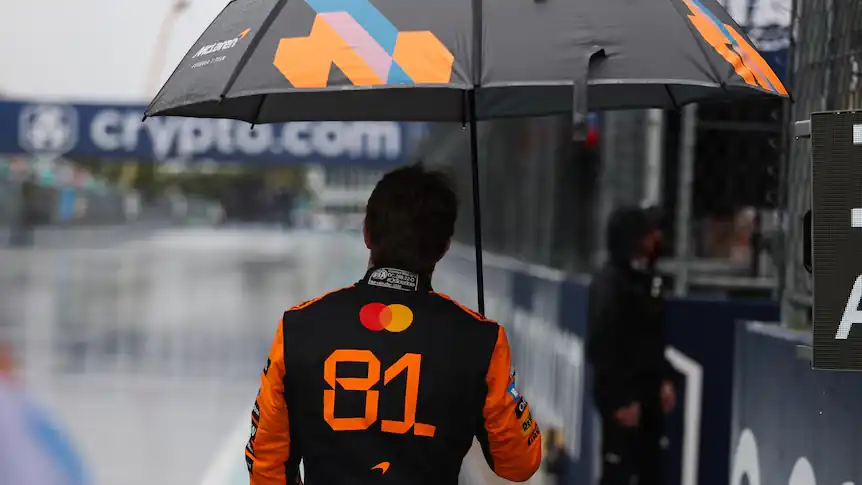

Formula 1’s Miami Grand Prix has taken an unexpected turn even before lights out, with race organisers moving the start time three hours earlier in response to an intensifying storm forecast over South Florida.
The race will now begin at 3am Monday AEST, replacing the earlier scheduled 6am AEST start. The adjustment is aimed at giving officials a better chance to run the race before severe weather, including heavy rain and thunderstorms, arrives later in the day.
This is not a minor scheduling tweak. Weather models have pointed to a high probability of torrential rain and lightning risk near the original race window. In the United States, sporting events must be paused if lightning is detected close to the venue, making it necessary for Formula 1 to act early rather than risk a delayed or incomplete race.
According to Formula 1 authorities, the revised timing has been chosen to reduce disruption while prioritising safety for drivers, teams, track personnel and spectators. Fans can track official updates through Formula 1’s official platform, which continues to monitor race conditions closely.
For viewers, the earlier start simply means adjusting their schedules. But for teams, it changes the entire race dynamic. Wet weather racing demands a different mindset — braking distances increase, tyre wear becomes unpredictable, and visibility can drop dramatically within seconds.
Miami, in particular, is known for sudden and intense rain bursts. When showers hit, the track can quickly develop standing water, turning high-speed corners into potential risk zones. The opening laps will be critical, with drivers needing to assess grip levels while avoiding costly errors.
Lando Norris has already acknowledged the challenge ahead, describing the situation as being “thrown in at the deep end.” With limited real-race experience in wet conditions using the current generation of cars, even experienced drivers may need to adapt quickly.
Oscar Piastri, who starts seventh on the grid, faces a similar test. The Australian showed strong pace in the sprint race, finishing second behind Norris, as McLaren briefly disrupted the competitive order. However, rain can level the field, making race execution far more important than outright speed.
In wet conditions, strategy often becomes the deciding factor. Teams must carefully time pit stops, react to changing track conditions and decide when to switch between intermediate and full wet tyres. A single well-timed decision can move a driver from midfield into podium contention.
The power delivery of modern F1 cars also becomes a key variable in the rain. Managing traction out of corners requires precision, as too much throttle can lead to wheelspin, while conservative driving can cost valuable lap time. Teams will rely heavily on data and driver feedback to strike the right balance.
Read More
The earlier race start is intended to avoid the worst of the storm, which is currently forecast to intensify around 5am AEST. Still, there is no guarantee of dry conditions. Even lighter rain could reshape the race, while heavier downpours may lead to safety cars, red flags or interruptions.
For fans in Australia and other regions, the timing change may be inconvenient, but it increases the likelihood of seeing a complete race rather than one affected by repeated stoppages. In recent seasons, Formula 1 has faced multiple disruptions, making proactive decisions like this increasingly important.
The Miami situation also reflects a broader trend. Alongside earlier calendar disruptions linked to geopolitical tensions, the sport is now regularly dealing with environmental unpredictability. Managing these factors has become as crucial as car performance and race strategy.
Formula 1’s global nature means it must adapt quickly to changing conditions across continents. From desert heat to tropical storms, each venue presents unique challenges. Miami’s revised schedule is another example of how the sport is evolving to maintain safety without compromising competition.
From a racing perspective, the uncertainty adds excitement. Drivers who remain composed under pressure often gain an advantage, while those who push beyond the limit risk losing positions or retiring altogether. Wet races have historically produced unexpected results, and Miami could follow that pattern.
As the grid prepares under unpredictable skies, the focus will be on adaptability. The outcome may depend less on outright speed and more on decision-making, timing and control. That is what makes races like this stand out — they test every aspect of Formula 1, not just engineering excellence.
For more detailed race insights and breaking updates, readers can explore ongoing coverage at Swikblog, where Formula 1 developments and analysis continue to be tracked closely.
With conditions still uncertain, the Miami Grand Prix now carries a different kind of anticipation. Whether the race runs smoothly or turns into a strategic battle against the weather, it promises to be one of the most closely watched events of the season.

Make Swikblog your go-to source on Google for reliable updates, smart insights, and daily trends.