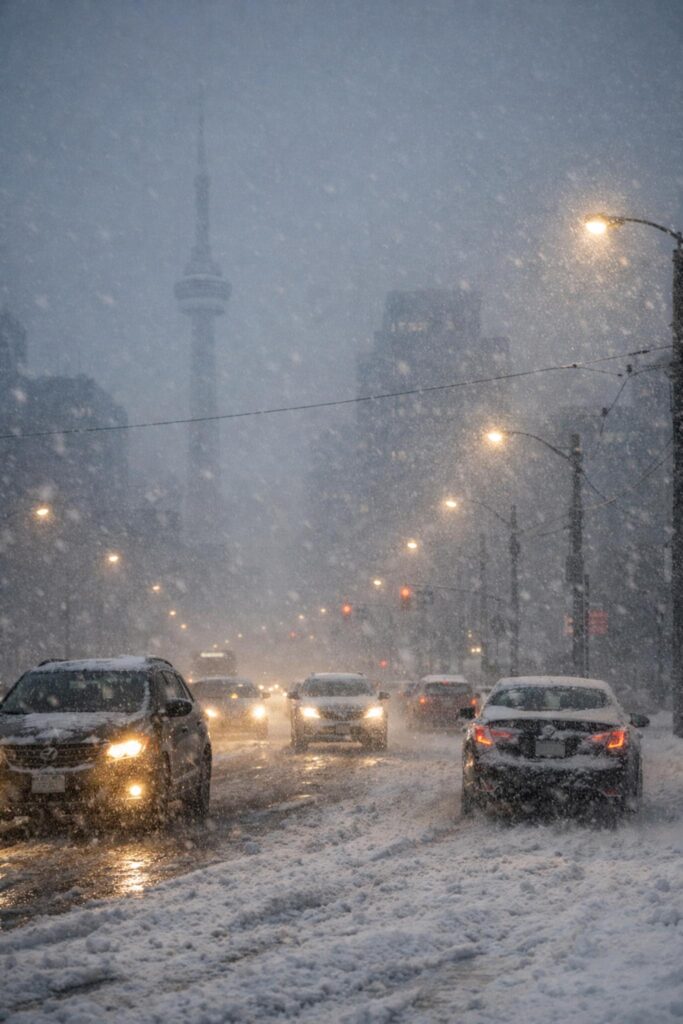

A fast-moving Toronto snowstorm is triggering a familiar winter chain reaction across Ontario: school boards are closing buildings, airlines are trimming schedules, and travellers are refreshing departure boards hoping their flight holds. With heavy snowfall and blowing snow reducing visibility on key routes, the practical question for families this evening is simple — what’s actually open tomorrow, and what should you plan for if you have to move around the region?
The most immediate impact is on education. Across the Greater Toronto Area and neighbouring communities, several boards and campuses typically shift to closures when road conditions deteriorate and school buses are pulled off the roads. If you’re a parent, the safest approach is to treat the morning commute as uncertain until your local board confirms status, because decisions can change overnight as snow totals and plowing progress become clearer.
Air travel is also taking a hit, especially for passengers moving through Toronto Pearson International Airport and other busy Ontario hubs. When snowfall intensifies, the ripple effect can be immediate: runway clearing slows departure rates, de-icing adds time at the gate, and even “on time” flights can become vulnerable if crews or inbound aircraft are delayed elsewhere. If you’re flying, it’s smart to assume disruption is possible even if your itinerary looks fine right now.
What to check before you leave the house
- Your school board alerts for closures, remote learning instructions, and bus cancellations.
- Airline apps for rebooking options, gate changes, and updated departure times.
- Airport status pages for operational notes and advisories.
- Local public transit alerts for slowdowns and route diversions.
- Current weather warnings and snowfall forecasts for your exact neighbourhood.
For weather verification, the quickest authoritative reference is the official Ontario alerts and warnings stream from Environment and Climate Change Canada. It’s the clearest place to confirm whether you’re under a snowfall warning, blowing snow warning, or a broader winter storm statement as conditions evolve. Check Ontario weather warnings here.
On roads, the pattern tends to be uneven. Main corridors may improve quickly once plows complete multiple passes, but residential streets can stay slick, rutted, and narrow for longer — which is often why schools and buses pause operations even when snowfall looks “manageable” on paper. If you must drive, plan extra time, keep your fuel tank above half, and leave more space than usual between vehicles, especially near highway ramps where blowing snow and black ice can catch drivers off guard.
If you’re travelling, treat your trip like a sequence you can simplify. Pack essentials in your carry-on, download boarding passes early, and consider moving to an earlier flight if airline change-fees are waived. It’s also worth notifying anyone picking you up that curbside timing can be unpredictable during heavy snowfall — not because the airport is “closed,” but because vehicle flow and de-icing queues can change by the minute.
Ontario storms also hit routines beyond transport. Expect knock-on effects like delayed deliveries, reduced staffing in retail and healthcare offices, and slower emergency response times if roads are clogged. For families, the practical move is to treat the next 12–24 hours as a flexible window: confirm school notices early, avoid non-essential trips during peak accumulation, and keep plans easy to adjust.
We’ll keep this story framed around the essentials — what’s closed, what’s cancelled, and what Ontario residents need to know as the snow continues. For more weather and disruption updates published on Swikblog, visit Swikblog.
Note: Closures and cancellations can change quickly as forecasts update and crews clear roads and runways. Always confirm with your school board, airline, and local transit agency before leaving.

Make Swikblog your go-to source on Google for reliable updates, smart insights, and daily trends.