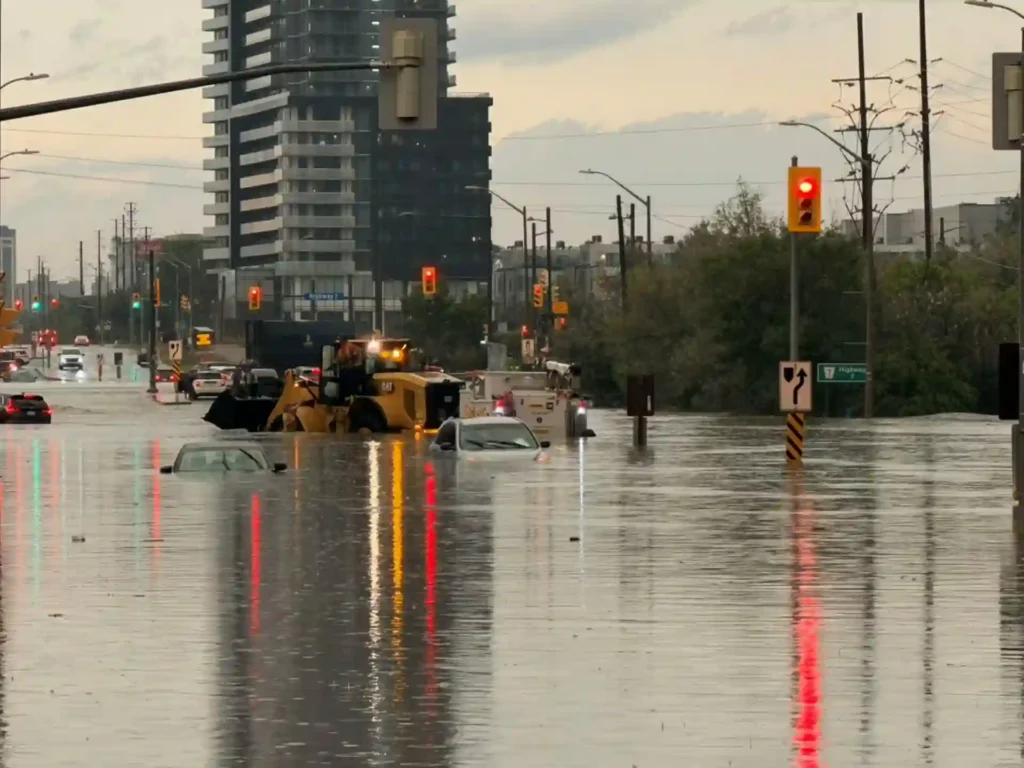

TORONTO — A powerful line of thunderstorms battered Toronto and the Greater Toronto Area on Wednesday, September 2, triggering flash flooding, stranding motorists and knocking out electricity to nearly 65,000 Toronto Hydro customers at the height of the storm.
Torrential rain, damaging winds and large hail hit southern Ontario, flooding the Don Valley Parkway and other roads. The disruption spread to public transit, Toronto Pearson airport, Michael Garron Hospital and Rogers Stadium.
Views from the aftermath of the storm in Toronto and other parts of the GTA 😳🌪️
— 6ixBuzzTV (@6ixbuzztv) September 2, 2026
Flying couches, falling trees and more! pic.twitter.com/VdJEiFfrh1
Nearly 65,000 Toronto Hydro customers lose power
Toronto Hydro reported nearly 65,000 customers without electricity as fallen trees, downed wires and storm damage affected the city’s power network. Restoration continued after the worst weather moved away.
The impact extended across southern Ontario, where Hydro One reported more than 155,000 customers without power at the height of the storms.
Toronto has experienced other significant electricity disruptions recently, including a Toronto power outage that affected more than 31,000 customers, although that incident occurred under different circumstances.
DVP flooding leaves vehicles stranded
The Don Valley Parkway was among the major routes affected as intense rainfall overwhelmed low-lying areas. Police warned motorists about dangerous conditions while water accumulated on roads across Toronto.
Flooding was also reported around parts of Yonge Street and other locations. Vehicles became stranded as conditions deteriorated during the evening commute.
Drivers should not attempt to cross flooded roads when the depth of the water is unknown. Flash flooding can turn a seemingly passable road into a dangerous area within minutes.
Motorists rescued from flooding in Vaughan
Severe flooding also developed around Jane Street and Highway 7 in Vaughan, north of Toronto. Reports indicated roughly 20 vehicles were caught in floodwater, with Vaughan Fire and Rescue Service assisting motorists.
Other roads across Vaughan were affected as the storm moved through the GTA, creating hazardous conditions for drivers.
More than 130 mm of rain reported in some areas
Rainfall totals varied significantly because the strongest thunderstorms were highly localized. Some locations received roughly 20 mm to more than 130 mm of rain, helping explain why serious flooding developed in certain areas while nearby neighbourhoods experienced less water.
Environment and Climate Change Canada issued severe thunderstorm warnings as the system crossed southern Ontario, warning of torrential rainfall, damaging winds and large hail.
Some warnings indicated that the strongest storms could produce wind gusts exceeding 100 km/h. Fallen trees and damaged utility lines contributed to widespread electricity outages.
Rogers Stadium suffers significant storm damage
Rogers Stadium, Toronto’s large outdoor concert venue, sustained what operator Live Nation Canada described as significant damage during the severe weather.
No injuries were reported at the venue. Elsewhere, a scheduled Salt-N-Pepa concert at RBC Amphitheatre was postponed, while the Canadian National Exhibition closed early because of the weather.
TTC, GO Transit and Pearson Airport disrupted
Flooding interrupted TTC Line 1 service between St. Clair West and St. George, while St. Patrick station was also affected. Storm conditions and debris caused additional transit problems.
GO Transit passengers experienced weather-related delays on several routes. Toronto Pearson International Airport also recorded delayed and cancelled flights as thunderstorms crossed the GTA.
Travellers should continue checking directly with their transit provider or airline because disruption can persist after severe weather has passed.
Ottawa Ice Storm Warning as Toronto Roads Flood Amid Severe Weather
Puffins Found Dead After Deadly Storms as Breeding Season Begins
Flooding reaches Michael Garron Hospital
Michael Garron Hospital in East York reported flooding inside its Stavro Emergency Department. Despite the water intrusion, the hospital said the emergency department remained open and operational.
Why Toronto flooded so quickly
Flash flooding can develop when rain falls faster than drainage systems and waterways can carry it away. Toronto’s extensive paved surfaces direct large volumes of runoff toward drains, underpasses and lower terrain.
The Don Valley Parkway follows the Don River valley, making parts of the route particularly vulnerable when intense rainfall rapidly increases runoff.
Similar conditions can become dangerous with little warning. A recent Grand Canyon flash flood prompted evacuations and emergency operations, reinforcing why authorities warn motorists not to enter rapidly rising water.
What Toronto residents need to know now
Cleanup and power restoration continued after the strongest thunderstorms moved away. Fallen trees, damaged utility equipment and localized flooding can remain hazardous even after weather warnings expire.
Residents should stay away from downed electrical wires and avoid floodwater around electrical equipment. Drivers should check road conditions, while transit passengers and airline travellers should confirm current service before leaving.
Attention across Toronto and surrounding GTA communities is now focused on restoring electricity, reopening transportation routes and assessing storm damage to homes, businesses and public infrastructure.

Make Swikblog your go-to source on Google for reliable updates, smart insights, and daily trends.