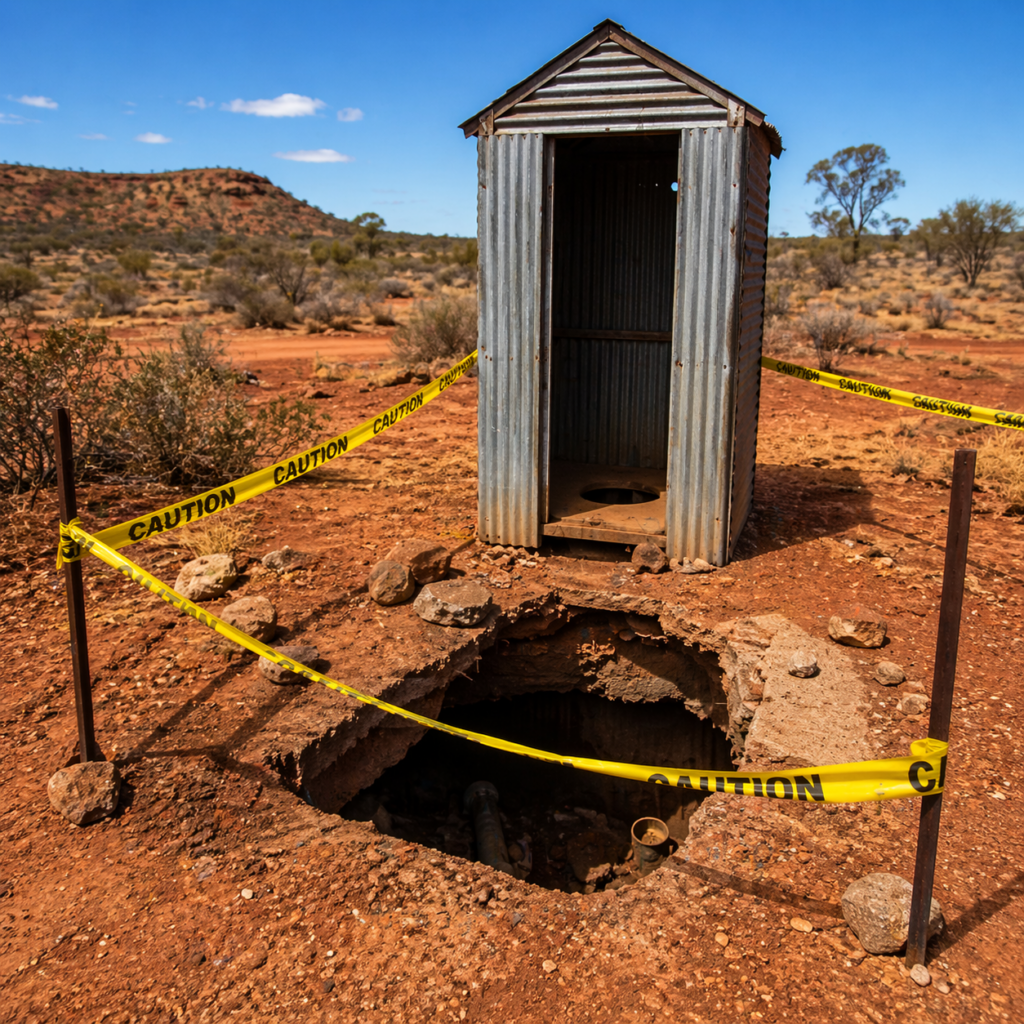

A family visit to one of Australia’s remote natural landmarks turned into a distressing rescue drama after a woman fell into a long-drop toilet pit when the structure collapsed beneath her. The incident happened at the Henbury Meteorites Conservation Zone, a rugged outback site south of Alice Springs in the Northern Territory, where basic facilities and limited phone reception can make even a small emergency difficult to manage.
The woman, who was travelling with her partner and two children from Canberra, had stopped at the conservation area during a road trip. She entered the public toilet on Sunday afternoon, but when the floor and toilet structure reportedly gave way, she dropped into the sewage pit below. Instead of a short bathroom break, she was left trapped waist-deep in waste for about three hours.
Long-drop toilets are common across remote parts of Australia because they do not require running water or modern plumbing. They are usually built over a deep pit that collects waste, with a seat or platform installed above it. In isolated tourism areas, they are often the only available facility for travellers, hikers and families passing through. But when the structure is old, poorly maintained or exposed to harsh weather, the risks can become serious.
How the outback toilet collapse unfolded
According to details reported from the scene, the woman fell roughly two metres into the pit after the toilet collapsed. The location’s remoteness made the situation more frightening. Mobile reception was not available at the site, forcing her partner to leave the area and drive along the highway in search of a signal or help.
During that time, the woman remained inside the pit, unable to climb out safely. A witness later described the conditions as extremely unpleasant, saying the hole contained human waste, urine and discarded nappies. The description explains why the incident has spread so quickly online, but behind the viral reaction was a genuinely dangerous situation involving structural failure, isolation and delayed rescue access.
Help eventually came when a passing tradesman stopped and assisted the family. He used a tow rope and his vehicle to help lift the woman from the pit. The rescue was not instant. Reports say the extraction took about 45 minutes, as the woman had to secure herself and be pulled out carefully from the confined space.
She was later taken to Alice Springs Hospital. While she reportedly avoided major injuries and suffered only minor cuts, the emotional impact of the ordeal was significant. Being trapped in a sewage pit for several hours in a remote area would be traumatic for anyone, especially while family members were left searching for help with no phone signal nearby.
Why the incident is now under investigation
NT WorkSafe has been notified of the incident and is investigating it as a dangerous structural collapse. The agency said early inquiries indicated the toilet fell into the sewage pit, causing the tourist to fall in as well. The toilet site was later cordoned off with caution tape while authorities examined what happened.
The case raises broader questions about how remote public facilities are inspected and maintained. Outback attractions often rely on simple infrastructure because they are far from towns, water systems and regular service crews. However, when these places are open to tourists, basic structures still need to be safe enough for public use.
The Henbury Meteorites Conservation Zone is known for its crater field and is visited by travellers interested in geology, road trips and remote landscapes. Its distance from Alice Springs means emergency response is not as immediate as it would be in a city or major town. That makes prevention especially important. A failing toilet floor, rusted support, weakened base or neglected structure can quickly become a serious hazard when help is far away.
For official safety context, NT WorkSafe oversees work health and safety matters in the Northern Territory, including dangerous incidents involving structural collapse. Its investigation will be important in determining whether the failure was caused by age, design, maintenance gaps or another factor.
This is not the first time a pit toilet has caused an emergency in Australia. In 2024, firefighters in Victoria were called to rescue a man who became stuck in a long-drop toilet at night. Another earlier case involved a woman who was seriously injured after falling into a pit toilet in Queensland. These incidents are unusual, but they show why remote toilet facilities need regular checks, especially in places used by the public.
The story has gained global attention because of its shocking details, but it also highlights a practical travel warning. Visitors heading into the Australian outback should expect limited phone coverage, long distances between services and basic amenities. Carrying water, keeping a first-aid kit, checking reception points and travelling with others can make a major difference when something goes wrong.
At the same time, responsibility cannot fall only on travellers. Public tourism sites need clear maintenance schedules, visible hazard reporting and fast action when infrastructure begins to deteriorate. Toilets, shelters, viewing platforms and walking tracks may look simple, but in remote areas they are part of the safety network visitors depend on.
For more global travel safety and unusual incident coverage, readers can visit Swikblog.
The woman’s escape without serious injury was fortunate. The outcome could have been far worse if she had been injured in the fall, submerged deeper in the pit, travelling alone or unable to attract help. As the investigation continues, the incident is likely to put renewed pressure on authorities and site managers to review the condition of remote facilities before another routine stop turns into an emergency.
You may like: NSW petrol stations fined over price mismatch crackdown explained

Make Swikblog your go-to source on Google for reliable updates, smart insights, and daily trends.