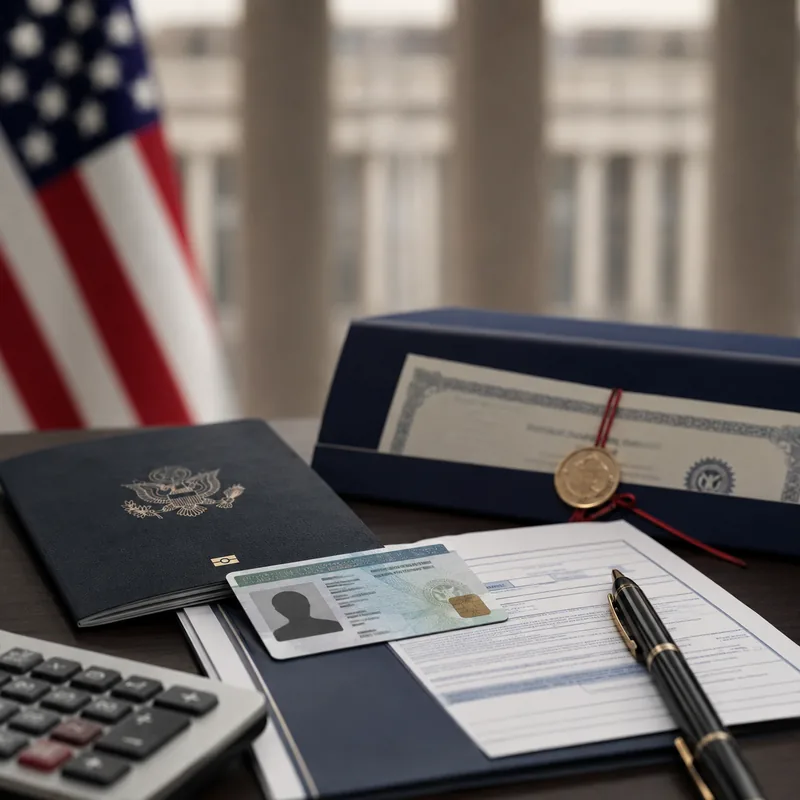

The Trump administration is considering a proposal that could require some green-card applicants completing immigrant-visa processing outside the United States to post a bond of about $100,000.
The plan is not yet in effect. No start date, country list, covered visa categories or payment instructions have been announced.
Who could be affected?
The proposal is aimed at selected applicants attending immigrant-visa interviews at U.S. embassies or consulates abroad. It would not automatically apply to everyone seeking lawful permanent residence.
A bond could be requested when an applicant meets other visa requirements but has not overcome concerns that they may become a public charge.
There is no confirmation that the measure would apply to people filing Form I-485 from inside the United States.
What has the government confirmed?
State Department spokesperson Tommy Pigott said officials are working with the Department of Homeland Security on procedures linked to existing public-charge law.
The Immigration and Nationality Act already allows public-charge bonds in certain cases, but the government has not explained how a bond of this size would be calculated or applied.
Would the bond be refundable?
The payment would be a financial guarantee rather than a normal filing fee. An applicant or qualifying relative could potentially provide the money.
One option under discussion would return the bond after the permanent resident becomes a U.S. citizen. Most permanent residents become eligible for naturalization after five years, while some spouses of U.S. citizens may qualify after three years.
Officials have not published final refund rules, accepted payment methods, interest terms or forfeiture conditions.
How does the public-charge review work?
Immigration officers may consider age, health, household finances, assets, education, employment prospects, family circumstances and expected medical costs.
Many family-sponsored immigrants already submit Form I-864, an Affidavit of Support. The State Department’s official Form I-864 guidance explains how sponsor responsibility works.
Applicants can also review how the 2026 public-charge policy may affect SNAP, Medicaid and housing assistance.
How is it different from existing fees?
The proposed bond would be separate from standard USCIS and State Department charges.
A different proposal could raise the U.S. naturalization application fee to as much as $1,330, but that possible increase is unrelated to the green-card bond.
How does it compare with visitor visa bonds?
The United States already uses refundable bonds of up to $15,000 for some B-1/B-2 visitor visa applicants from designated countries.
Those bonds focus on temporary-visa compliance. The proposed $100,000 bond would instead involve immigrant visas leading to permanent residence.
What should applicants do now?
Applicants should continue following instructions from USCIS, the National Visa Center and the embassy or consulate handling their case.
No one should send a $100,000 payment unless the U.S. government formally launches the policy and provides official instructions.
Until then, the bond remains a proposal rather than a current green-card requirement.

Make Swikblog your go-to source on Google for reliable updates, smart insights, and daily trends.