
The pressure surrounding Washington’s shutdown fight intensified late Thursday and into Friday as President Donald Trump said he would sign an order to pay Transportation Security Administration agents while senators worked through the night to stop the Department of Homeland Security crisis from getting worse. After 42 days of deadlock, the airport disruptions, missed paychecks and political brinkmanship have turned a funding dispute into one of the most visible shutdown flashpoints in the country.
Trump said the order would direct Homeland Security to immediately pay TSA agents, a move aimed at easing what he described as growing chaos at US airports. The administration is expected to draw the money from funds tied to Trump’s 2025 tax bill, a workaround that avoids waiting for Congress to approve a standalone rescue measure for the agency’s frontline staff.
Trump’s TSA pay move changes the pressure point
The president’s decision lands at a critical moment. TSA officers have continued working during the shutdown without regular pay, but the strain has been building for weeks. The longer the stalemate has dragged on, the more visible the fallout has become for travelers standing in long security lines and for workers struggling to cover bills.
By stepping in directly, Trump is trying to show immediate action on the most publicly painful part of the shutdown. The White House had reportedly considered more dramatic emergency powers, but the current plan instead uses already available funds to restore pay for TSA personnel. That may deliver short-term relief at checkpoints, but it does not solve the wider Department of Homeland Security funding fight that remains stuck in the Senate.
The legal and political debate around the move is likely to continue. Using executive authority and repurposed funding to bypass the usual appropriations route will invite scrutiny, particularly because lawmakers are still actively negotiating the department’s future budget. Even so, the administration appears to be betting that the practical urgency of paying TSA workers outweighs the immediate risk of a prolonged legal challenge.
Why airports became the center of the shutdown crisis
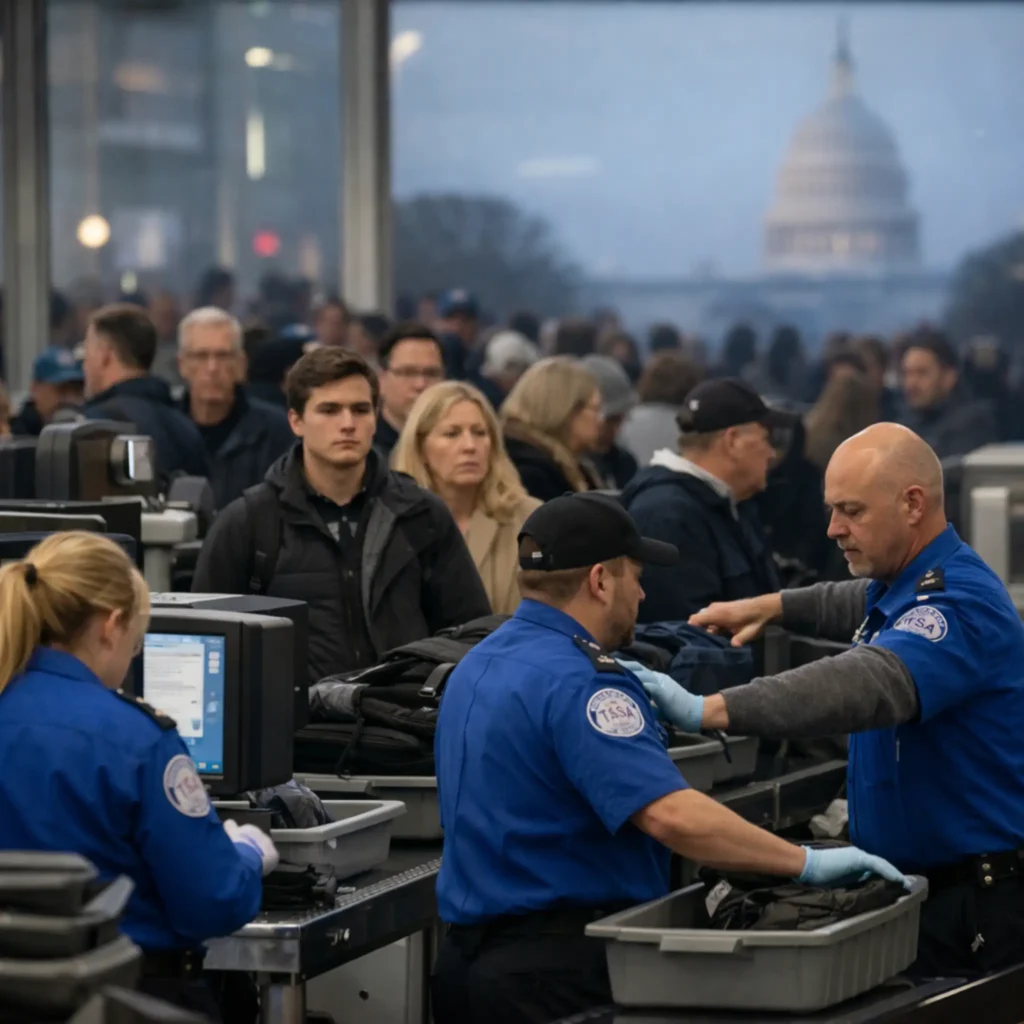
The shutdown’s most visible impact has been at airports, where staffing shortages have steadily worsened. As workers missed paychecks, callout rates climbed and some officers left the agency entirely. The result has been a travel system under obvious strain, with delays spreading across major hubs and warnings that some facilities could face even deeper operational trouble if the standoff continued.
According to the latest reporting, more than 11% of TSA employees scheduled nationwide missed work on Wednesday, amounting to roughly 3,120 callouts. At several airports, callout rates topped 40%, and nearly 500 of the TSA’s almost 50,000 transportation security officers have quit during the shutdown. Those numbers help explain why what began as a Washington budget dispute has become a nationwide travel problem.
Travelers have already started feeling the consequences in real time. In Houston, one passenger told reporters she waited more than 2 and a half hours and still had not reached the security checkpoint in time to make her flight. Stories like that have amplified the political stakes, especially with lawmakers facing public anger over delays that are no longer abstract or confined to Capitol Hill talking points.
Senate talks run overnight as both parties dig in
While Trump moved on TSA pay, senators continued overnight negotiations on a package that would fund as much of the rest of Homeland Security as possible, including agencies such as the Federal Emergency Management Agency and the Coast Guard. That effort reflects an acknowledgment in both parties that the broader shutdown is becoming harder to defend as its effects spread.
Still, the core disagreement has not disappeared. Democrats have demanded restrictions tied to the Trump administration’s immigration enforcement operations before they agree to fully fund parts of Homeland Security connected to those activities. Republicans have resisted linking the funding package to those policy concessions, arguing that the immediate priority should be reopening and stabilizing the department.
That split has kept negotiators locked in a familiar cycle: visible urgency on airport operations, but no easy path to a full bipartisan compromise. Trump’s TSA pay order may remove the most immediate public pressure from airport lines, yet it also risks reducing the incentive for Congress to rush a final agreement unless senators believe the broader political cost of failure is still climbing.
Financial hardship for workers remains central to the story
Beyond the politics, the shutdown has created deep financial pain for federal workers expected to stay on the job. TSA agents have become the most prominent example because they are both essential and highly visible, but the wider department has also been caught in the same budget freeze. Union leaders welcomed the prospect of pay for TSA workers, while also warning that Congress still needs to pass a complete deal that keeps the full department functioning.
That distinction matters. Paying TSA officers may calm one part of the crisis, but it does not erase the stress that has accumulated over six weeks of uncertainty. For many workers, the missed pay periods have translated into delayed rent payments, growing debt pressure and a sense that Washington only acts once the public disruption becomes impossible to ignore.
For readers tracking the political and policy angle, the Associated Press report offers a detailed account of the overnight Senate negotiations and the scale of the airport disruption via AP’s latest coverage. Broader developments in the shutdown fight, including Senate vote setbacks and the White House response, can also be followed through CBS News live reporting.
A temporary fix, not a final ending
Trump’s move gives the White House a powerful headline: TSA workers will be paid even as Congress remains deadlocked. But the bigger story is that the shutdown itself is still not resolved. The Department of Homeland Security cannot run indefinitely on piecemeal fixes, especially with airport operations already strained and lawmakers staring at a politically dangerous impasse.
For now, the order may ease the immediate crisis at security checkpoints and spare TSA workers from another unpaid stretch. Yet the fact that senators were still negotiating overnight says everything about the unfinished nature of the fight. Washington may be close to an endgame, but until a full funding deal is signed, this remains a shutdown story defined by emergency patches, hardening partisan lines and a travel system that has already absorbed weeks of damage.
Add your related internal links here in WordPress box format, such as shutdown coverage, airport disruption stories, or wider US politics updates.

Make Swikblog your go-to source on Google for reliable updates, smart insights, and daily trends.