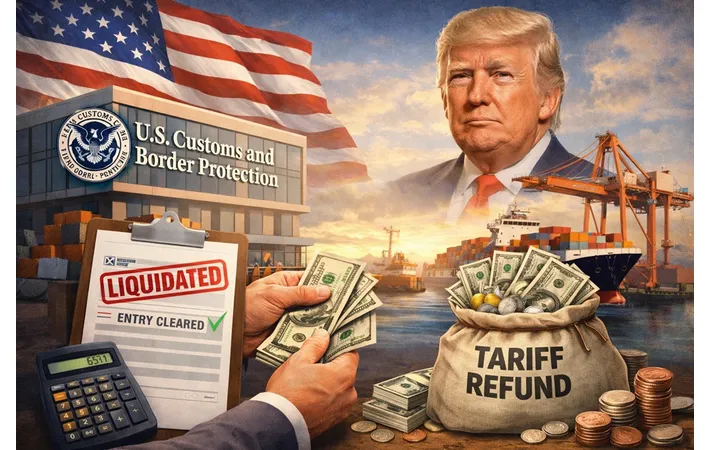

Trump tariff refunds are now moving from courtroom dispute to real payments, with billions of dollars set to flow back to US importers that paid duties later ruled invalid. The first wave of refunds is being handled through a new Customs and Border Protection system called CAPE, short for Consolidated Administration and Processing of Entries.
The program matters because the money involved is unusually large. Federal officials are processing refunds tied to tariffs imposed under the International Emergency Economic Powers Act, after the Supreme Court ruled that those duties exceeded the authority available under the law. The refund pool could eventually reach about $166 billion, covering hundreds of thousands of importers and millions of shipments.
According to recent reporting from USA TODAY, Customs officials have already finalized more than $35 billion in refunds and interest connected to millions of shipments affected by the overturned tariffs.
For companies, this is a major cash-flow event. For consumers, the answer is less direct. Shoppers who paid higher prices during the tariff period will not receive checks from the government, even if those costs were passed through at the register.
Who gets paid under the tariff refund system
The money goes first to the importer of record — the business officially listed on customs documents for the goods that entered the United States. Customs brokers acting on behalf of those importers can also submit refund declarations where they have proper authorization.
That means retailers, manufacturers, distributors and logistics customers that paid the invalidated duties may be eligible. Large import-heavy companies such as Walmart, Target, Nike, Home Depot and other consumer-goods businesses are expected to be among the firms reviewing or pursuing refunds because of the scale of goods they bring into the country.
The new CAPE system was created to avoid processing refunds one shipment at a time. Instead, eligible entries can be consolidated, recalculated and paid in a more streamlined way. Customs officials remove the invalid tariff charge from qualifying records, calculate the corrected duty amount and then issue the refund with applicable interest.
The first phase does not cover every possible claim. Some entries may be excluded until later phases, especially where shipments are not finalized, involve complex reconciliation issues or require additional documentation. For straightforward claims that are accepted, businesses have been told to expect payment in roughly 60 to 90 days, though more complicated files may take longer.
The refund rollout comes at a time when investors are already closely watching trade-sensitive sectors and retail stocks. Recent market volatility tied to tariffs and global demand has also influenced broader Nasdaq and ETF performance, including movements tracked in major technology-focused indexes and growth stocks.
Consumers should not expect direct refunds
The biggest question for households is simple: if tariffs pushed prices higher, will consumers get money back? The answer is no, at least not directly. The refund system is designed for importers that paid duties to the federal government, not for shoppers who bought shoes, electronics, furniture, clothing or household goods at higher prices.
Consumers may still benefit indirectly, but that depends on individual companies. Some firms could use refunds to lower prices, offer promotions or add customer value. Others may use the money to repair profit margins after absorbing tariff costs, paying suppliers, managing inventory or dealing with weaker demand.
That is why broad price cuts are unlikely to appear quickly across store shelves. Tariffs became part of a wider cost structure that also included shipping, wages, currency moves, supplier contracts and inventory timing. Even when a company receives a refund, the original products may have already been sold months ago.
Retailers also face another challenge: trade policy remains unsettled. Although the invalidated IEEPA duties are being refunded, new or temporary tariffs under different trade authorities could still affect future imports. Businesses may be cautious about cutting prices today if they expect new costs later in the year.
For shoppers, the most realistic impact may show up gradually. Certain companies could become more aggressive with discounts. Some logistics customers may receive reimbursements if a carrier or broker paid duties on their behalf. Membership retailers may return value through pricing, rewards or lower fees rather than direct refund checks.
The refund rollout also creates a fairness debate. If a business passed tariff costs to customers but later receives money back from the government, should it share that refund? There is no automatic national rule requiring companies to do so in most consumer transactions. That leaves the outcome largely in the hands of corporate pricing decisions, customer contracts and competitive pressure.
For small and mid-sized importers, the refunds may be more urgent. Many smaller firms had less ability to absorb sudden tariff costs and may use repayments to cover debt, rebuild inventory or stabilize operations. That could help keep some products available and prevent further price increases in niche categories.
The CAPE system is therefore more than a technical customs update. It is a major reversal of tariff collections that affected supply chains, retailers and consumers across the country. Businesses that qualify may see meaningful cash returned, but households should treat the refund news with caution: the money is going to importers first, and any consumer benefit will depend on how companies choose to respond.
For now, the clearest winners are eligible importers with clean documentation and finalized customs entries. Consumers may see some indirect relief later, but immediate refund checks or sweeping price drops are not part of the current program.

Make Swikblog your go-to source on Google for reliable updates, smart insights, and daily trends.