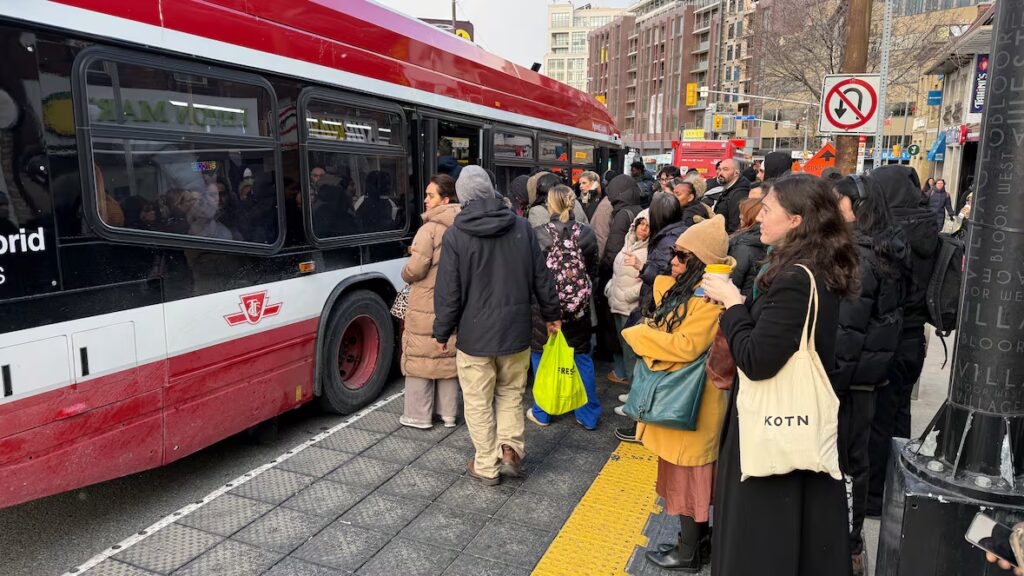

Toronto’s morning commute was disrupted on Tuesday after a hydraulic oil spill forced the shutdown of a key western section of the TTC’s Line 2 Bloor-Danforth subway, stranding commuters and triggering shuttle bus replacements during peak rush hour.
The Toronto Transit Commission (TTC) confirmed that service was suspended between Jane and Islington stations following the spill, which occurred near Old Mill station around 2:45 a.m. Crews continued working through the morning to clean the affected tracks, with no immediate timeline for full service restoration.
Earlier in the morning, disruptions also extended between Kipling and Islington, as well as Jane and Keele, before partial service resumed. Despite that, shuttle buses continued operating between Keele and Kipling to manage passenger volume as thousands of commuters sought alternative routes.
The incident quickly gained attention as it unfolded during one of the busiest travel windows of the day. To ease congestion, the TTC allowed riders to use their fare on GO Transit services at Dundas West, Kipling, Bloor, Union and Mimico stations — a contingency measure typically reserved for major service failures.
Cleanup underway as cause remains unclear
The spill originated from a maintenance vehicle, though the TTC said it remains unclear how much hydraulic oil leaked onto the tracks. Spokesperson Stuart Green described the cleanup as labour-intensive, with crews working manually to remove the oil, underscoring the complexity of restoring safe operations.
“No two delays are ever alike,” Green said, adding that the agency does not expect the disruption to extend into the afternoon rush, although the situation remains fluid.
Stations were closed in part because some sections of the line do not allow trains to turn back, forcing a wider shutdown as a precaution. The disruption covered approximately 6.75 kilometres of track, amplifying its impact across Toronto’s transit network.
Recurring issue raises pressure on TTC
TTC chief executive Mandeep Lali apologised to riders and announced an immediate review into the incident, promising corrective action once the root cause is identified. “The goal is simple: this must not happen again,” he said in a statement.
The latest disruption comes amid a series of similar incidents in recent years. A 2024 report attributed a spike in fuel and oil spills largely to aging and faulty equipment, raising ongoing concerns about system reliability and maintenance standards.
For commuters, Tuesday’s shutdown was more than a routine delay. It highlighted how a single mechanical issue can cascade into widespread disruption, particularly on Line 2 — one of the city’s busiest subway routes. The repeated nature of such incidents is likely to intensify scrutiny over the TTC’s infrastructure and its ability to prevent future breakdowns.
More information and service updates are available on the Toronto Transit Commission’s official website.
As crews continued their cleanup, the disruption served as a reminder of the fragility of critical transit systems — and the growing expectation that such failures should be the exception, not the norm.
You may like Stanford tops the 2026 law school rankings as Yale slips.

Make Swikblog your go-to source on Google for reliable updates, smart insights, and daily trends.