
Last Updated: July 11, 2026
Typhoon Bavi is now approaching China’s eastern coast after brushing past northern Taiwan and battering Japan’s southern Sakishima island chain, prompting one of the region’s largest storm evacuations of the year. More than 600,000 people have been moved to safety across eastern China as authorities prepare for landfall near the major coastal city of Wenzhou early Sunday.
Although Bavi has weakened slightly while moving over cooler waters, meteorologists warn the storm remains extremely dangerous because of the enormous amount of moisture packed into its circulation. Forecasters say the typhoon’s rain bands stretch across an area roughly the size of France, raising the risk of flooding, landslides and storm surge well away from the storm’s centre.
Chinese authorities have evacuated more than 600,000 residents across Zhejiang and Fujian provinces ahead of Typhoon Bavi’s expected landfall near Wenzhou early Sunday. Taiwan escaped a direct hit but cancelled more than 1,200 flights, while the Philippines has reported 17 deaths linked to heavy monsoon rains intensified by the storm.
China’s National Meteorological Centre expects Bavi to come ashore around Wenzhou, a city of about 10 million people in Zhejiang province, during the early hours of Sunday. Officials have ordered widespread evacuations and suspended many outdoor activities as coastal communities prepare for powerful winds, torrential rainfall and dangerous sea conditions. Residents can continue monitoring official forecasts through the Taiwan Central Weather Administration.
More than 600,000 evacuated across eastern China
State media reported that over 500,000 residents were evacuated from Zhejiang province alone, while more than 100,000 people were moved to safety in neighbouring Fujian province. Emergency shelters have opened, fishing boats have returned to port and transport operators are closely monitoring conditions as the storm approaches.
In Wenzhou, supermarkets and traditional markets saw residents making final preparations before conditions deteriorated. Local resident Huang Xinghuan said his family had stored enough drinking water and daily essentials for several days but believed government preparations had reduced the need for panic buying.
Farmers across coastal Zhejiang also rushed to protect crops before the strongest winds arrived, moving rice seedlings and securing agricultural equipment in an effort to reduce storm damage.
Taiwan avoids direct landfall but faces major disruption
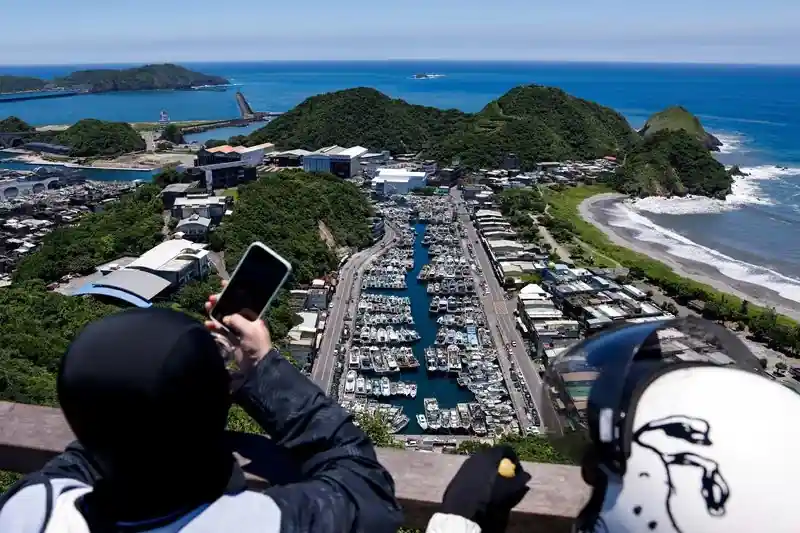
Taiwan avoided a direct strike after Bavi passed just north of the island, but authorities still treated the storm as a major emergency because forecasts showed some mountain areas could receive close to one metre of rainfall.
More than 14,000 residents, mainly from mountainous communities vulnerable to landslides, were evacuated before the storm’s closest approach. The government declared widespread typhoon holidays across most cities and counties, closing schools and public offices.
Travel was heavily disrupted. Officials cancelled 920 international flights and 282 domestic flights, effectively shutting down operations at Taiwan Taoyuan International Airport. The island’s high-speed rail network continued running with reduced services to maintain essential travel.
Taiwan’s fire department reported 87 injuries, most involving motorcycle and bicycle accidents, falls and people struck by debris during strong winds. Fortunately, authorities reported no storm-related deaths on the island.
In Taipei’s Beitou district, gusts approaching 100 km/h toppled trees and caused rivers to swell, while much of central Taipei experienced strong winds and steady rain without widespread structural damage.
Japan and the Philippines also affected
Before turning toward China, Bavi lashed Japan’s southern Sakishima island chain with heavy rain and damaging winds, disrupting flights and prompting weather warnings across Okinawa Prefecture.
While Japan and Taiwan have so far avoided fatalities directly linked to the typhoon, the broader weather system has had deadly consequences elsewhere. In the Philippines, officials said at least 17 people died after heavy southwest monsoon rains, intensified by Bavi, triggered flooding in several regions.
Why Bavi remains dangerous despite weakening
Although maximum sustained winds have eased since the storm reached peak intensity over the western Pacific, meteorologists stress that rainfall—not wind—now represents the greatest threat.
Large tropical cyclones often continue producing destructive weather after weakening because they retain enormous quantities of tropical moisture. Bavi’s expansive rain bands are expected to bring prolonged heavy rainfall across eastern China, increasing the risk of flash flooding, overflowing rivers and landslides in mountainous terrain.
Emergency agencies are urging residents across Zhejiang, Fujian and nearby provinces to remain indoors during the storm, avoid unnecessary travel and closely follow evacuation orders and official weather updates. Recent extreme weather has also highlighted the growing impact of severe storms, including the rare May snowstorm that triggered weather alerts across Victoria and New South Wales.
The coming hours will determine exactly where Bavi makes landfall, but authorities warn that its enormous size means dangerous weather will extend hundreds of kilometres from the centre. Even communities away from the coastline could experience severe flooding and prolonged disruption through the weekend.
Read More:
- Rare May snowstorm triggers weather alerts across Victoria and New South Wales
- K2 Airways cargo plane reported missing near Karachi
- 730-pound great white shark Bella spotted in the Gulf of St. Lawrence
- Visit the Swikblog homepage for more latest news
Residents are advised to secure outdoor property, avoid coastal areas, prepare emergency supplies and continue monitoring updates from local meteorological agencies as Bavi moves inland. Authorities say the combination of saturated ground, prolonged rainfall and strong winds could continue creating hazardous conditions well after the storm makes landfall. Travellers should also check airline advisories before departing, as cancellations and delays may continue across eastern China, Taiwan and Japan.

Make Swikblog your go-to source on Google for reliable updates, smart insights, and daily trends.