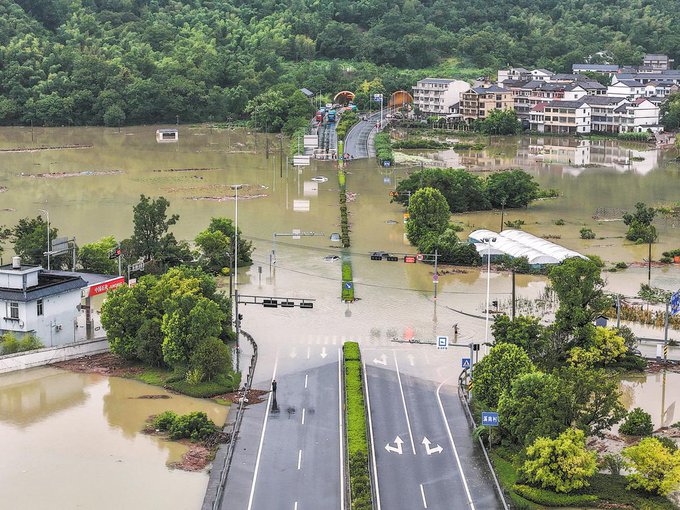

Typhoon Dolphin’s impact has moved deeper into China after the storm struck Zhejiang province, flooded parts of Shanghai and forced more than one million people to move to safer areas. By Tuesday, August 11, Dolphin had weakened from a typhoon, but its moisture was still producing dangerous rainfall across central China while Beijing prepared for another period of intense downpours.
Dolphin made landfall in Zhejiang on Sunday evening with winds of about 151km/h before weakening over land. The main threat has since shifted from destructive coastal winds to flooding, flash floods and landslides along the storm’s inland path.
Beijing’s meteorological service forecast more than 150mm of rain in some areas within 24 hours, prompting heightened flood precautions in several outer districts. Mountainous areas face particular concern because heavy rain can rapidly raise rivers and destabilise saturated slopes.
Shanghai flights and transport hit by heavy rain
Travel disruption continued after Dolphin moved inland. Shanghai’s Hongqiao and Pudong airports cancelled more than 900 flights during the latest major round of disruption, roughly 40% of expected services, after about 1,300 flights had been cancelled the previous day.
Some Shanghai metro services were suspended, while China Railway Chengdu Group halted 115 trains. Flooded streets and difficult travel conditions added to disruption across the region.
Shanghai avoided a direct strike from Dolphin’s centre but received exceptional rainfall from the storm’s broad circulation. More than 215,000 people had been moved from areas considered vulnerable before the worst conditions arrived.
In Zhejiang, authorities responded to flooding in several communities, including Yueqing, where emergency teams searched for people trapped in flooded homes.
Wenzhou relocated more than 900,000 people and opened more than 1,500 emergency shelters. Evacuation figures reported by different cities and provinces were released at different stages of the emergency, but overall reporting showed that more than one million people were moved to safety across eastern China.
Hangzhou temporarily closed West Lake scenic areas, parks, temples and museums as a precaution during the severe weather.
Dolphin moves into Hubei as flood risk spreads inland
By Tuesday, Dolphin had moved into Hubei province, shifting the centre of concern towards inland rainfall. China’s National Meteorological Center maintained an orange alert for heavy rain, with parts of north-western Hubei forecast to receive as much as 250mm within 24 hours.
Flood and landslide warnings were issued for several cities, while tourist attractions across Hubei temporarily closed. The Three Gorges Dam tourist area in Yichang was among the affected sites, and a number of highway and waterway construction projects considered high-risk were suspended.
Neighbouring Henan province also issued a flash-flood warning as Dolphin continued to carry tropical moisture northward.
The situation reflects a familiar danger during prolonged rain events in China. Earlier deadly flooding caused by heavy rain in China showed how quickly swollen waterways and submerged roads can become hazardous, particularly when currents hide damaged surfaces or debris.
China’s official Typhoon Dolphin red-alert notice warned before landfall that the system could produce prolonged heavy rainfall across a wide area and create elevated risks of mountain torrents, urban flooding and other secondary disasters.
Once a tropical cyclone moves inland, wind speeds normally weaken because the system loses access to warm ocean water. Heavy rain can continue much longer, however, especially when the remaining circulation keeps drawing moisture across already saturated regions.
Philippines faces deadly monsoon flooding
Dolphin did not directly strike the Philippines, but its circulation intensified seasonal monsoon rainfall across northern Luzon.
A landslide in the mountain city of Baguio buried homes after days of rain. Updated reporting said 10 people were killed in the landslide, while flooding and other rain-related incidents affected communities across the region.
More than one million people were affected by the prolonged monsoon rains and floods, with about 98,000 displaced from their homes.
Before reaching China, Dolphin also affected northern Taiwan and Japan’s Okinawa islands, bringing heavy rain, flight cancellations and other transport disruption.
The regional disruption followed Typhoon Bavi’s earlier threat to Taiwan and China, another western Pacific system that raised concerns over strong winds, coastal conditions and heavy rainfall.
Read More
Centenares de vuelos cancelados por la tormenta tropical Dolphin en el este de China https://t.co/iBKCU05RxQ https://t.co/U2ix9YqAkd
— Noticias Perú 🇵🇪 (@peruenlanoticia) August 11, 2026
Beijing prepares for the next phase of Dolphin’s rainfall
Attention has now shifted farther north as Dolphin’s remaining circulation carries moisture towards Beijing and surrounding areas.
Parts of the capital could receive more than 150mm of rain within a day, a substantial total for Beijing. Emergency flood measures have been activated in some outer districts, with residents in mountainous areas advised to limit unnecessary travel and stay away from rivers and steep terrain during the heaviest rain.
The storm has travelled thousands of kilometres across the western Pacific and China, but its weakening winds do not mean the emergency is over. Flooding, river rises and landslides remain the main concerns along its inland route, while travellers should continue checking flight and railway services directly with operators before setting out.

Make Swikblog your go-to source on Google for reliable updates, smart insights, and daily trends.