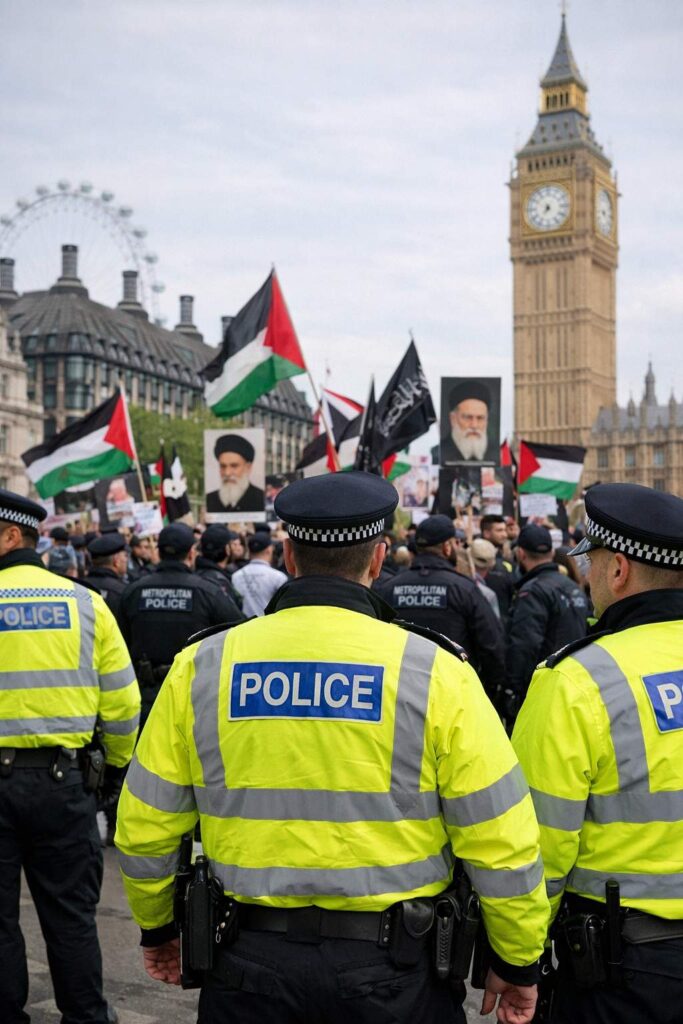

The UK government has banned the planned Al Quds march in London after police warned the event posed a severe security risk and could trigger serious public disorder. Home Secretary Shabana Mahmood confirmed she approved a request from the Metropolitan Police to block the march, which had been scheduled to take place this weekend.
The decision comes amid rising tensions linked to the Middle East conflict and concerns that large numbers of protesters and counter-protesters could clash on the streets of London. Authorities said the scale of the demonstration and the increasingly volatile political climate made it impossible to safely manage the march under normal protest conditions.
Why the UK Government Banned the March
According to the Metropolitan Police, the planned Al Quds march presented “unique risks and challenges” this year. Police warned that extreme tensions between opposing groups could quickly escalate into violence if the march was allowed to proceed.
Home Secretary Shabana Mahmood said she approved the police request because the event could lead to “serious public disorder.” She explained that the decision was based on the expected scale of the protest and the presence of multiple counter-protests likely to occur at the same time.
The ban will apply not only to the Al Quds march but also to any associated counter-protest marches. Police confirmed the restriction took effect from 16:00 on Wednesday and will remain in place for one month.
Despite the ban on marching, authorities said a stationary demonstration could still be permitted. However, such a protest would face strict conditions and heavy policing to ensure public safety.
What Is the Al Quds Day March?
Al Quds Day is an annual international demonstration traditionally held near the end of Ramadan. The event was originally established in Iran in 1979 and is intended to express solidarity with Palestinians and opposition to Israeli control of Jerusalem.
In London, the march has been organized for decades by the Islamic Human Rights Commission (IHRC). Organisers describe the event as a peaceful demonstration supporting Palestinian rights and global opposition to oppression.
However, critics argue that the march often includes pro-Iranian messaging because of its historical origins and links to Iranian political ideology. The controversy surrounding the event has grown significantly since the Hamas attack on Israel on 7 October 2023 and the subsequent conflict in Gaza.
Iran Tensions and Security Concerns
This year’s event has drawn particular attention due to heightened geopolitical tensions involving Iran. Authorities cited the volatile situation in the Middle East, including Iranian attacks on British allies and overseas military bases, as part of the risk assessment.
The police also pointed to recent security concerns within the UK. Counter-terrorism officers recently arrested four men suspected of spying on the Jewish community in Britain, which added to fears about the broader security environment.
Officials said these developments increased the risk that the march could become a flashpoint for confrontation between rival groups.
Controversy Around Organisers
The Islamic Human Rights Commission, which organizes the London event, has strongly criticised the government’s decision. The organisation described the ban as a politically motivated move rather than a genuine attempt to protect public safety.
IHRC representatives also condemned the killing of Iran’s former supreme leader Ayatollah Ali Khamenei during a US-Israeli bombing campaign in Tehran. The group said the ayatollah had been “standing on the right side of history,” remarks that intensified criticism of the march from political leaders and community organisations.
The Iranian government has faced widespread condemnation over allegations that thousands of protesters have been killed during recent demonstrations inside the country.
Police Say Ban Is a Rare Step
The Metropolitan Police emphasized that the decision to request a ban was not taken lightly. In Britain, banning a protest march requires meeting a very high legal threshold, and authorities said such powers are used only in exceptional circumstances.
Assistant Commissioner Ade Adelekan, who oversees public order policing in London, said the force has successfully managed hundreds of protests in recent years, including large demonstrations on both sides of the Middle East conflict.
He noted that police have handled at least 32 major pro-Palestinian demonstrations along with many protests both supporting and opposing the Iranian regime. However, he said the Al Quds march this year posed risks that were different from previous events.
“We do not police taste or decency or prefer one political view over another,” Adelekan said. “But we will do everything we can to reduce violence and disorder.”
Freedom of Expression Debate
Organisers and supporters of the march say banning the event raises serious concerns about freedom of expression and the right to protest. Faisal Bodi of the IHRC said the decision would represent a “sad day for freedom of assembly” if the march could not go ahead.
Supporters argue that the demonstration has taken place peacefully for more than 40 years and that authorities should allow people to express their political views even if those views are controversial.
However, critics of the event say the march has historically included participants displaying symbols linked to banned organisations and engaging in antisemitic rhetoric. They argue that preventing potential violence should take priority over protecting a highly contentious protest.
Growing Political Pressure
Calls to ban the Al Quds march have been made repeatedly over the past decade, but pressure intensified after the October 2023 Hamas attack on Israel and the war that followed in Gaza.
Some political leaders and security experts have argued that allowing the march to continue during a period of heightened global tensions could inflame divisions within Britain.
Others warn that banning protests could set a dangerous precedent and encourage authorities to restrict demonstrations based on political pressure rather than genuine security threats.
What Happens Next
Although the march itself will not take place, organisers are considering legal options and may challenge the decision. They also hope supporters will attend the permitted stationary rally if it is approved by police.
The controversy surrounding the ban highlights the broader challenge facing governments across Europe as they attempt to balance civil liberties with security concerns during a period of intense geopolitical conflict.
For now, the UK government insists the move is necessary to prevent violence and protect public safety. But the debate over protest rights, political expression, and national security is likely to continue long after this year’s Al Quds Day passes.
More details about the decision can be found via Sky News and BBC News.

Make Swikblog your go-to source on Google for reliable updates, smart insights, and daily trends.