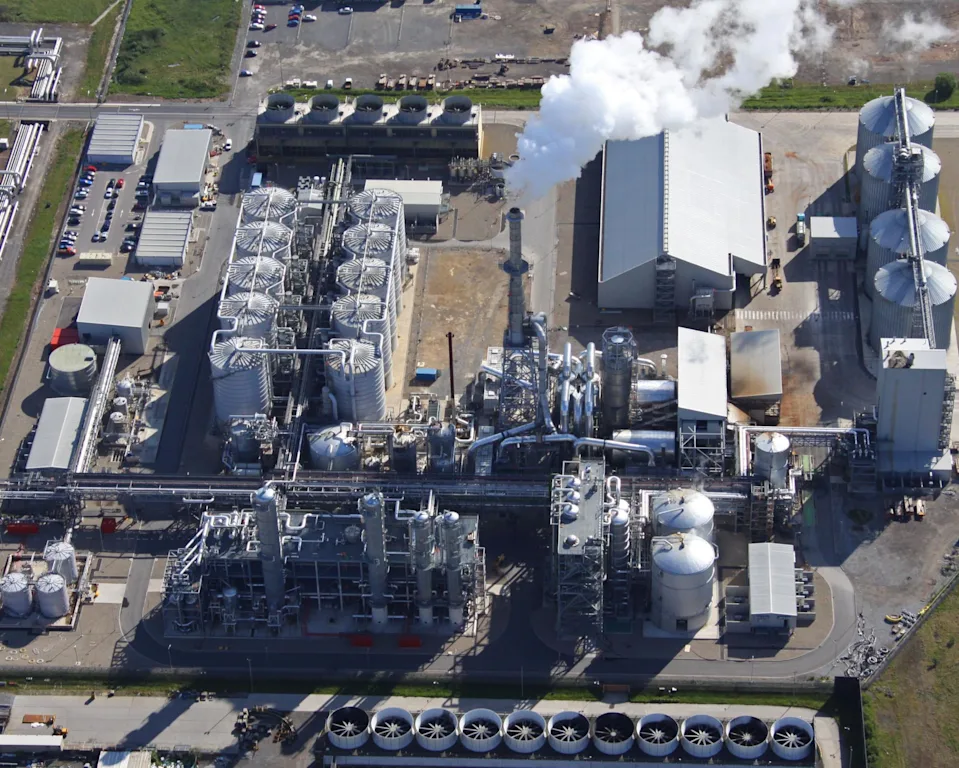

The UK government is making an urgent move to prevent a potential supply shock, announcing the reopening of the Ensus carbon dioxide plant on Teesside with around £100 million in support. The decision comes amid growing fears that the escalating war involving Iran could disrupt global supply chains and trigger shortages of CO2 — a critical industrial gas used across food, healthcare, and manufacturing sectors.
While carbon dioxide is often associated with emissions and climate debates, in industrial terms it plays a vital role in everyday operations. From carbonating soft drinks and preserving packaged food to supporting medical procedures and even sedating animals in abattoirs, CO2 is deeply embedded in the UK economy. Any disruption in supply can quickly ripple across multiple industries.
Why the UK Is Restarting the CO2 Plant Now
The Ensus plant, based in Teesside and operational since 2010, had been mothballed in September after a major shift in trade dynamics. A UK-US trade agreement reduced tariffs on American bioethanol imports, making domestic production less competitive. Since CO2 is a byproduct of bioethanol production, lower ethanol output directly reduced the UK’s CO2 supply capacity.
In a striking twist, officials have acknowledged the irony of the situation. The same geopolitical and trade dynamics linked to former US President Donald Trump contributed to both the plant’s shutdown and its reopening. As reported, one government official noted that the plant was “shut because of a deal with Trump and now it’s reopening because of Trump’s war in Iran.”
Now, with geopolitical tensions rising, the UK government is stepping in to secure domestic production. The Department for Business and Trade is expected to support the plant’s restart for an initial three-month period, with the possibility of extending operations if market conditions remain unstable.
How the Iran War Is Driving Supply Fears
The connection between the Iran conflict and CO2 supply may seem indirect, but it is rooted in global energy and industrial market dynamics. War in the Middle East often leads to volatility in oil and gas prices, increases transportation risks, and disrupts international trade flows. These factors can raise production costs and tighten supply chains worldwide.
According to energy consultancy insights, UK businesses could face significant cost increases if the conflict persists. Electricity bills could rise between 10% and 30%, while gas costs may surge by 25% to 80%. Such increases place additional pressure on energy-intensive industries like bioethanol production, further threatening CO2 availability.
For more details on the original development, you can refer to The Guardian’s full report.
Industries at Risk From CO2 Shortages
The potential impact of CO2 shortages extends far beyond a single sector. Food and beverage companies rely heavily on CO2 for packaging, preservation, and carbonation. Any disruption could affect supply chains, product availability, and pricing for consumers.
Hospitals and healthcare providers also depend on CO2 for various procedures, making supply stability a matter of public health. Meanwhile, abattoirs require CO2 for humane animal processing, and even parts of the nuclear and water treatment industries rely on steady access to the gas.
Grant Pearson, chair of Ensus UK, emphasized that CO2 supplies are “vital to food and drinks companies, as well as being important to hospitals, abattoirs and the nuclear industry.” The plant itself employs around 100 people and produces not only bioethanol but also high-protein animal feed, adding further economic significance.
Government Steps In to Protect Supply Chains
Business Secretary Peter Kyle defended the intervention, stating that the government would act decisively to protect British industries from global uncertainty. He highlighted that the plant had been kept on standby precisely for situations like this, allowing for a rapid restart when needed.
The move signals a broader shift in policy thinking. Instead of relying entirely on global markets, the UK is increasingly prioritizing domestic resilience in critical supply chains. This includes maintaining backup production capacity for essential materials like CO2.
Further context on how geopolitical tensions affect energy and supply chains can be explored through the UK government’s official energy factsheet.
A Warning Sign for the Global Economy
The reopening of the Ensus plant is not just a short-term fix — it is a signal of deeper vulnerabilities in the global economy. As conflicts escalate and trade relationships shift, countries are being forced to rethink how they secure essential industrial inputs.
What makes this situation particularly notable is how quickly priorities have changed. A plant that was economically unviable just months ago is now considered strategically critical. This reflects how geopolitical risks can rapidly reshape industrial policy and supply chain decisions.
What Comes Next
For now, the focus is on stabilizing supply and preventing immediate shortages. However, the long-term outlook will depend on how the Iran conflict evolves and whether energy markets remain volatile. If disruptions continue, the UK may need to consider permanent solutions to secure domestic CO2 production.
The Ensus restart underscores a key reality: in today’s interconnected world, even indirect geopolitical events can have direct consequences for everyday industries. From supermarket shelves to hospital operations, the availability of something as seemingly ordinary as CO2 has become a matter of national importance.

Make Swikblog your go-to source on Google for reliable updates, smart insights, and daily trends.