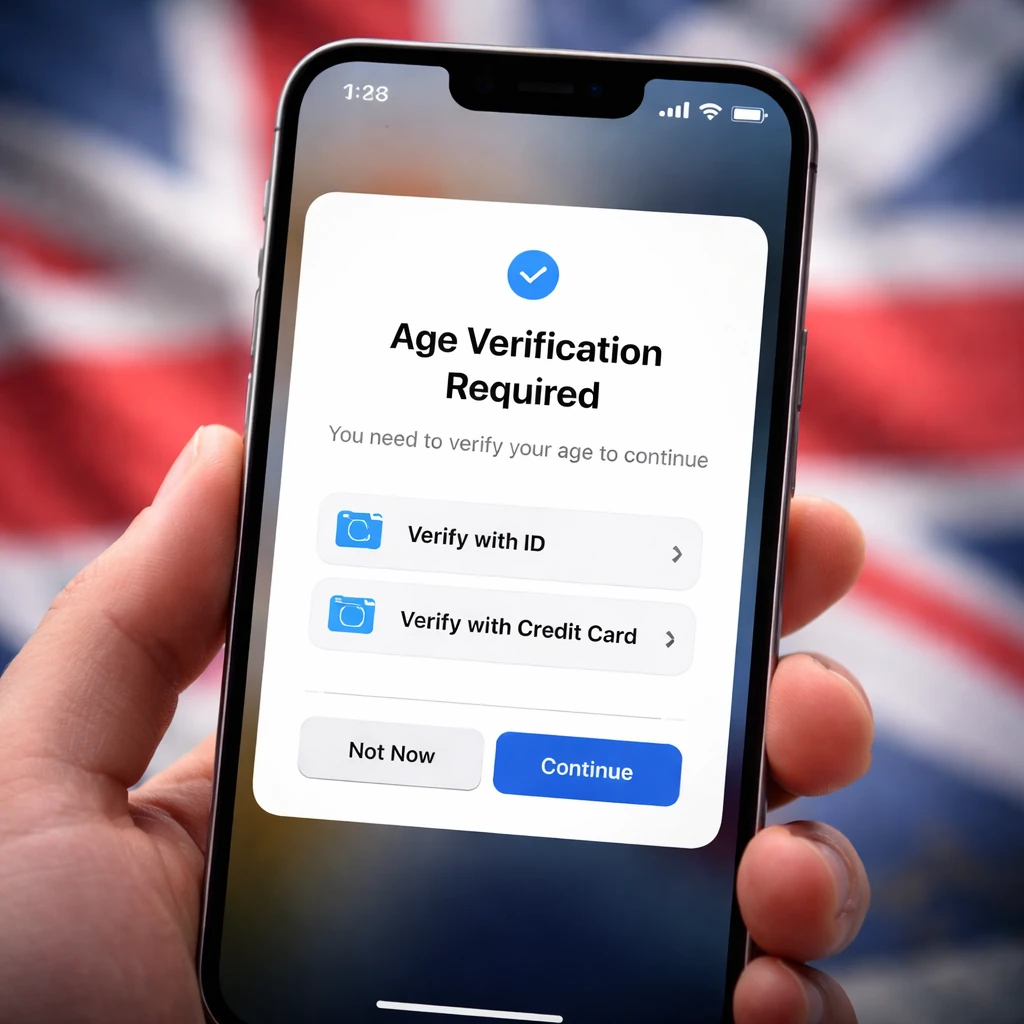

Apple has triggered a fresh controversy in the UK with the rollout of iOS 26.4, a software update that now asks iPhone and iPad users to verify whether they are adults before they can access certain services, change some content restrictions, or enjoy a fully unrestricted device experience. What could have been seen as a routine software update has instead turned into a major privacy, regulation, and child-safety debate, with regulators praising the move and campaigners warning that it goes too far.
The change is especially significant because it affects ordinary users at the device and account level. After updating, some users in the UK are shown a message that says: “UK law requires you to confirm you are an adult to change content restrictions.” That wording alone has caught attention, because it suggests the update is tied directly to Britain’s growing push for stronger online child safety protections. For Apple users, the result is simple but serious: verify your age or face automatic restrictions on parts of your device experience.
What Apple’s new age verification system does
According to the details shared, Apple is asking UK users to prove they are 18 or older in order to access certain services and features linked to their Apple Account. Users can verify their age in several ways. They may be able to use a credit card already linked to their account, scan a form of identification, or rely on other eligible verification signals. In some cases, Apple may also look at the length of time a person has held their account as part of confirming age.
This is an important change because it shifts age checks away from being only a website issue and moves them directly onto the device ecosystem itself. Instead of age assurance happening only when users visit a particular adult site or platform, Apple is now bringing that check into the Apple Account and iPhone experience. That makes the company a much more active gatekeeper between users and online content.
What happens if users do not verify
The most controversial part of the update is what happens if an adult chooses not to go through the age-check process. Adults who do not confirm their age will have web content filters automatically applied to their accounts. In effect, their device experience may resemble the restrictions placed on younger users. This is why critics argue that the update does not feel like a simple optional safety feature. To them, it feels more like a forced compliance system tied to normal device use.
The restrictions do not stop with adults who refuse verification. For users under 18, or users whose age remains unverified, Apple may also automatically switch on Web Content Filter and Communication Safety. These tools are designed to block explicit material and blur suspicious or explicit images and videos received through messages and other communication apps. Apple’s guidance also says that children under 13 cannot create an account without a guardian, making parental oversight part of the setup process for the youngest users.
Why Apple is making this move in the UK
The wider backdrop is the UK’s tougher online safety regime. Rules introduced under the Online Safety Act in 2025 already require certain websites and online platforms, especially those hosting adult material, to use age checks. That includes pornography services and other online services where minors could be exposed to harmful adult content. However, one crucial detail is that the current law does not directly apply to app stores or operating systems. In other words, Apple is not being explicitly forced by the current law to introduce device-level age checks in the same way that adult-content websites are.
That detail matters because it shows Apple has gone a step further than what the law currently mandates. Ofcom, the UK regulator, has welcomed the move and described it as a “real win for children and families.” The regulator also said its rules are flexible and were designed to encourage innovation in age assurance. According to the information shared, Ofcom worked closely with Apple and other services so that age-assurance rules could be applied in a variety of contexts to better protect users.
At the same time, Ofcom is also conducting a review into whether the Online Safety Act should be expanded to cover app stores and operating systems more directly, with a report due in January 2027. That means Apple’s move could be an early sign of where digital regulation is heading, even before the legal framework formally catches up.
Why critics say the update is dangerous
While regulators are celebrating the change, digital rights groups are sounding the alarm. One of the strongest reactions came from Silkie Carlo, director of campaign group Big Brother Watch. She argued that Apple had put a “chokehold on Britons’ freedom to search the internet” and claimed the company had effectively crossed a line by making millions of people choose between sharing sensitive personal information and using what she described as a more restricted, child-like version of their own device.
Critics say the issue is not whether children should be protected online. Most agree that child safety matters. The real dispute is over how that protection is being enforced. Campaigners argue that requiring users to hand over ID documents or rely on credit card checks creates serious privacy risks. They fear such systems could become attractive targets for hackers, while also normalizing the idea that adults must routinely prove their age to access ordinary digital services.
This concern is not new. Similar backlash already followed the broader rollout of age verification requirements for certain UK websites and platforms in 2025. Opponents argued then, as they do now, that data collection tied to age checks creates cybersecurity and privacy risks that may outweigh the promised benefits if not handled carefully.
Part of a wider global push on child safety and social media
Apple’s move also sits within a much bigger political and cultural debate about children, smartphones, and social media. The UK government is already testing new approaches through a trial involving 300 teenagers. In that test, some teens will have their social apps disabled entirely, some will have them blocked overnight, some will be limited to one hour of use, and others will see no change at all so researchers can compare their experiences. The purpose is to examine how app restrictions affect young people’s wellbeing and behavior.
Alongside that trial, the UK government is also consulting on whether Britain should follow Australia by making it illegal for under-16s to access many social media platforms. That means Apple’s age-verification rollout is not an isolated tech update. It is arriving at a time when governments are actively rethinking how much access children and teenagers should have to digital platforms in general.
Apple is not stopping with the UK
Another important detail from the information shared is that these age-verification requirements have also been rolled out in South Korea. That suggests Apple is not treating this as a one-country experiment alone. Instead, it may be testing or expanding a broader model in markets where regulators and policymakers are increasing pressure around child safety, age assurance, and platform responsibility.
That possibility will worry some users and reassure others. Supporters may see it as a sign that major tech companies are finally taking meaningful responsibility for children’s online safety. Critics, however, may see it as evidence that device-level identity checks could spread across more countries and become part of everyday smartphone use.
Why this update matters so much
The reason this story has exploded is because it sits at the intersection of several major tensions at once: child protection, freedom of access, privacy, regulation, and corporate control. Apple’s defenders will say the company is responding responsibly to real concerns about harmful content and underage exposure online. Its critics will say the update turns a personal device into a compliance tool that pressures adults to submit more data just to use their phone without restrictions.
For UK iPhone users, the immediate reality is clear. Updating to iOS 26.4 may now mean making a choice that feels bigger than software. Verify your age through the methods Apple accepts, or live with content filters and a more restricted experience. Whether users see that as a sensible safety step or an unnecessary intrusion will likely determine how this policy is judged in the months ahead.
Either way, Apple’s age verification rollout is more than a technical change. It is a sign of where the future of digital regulation may be heading. In the UK, the smartphone is no longer just a personal device. It is becoming part of the frontline in the battle over how the internet should be controlled, who gets protected, and how much privacy people are expected to give up in return.

Make Swikblog your go-to source on Google for reliable updates, smart insights, and daily trends.