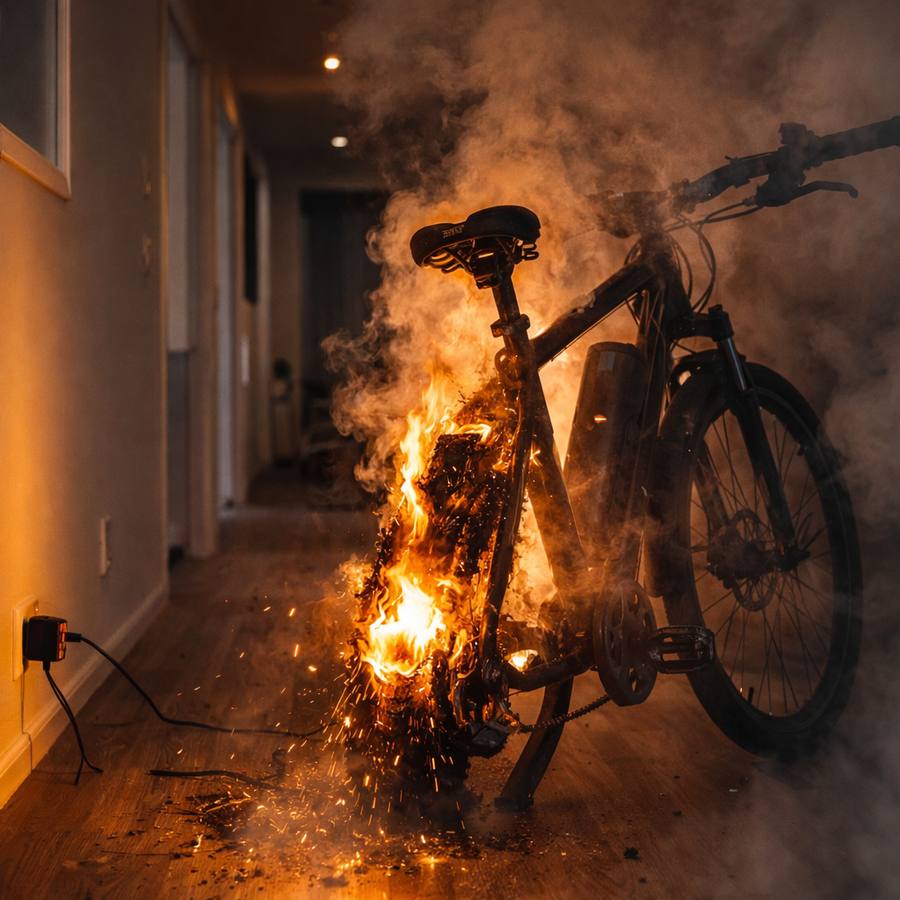

UK e-bike and e-scooter blazes are no longer isolated incidents — they are rapidly becoming a nationwide safety concern. Fresh data released this week shows a sharp rise in fires linked to battery-powered bikes and scooters, with experts warning that poorly made batteries and unregulated online products are driving a dangerous trend. What was once seen as a convenient, eco-friendly transport option is now raising serious questions about safety inside homes and public spaces.
The latest figures paint a worrying picture. A total of 432 e-bike fires were recorded across the UK in 2025, marking a 38% increase from 313 cases in 2024. The rise becomes even more alarming when compared to 2021, when just 84 incidents were reported. That means e-bike fires have surged more than five times in just four years. E-scooter fires are also climbing, reaching 147 cases in 2025, up 20% from 123 the previous year. Back in 2021, that number stood at 88, showing a steady upward trend.
Battery failures and online products driving the surge
At the centre of this growing crisis is one key issue: lithium-ion battery failure. Investigations show that most fires are linked to faulty batteries, unsafe chargers or poorly installed conversion kits. These components can overheat, explode or ignite suddenly, often while charging indoors. Unlike traditional fires, lithium battery fires can spread extremely quickly and release toxic fumes, making them far more dangerous.
Safety experts are increasingly pointing towards online marketplaces as a major source of risk. Products sold through these platforms are often cheaper but may not meet strict safety standards followed by established retailers. According to industry voices, many of the devices involved in fires are “cut-price products” with weak quality control. This has allowed unsafe batteries and accessories to enter homes at scale.
Even more concerning is the rise of a black market for DIY and counterfeit batteries. Some of these are reportedly being built using recycled battery cells taken from used disposable vapes. While this may reduce costs for riders — especially delivery workers — it dramatically increases the chances of malfunction. Experts warn that these makeshift batteries are highly unstable and should never be used without proper monitoring.
For many households, the danger is amplified by where these devices are kept. Charging e-bikes or scooters inside hallways, near exits or overnight creates a high-risk scenario. Once a battery fire starts, it can block escape routes within seconds.
London worst hit as deaths and bans raise alarm
London remains the epicentre of the problem. The London Fire Brigade recorded 171 e-bike fires and 35 e-scooter fires in 2025 — far higher than any other region. Outside the capital, Nottinghamshire reported 30 e-bike fires, followed by Greater Manchester with 13 and Avon Fire and Rescue Service with 10. For e-scooters, Greater Manchester and Avon recorded the highest numbers outside London.
Behind these statistics are real human consequences. One of the most tragic cases involved a 30-year-old woman who died after a fire believed to have been caused by a failing e-bike battery while charging at her home in north London. The incident marked the fourth fatal e-bike fire in the capital, underlining how deadly these situations can become.
Fire services say they are now being called out to a “worrying amount” of such incidents. The speed and intensity of lithium battery fires make them particularly challenging to control, often causing significant damage within minutes.
Authorities have already started taking action. Privately owned e-scooters have been banned from use in public spaces across the UK, although they are still widely used illegally. Transport for London banned privately owned e-scooters from its network in 2021 due to fire risks. In 2025, restrictions were extended to non-foldable e-bikes across most services after a fire incident at Rayners Lane Tube station.
Despite these measures, enforcement remains a challenge, and many modified or tampered devices continue to circulate. Police have also reported increasing cases of e-bikes being altered to exceed legal speed limits, adding another layer of risk.
The growing number of incidents has pushed the Government to consider stricter rules. New proposals include forcing online marketplaces to take greater responsibility for identifying and removing unsafe products. Consumer safety groups argue that without stronger enforcement, dangerous devices will continue to enter homes unchecked.
Campaigners say the issue is now reaching a tipping point. Without urgent intervention, they warn, further loss of life is inevitable. The combination of rising demand, cheap unregulated products and lack of awareness is creating what some describe as a “runaway problem”.
For consumers, the takeaway is becoming increasingly clear. Price should not be the only factor when buying an e-bike or e-scooter. Choosing certified products, avoiding unknown sellers and using approved chargers can significantly reduce risk. Fire safety experts also advise against charging devices unattended or storing them in confined spaces.
Guidance from Electrical Safety First highlights simple precautions that can help prevent battery fires, from checking for damage to avoiding overcharging. While these steps may seem basic, they can be the difference between safe use and a life-threatening incident.
The surge in UK e-bike e-scooter blazes reflects a deeper issue tied to rapid adoption of new technology without equally strong safety controls. As more people turn to electric mobility for convenience and cost savings, the risks linked to poor-quality batteries are becoming harder to ignore. Whether through tighter regulation, better awareness or improved product standards, addressing this issue is now critical — because the numbers show the problem is only getting bigger.
You may like: Samsung Messages App Discontinued From July 2026 as Galaxy Users Shift to Google Messages

Make Swikblog your go-to source on Google for reliable updates, smart insights, and daily trends.