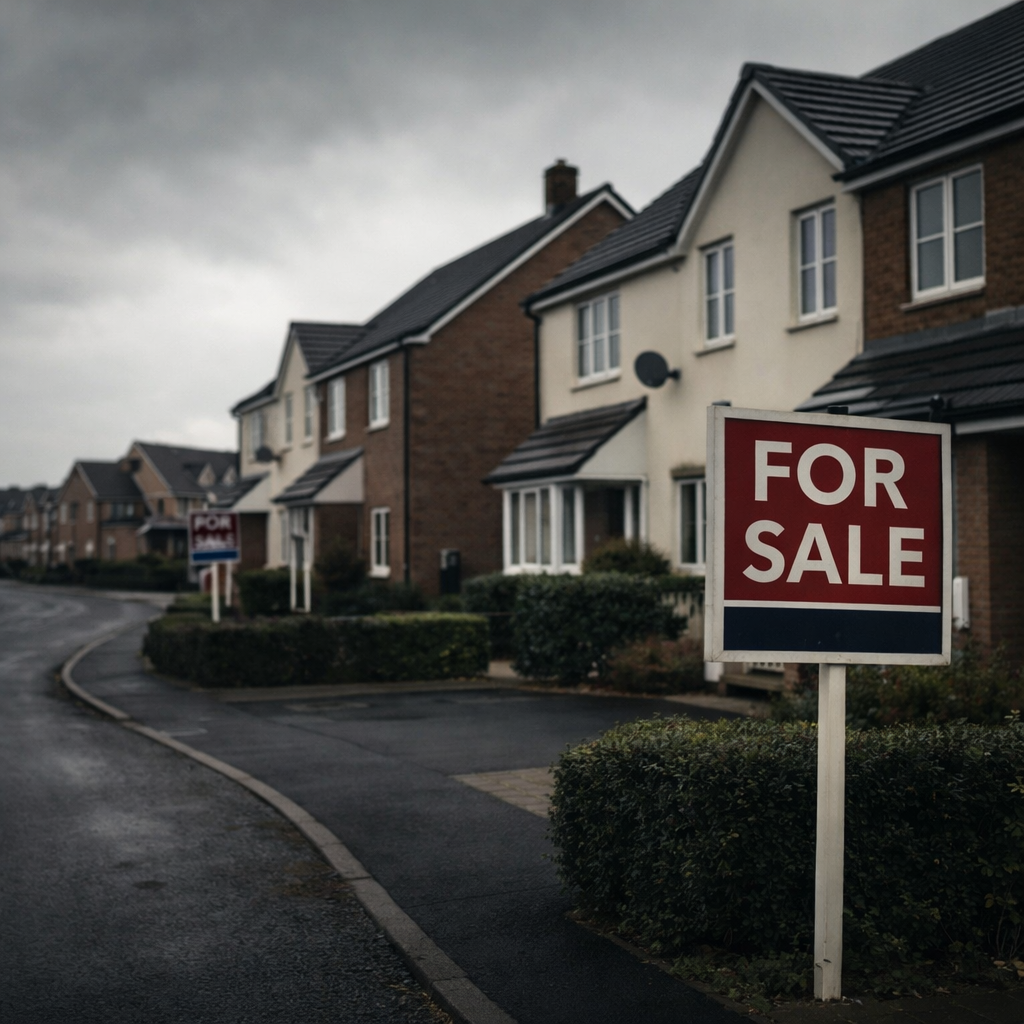

UK house prices fell in March, signalling a shift in momentum just as the crucial spring selling season begins. Fresh data from Halifax shows average property values dropped by 0.5%, bringing the typical UK home price down to £299,677 — slipping back below the £300,000 mark after briefly crossing it earlier this year.
The decline reverses a 0.3% rise in February and reflects growing pressure on buyers as borrowing costs climb sharply. While the fall may appear modest on the surface, it highlights how quickly sentiment in the housing market is changing under the weight of global and economic uncertainty.
Mortgage rate shock hits buyers as deals vanish
The biggest factor behind the slowdown is the rapid rise in mortgage rates, which has hit affordability and demand in a matter of weeks. Since the start of March, lenders have increased rates significantly, with some of the cheapest fixed deals jumping from around 3.5% to nearly 4.75%.
For buyers, the impact is immediate. On a typical £200,000 mortgage over 25 years, monthly repayments have increased by more than £100 — a jump that is forcing many to rethink or delay purchasing decisions.
At the same time, hundreds of mortgage products have been withdrawn from the market, marking one of the biggest daily pullbacks since the turmoil following the 2022 mini-budget. This sudden tightening of available deals has further reduced buyer confidence.
The surge in borrowing costs is being driven by rising inflation expectations, which in turn are linked to global developments — particularly the ongoing tensions in the Middle East. Higher energy prices have raised concerns that inflation could climb again, reducing the likelihood of interest rate cuts in the near term.
According to Halifax, this uncertainty has “dampened the initial momentum in the market seen at the start of the year,” as buyers adopt a more cautious stance.
Prices drop below £300K as growth slows sharply
The fall below the £300,000 level is significant. Earlier in January, average prices had crossed this milestone for the first time, driven by optimism around falling rates and improving affordability. March’s drop shows how quickly those gains can be reversed when borrowing conditions change.
In real terms, the average home lost around £1,374 in value during the month. While this is not a dramatic correction, it reflects a cooling market where demand is no longer keeping pace with supply.
Annual house price growth has also slowed to 0.8%, down from 1.2% the previous month, indicating that price increases are losing strength. This suggests the housing market is entering a more stable — but slower — phase after recent volatility.
The average two-year fixed mortgage rate also climbed to around 5.84% by the end of March, the highest level since mid-2024, further tightening affordability for new buyers.
For a broader view on how interest rates are influencing borrowing costs, the Bank of England’s base rate tracker provides ongoing updates that directly impact mortgage pricing.
Despite the national slowdown, regional differences remain clear. Northern Ireland continues to lead annual house price growth at 8.7%, while Scotland has seen prices rise by 4.4% over the past year. Wales has recorded more modest gains of around 1.6%.
In contrast, southern England is seeing weaker performance. Prices in the South East have fallen by 1.9% year-on-year, while London values have declined by around 1.2%, reflecting the greater sensitivity of higher-priced markets to borrowing costs.
This regional divide highlights how affordability constraints are having a bigger impact in areas where property prices — and mortgage sizes — are already elevated.
Looking ahead, the direction of the housing market will largely depend on how long current pressures persist. A potential easing of geopolitical tensions, such as any sustained ceasefire in the Middle East, could help stabilise energy prices and reduce inflation concerns.
However, even if conditions improve, experts suggest mortgage rates are unlikely to fall as quickly as they rose. That means demand could remain subdued in the short term, keeping house prices under pressure.
For now, buyers are watching closely. Many are waiting for clearer signals on interest rates before committing, while sellers may need to adjust expectations in a market that is becoming increasingly price-sensitive.
The latest figures suggest one thing clearly — the UK housing market is no longer being driven by optimism, but by affordability. And as long as borrowing costs remain elevated, price growth is likely to stay in check.
You may like: Apple Foldable iPhone Delay Risk Grows as Engineering Issues Persist

Make Swikblog your go-to source on Google for reliable updates, smart insights, and daily trends.