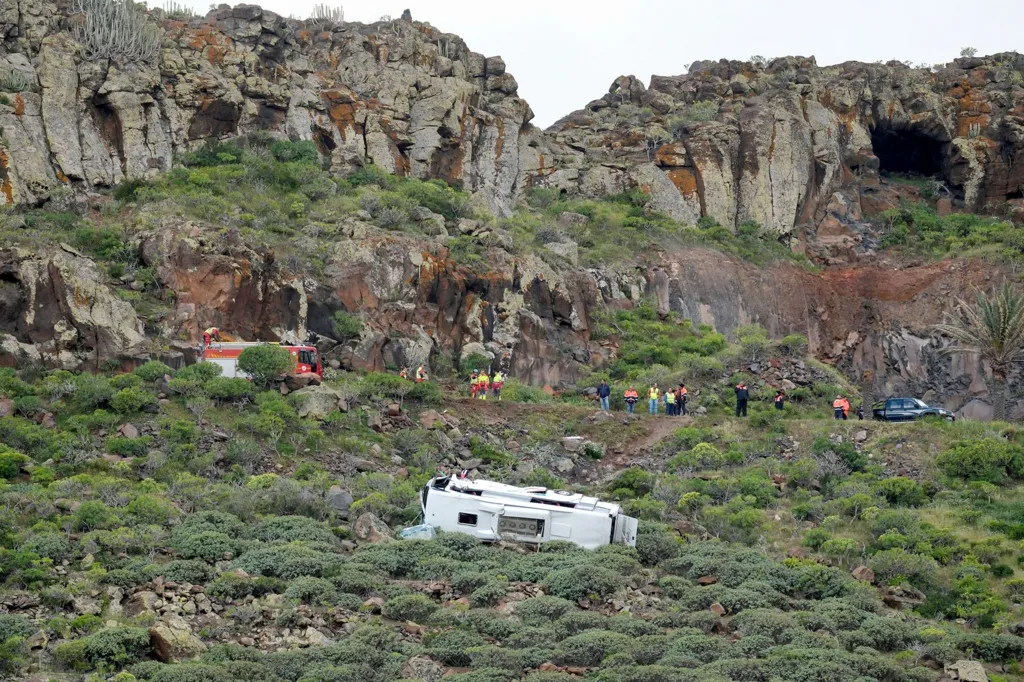

A bus carrying British tourists plunged into a ravine on the Canary Island of La Gomera on Friday, killing one man and injuring 27 others in a crash that has drawn international attention amid peak travel season. The vehicle veered off the GM-2 road near San Sebastián de La Gomera at around 1:15pm local time, falling approximately 10 metres down a steep slope.
Emergency services said there were 28 people on board, including 27 British tourists and the driver. The group had been travelling to the island’s port to catch a ferry to Tenerife when the accident occurred. Three people were reported to be in serious condition, with most of the injured taken to Hospital Nuestra Señora de Guadalupe, while two critically injured passengers were airlifted to hospitals in Tenerife.
Authorities confirmed that the passengers included adults and children, with local reports indicating around 25 adults and three minors on board. A medical helicopter and five ambulances were deployed to the scene as rescue teams worked to reach victims trapped below the road.
Crash on a steep mountain route
The accident happened on the GM-2 highway, a mountainous route known for its sharp bends and narrow stretches. Early images from the scene suggest the bus left the road near a tight hairpin turn before tumbling down the ravine and coming to rest on its side among rocks and vegetation.
La Gomera’s terrain, defined by volcanic mountains and winding roads, is a major draw for hikers and tourists but also presents driving challenges. Even short journeys can involve steep gradients and sudden turns, increasing the risk of serious accidents if vehicles lose control.
Emergency crews faced difficult conditions accessing the crash site, with rescue operations requiring coordination between ground teams and air support. Victims were stabilised on uneven terrain before being transported to medical facilities.
Tourism impact and wider concern
The Canary Islands remain one of the most popular destinations for British tourists, with millions visiting each year. Around 70,000 travellers head to La Gomera annually, often as part of island-hopping trips from Tenerife. The crash highlights the risks associated with transport on smaller, mountainous islands where infrastructure can be more challenging.
The president of the Canary Islands, Fernando Clavijo, said he was closely monitoring the situation and expressed support for the victims and their families. The incident is likely to raise fresh questions about road safety standards and transport arrangements for tourist excursions across the region.
For British travellers, the crash underscores the importance of understanding local travel conditions, particularly when navigating unfamiliar terrain. Updated guidance for visitors travelling in Spain can be found on the UK government’s official travel advice page, which outlines safety considerations for tourists.
Investigations into the cause of the crash are ongoing, with authorities expected to examine road conditions, vehicle factors and driver circumstances. For now, attention remains focused on those injured and the families affected by a journey that ended in tragedy on one of the Canary Islands’ most challenging roads.
You may like: CoreWeave stock momentum shifts as AI partnership focus grows
Make Swikblog your go-to source on Google for reliable updates, smart insights, and daily trends.