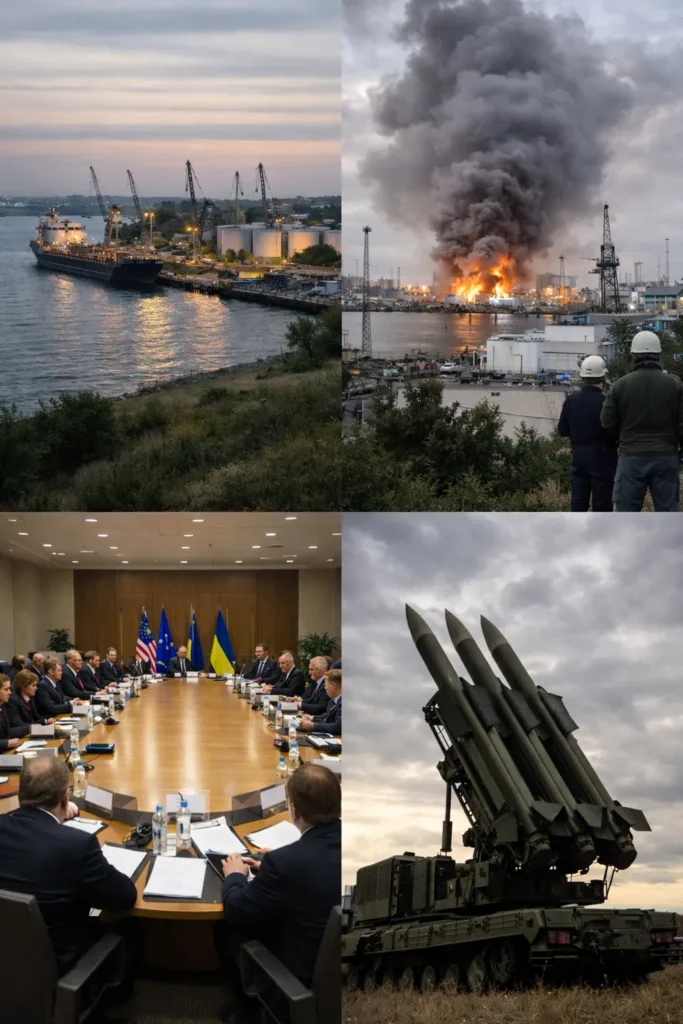

A Ukrainian drone strike set off multiple fires around Russia’s Black Sea port complex at Taman, according to regional officials, as Washington-backed peace talks in Geneva approach. The flare-up lands in a tense window where both sides have again been trading blows on energy and logistics targets, raising the stakes for negotiators trying to lock in anything durable beyond short-lived pauses.
The latest attack in Russia’s Krasnodar region was reported to have damaged an oil storage tank, a warehouse and port terminals, with two people injured in the area. Ukraine has framed its long-range drone campaign as an effort to squeeze the revenue streams that help fund Moscow’s war effort, particularly where fuel exports and transport infrastructure intersect. Industry estimates put the Taman hub among the more consequential outlets on the Black Sea coast, with roughly 4.16 million metric tons of oil products shipped through the port last year.
On the Ukrainian side, the Odesa region again felt the impact of drone warfare. Emergency services said a Russian drone strike hit a residential building in the port city of Odesa, killing an elderly woman. Recent days have also seen renewed disruption risks to heating, power, and municipal services at a time when cold snaps sharpen the humanitarian pressure and complicate repair work.
A key backdrop is the end of a U.S.-brokered moratorium that had temporarily curbed strikes on energy infrastructure. With that pause now expired, both Kyiv and Moscow appear more willing to test each other’s defenses and logistics, even as diplomats prepare for another attempt at a negotiated off-ramp. The Geneva meetings, scheduled for Tuesday and Wednesday, are widely viewed as a crucial check on whether incremental confidence-building measures can be restored—or whether the war’s energy and transport front will become even more central.
President Volodymyr Zelensky has pushed allies for more air-defense support and fresh security guarantees, arguing that Ukraine’s ability to hold the line depends on limiting the damage from ballistic missiles and drone swarms. After meetings around the Munich Security Conference, he said Ukraine expects additional support packages—particularly air-defense missiles—as well as energy and military assistance timed around 24 February. Kyiv’s position remains anchored in the demand for binding guarantees and sanctions pressure that outlasts any single ceasefire proposal.
The diplomatic lane is also being shaped by a growing sanctions narrative in Europe. In London, Britain’s foreign secretary signaled that additional measures could follow after allies said they were convinced Russian opposition figure Alexei Navalny was poisoned, a claim Moscow rejects. In Washington’s orbit, U.S. officials have indicated they are not disputing European partners’ assessment, a posture that keeps sanctions coordination on the table even as peace talks continue.
What is different about this moment is not simply the timing, but the target mix. Black Sea ports sit at the junction of military logistics, export earnings and psychological leverage. For Kyiv, a strike that forces firefighting crews and emergency repairs can impose costs disproportionate to the price of the drones involved. For Moscow, continued pressure on Ukrainian ports and power systems aims to erode civilian resilience, strain air defenses and complicate wartime governance. Negotiators in Geneva will be trying to translate that reality into verifiable limits—an uphill task when the battlefield incentives point in the opposite direction.
For a fuller account of the reported Taman damage and the context around the Geneva agenda, see Reuters’ reporting on the Black Sea port strike. For more world-market coverage and daily explainers, visit Swikblog.

Make Swikblog your go-to source on Google for reliable updates, smart insights, and daily trends.