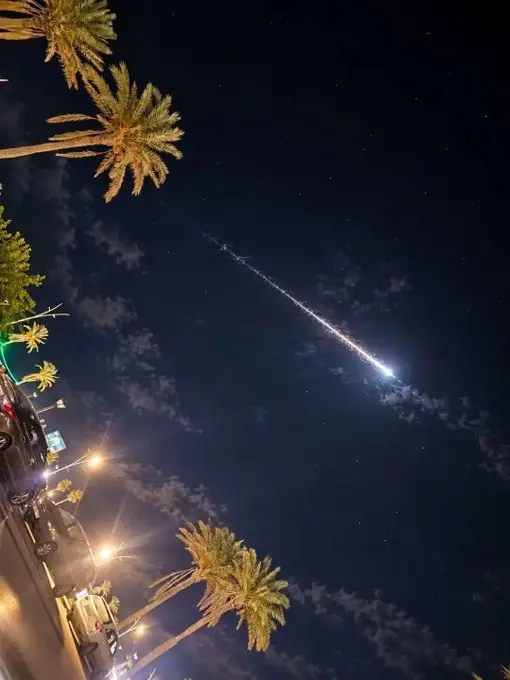
When December skies turn cold and quiet, most meteor-watchers think first of the Geminids. They are brighter, busier and easier to notice. Yet each year, just before Christmas, another meteor shower quietly arrives — dependable, understated and easily overlooked. The Ursids meteor shower returns in late December, offering patient skywatchers a modest but reliable celestial finale to the year.
The Ursids are not dramatic. They do not flood the sky with fireballs or demand social media attention. Instead, they reward stillness. In 2025, the shower is expected to peak during the overnight hours of December 21–22, a timing that places it squarely in the longest nights of the year for Northern Hemisphere observers. Under clear skies, that alone makes them worth stepping outside for.
What sets the Ursids apart is where they appear to come from. Their radiant — the point in the sky from which the meteors seem to fan out — lies in the constellation Ursa Minor, better known as the Little Dipper. The meteors trace back toward the bright orange star Kochab, one of the two outer stars of the dipper’s bowl. Because Ursa Minor circles close to the north celestial pole, this part of the sky never sets for most northern observers, meaning Ursids can technically be seen at any hour of the night.
That does not mean activity is constant. The Ursids are famously brief. Their strongest display usually lasts only a few hours around peak, with little activity on nights before or after. During maximum, observers under dark skies can expect around five to ten meteors per hour. In rare years, short-lived outbursts have pushed rates higher, but 2025 is not expected to produce a meteor storm.
These meteors travel at moderate speed, plunging into Earth’s atmosphere at roughly 22 miles per second (35 km/s). They are typically faint and fleeting, leaving short, delicate streaks rather than long, blazing trails. The best viewing window comes during the final dark hour before dawn, when the radiant climbs highest and Earth’s rotation carries observers more directly into the stream of debris.
The Ursids originate from comet 8P/Tuttle, a periodic comet that orbits the Sun roughly every 13.6 years. As the comet sheds dust along its path, Earth crosses those remnants each December. Unlike many showers, however, Ursid activity does not always correlate neatly with the comet’s position. Stronger returns have sometimes occurred when the comet was far from the Sun, making predictions unusually difficult and adding an element of uncertainty to each appearance.
Historically, the Ursids have produced a handful of surprising outbursts, notably in 1945 and 1986, with smaller enhancements reported in several years since. In most years, though, the shower lives up to its quiet reputation. That modesty is part of its appeal. Watching the Ursids feels less like attending a spectacle and more like sharing a private moment with the winter sky.
For 2025, conditions are favourable. The Moon will be near new phase around the time of peak, ensuring darker skies than many December meteor displays enjoy. A clear northern horizon and a willingness to linger outdoors are often all that is required. No telescope or binoculars are needed — in fact, they are a hindrance. The naked eye offers the widest view and the best chance of catching these subtle flashes.
There is something fitting about the Ursids arriving as the year winds down. They do not compete for attention, and they rarely disappoint those who understand their limits. In a season often filled with noise and urgency, this quiet meteor shower offers a reminder that not all celestial events need to be loud to be meaningful.
Skywatchers looking for official observing guidance and background on annual meteor showers can find additional resources from NASA’s meteor and meteorite overview, which explains how streams like the Ursids form and why their displays vary from year to year.
If skies cooperate, the Ursids of 2025 may not steal headlines, but they can still offer a gentle, reliable reminder that even the quietest cosmic events are worth looking up for.

Make Swikblog your go-to source on Google for reliable updates, smart insights, and daily trends.