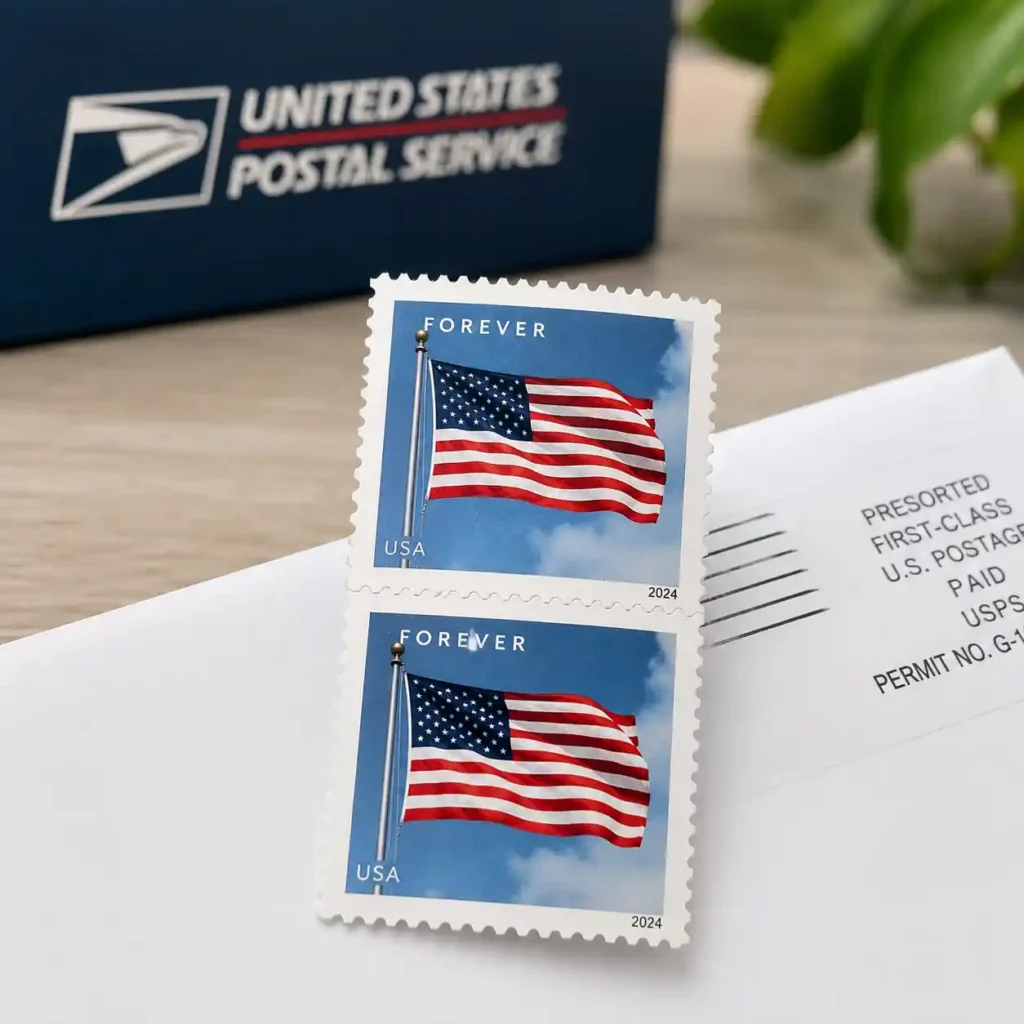

WASHINGTON — The cost of mailing a standard letter in the United States is going up again. Starting Sunday, July 12, 2026, the U.S. Postal Service will raise the price of a First-Class Mail Forever stamp from 78 cents to 82 cents, adding another four cents to one of the most commonly used postage products in the country.
The increase may look small for people who mail only a few letters a year. But for small businesses, nonprofits, medical offices, legal firms and households that still rely on paper bills, checks, cards or official notices, the higher rate can add up quickly across repeated mailings.
USPS first filed the July price change with the Postal Regulatory Commission in April. The agency said the new rates are part of a broader mailing services adjustment averaging about 4.8%, as it continues to manage declining mail volume, higher operating costs and long-running financial pressure.
USPS stamp price increase starts July 12
The Forever stamp change is the most visible part of the new pricing, but it is not the only increase taking effect. Domestic postcards and international mail prices are also rising.
| Mail product | Current price | New price from July 12, 2026 |
|---|---|---|
| First-Class Mail Forever stamp | 78¢ | 82¢ |
| Domestic postcard | 61¢ | 65¢ |
| International postcard or 1-ounce letter | $1.70 | $1.75 |
USPS outlined the proposed July changes in its official postal price change announcement, saying the adjustment was approved by the governors of the Postal Service before being filed with regulators.
Why Forever stamps are getting more expensive
The Postal Service says the higher prices are needed to support its finances while maintaining a nationwide delivery network. Unlike many private delivery companies, USPS serves addresses across cities, suburbs, small towns and rural communities, even when some routes are expensive to operate.
That network has become harder to fund as traditional letter mail has declined. More billing, banking, advertising and personal communication now happen online, reducing the amount of First-Class Mail moving through the system. At the same time, USPS still has to pay for workers, vehicles, sorting facilities, fuel, technology and delivery routes.
The price increase also arrives during a period when many consumer services are becoming more expensive. The same pressure can be seen in subscription and entertainment markets, including the recent Fubo price increase affecting streaming customers, where companies are trying to offset higher costs without losing users.
Older Forever stamps will still work
Customers who already bought Forever stamps at 78 cents, 73 cents, 66 cents or any earlier price do not need to add extra postage for a standard one-ounce First-Class letter after July 12.
That is the main purpose of a Forever stamp. It is not tied to the price printed at the time of purchase. Instead, it remains valid for the current one-ounce First-Class Mail rate whenever it is used.
Example: A Forever stamp bought when the price was 58 cents can still be used after the rate rises to 82 cents, as long as it is used for a standard one-ounce First-Class letter.
This is why some frequent mail users buy stamps before scheduled increases. The savings may be small per stamp, but they can matter for organizations sending large volumes of invoices, cards, notices or fundraising letters.
How much stamp prices have changed
The July 2026 increase continues a sharp climb in postage costs over the past several years. A Forever stamp was 58 cents in 2021. After the new rate begins, the price will be 82 cents.
| Period | Forever stamp price |
|---|---|
| 2021 | 58¢ |
| 2023 | 66¢ |
| 2024 | 73¢ |
| Before July 12, 2026 | 78¢ |
| Starting July 12, 2026 | 82¢ |
For households, the increase may be most noticeable when buying a book of stamps. For businesses and nonprofits, the bigger issue is annual volume. A four-cent increase becomes $40 for every 1,000 pieces of First-Class letter mail, before counting any other postage or mailing service changes.
USPS faces pressure over finances and delivery
The Postal Service has been trying to reduce large losses while modernizing parts of its network. The challenge is that USPS must keep serving the entire country even as its most profitable traditional mail categories continue to shrink.
Delivery performance has also drawn attention from lawmakers and customers in some regions. That makes the July rate increase more sensitive: people are being asked to pay more at a time when service reliability remains an important public concern.
Cost-cutting and restructuring have become common across major U.S. businesses, not only public service networks. Recent Microsoft layoffs tied to wider business pressure show how large organizations are adjusting staffing, budgets and operations as expenses rise.
Who is most affected by the new stamp rate?
The increase will be felt most by people and organizations that still send physical mail regularly. That includes small businesses mailing invoices, nonprofits sending donor appeals, law offices sending formal notices, medical offices mailing patient documents and families sending cards or invitations.
Online bill pay and digital statements have reduced the need for stamps for many households. Still, physical mail remains important for government notices, legal documents, tax forms, checks, prescriptions, greeting cards and communications with people who prefer paper records.
The same shift from physical to digital behavior is changing other consumer industries too. Starbucks and other chains have been adapting to changing customer habits with new product strategies, including a broader move toward fruit-flavored drinks aimed at younger customers. USPS faces a different version of that problem as more communication moves away from paper mail.
Should customers buy stamps before July 12?
For people who mail only one or two letters a year, buying extra stamps before the increase may not make much difference. But frequent mailers may save money by purchasing Forever stamps before the new 82-cent price begins.
The practical rule is simple: if the stamp says “Forever,” it remains valid for a standard one-ounce First-Class letter even after the price changes. Customers do not need to exchange old stamps or add extra postage unless the letter is overweight, oversized, non-machinable or requires another mail service.
Small businesses and nonprofits should also review mailing budgets for the second half of 2026. The new 82-cent rate is only one part of postage planning, but it can affect invoices, direct mail campaigns, donor letters and recurring customer notices.
What to know before the USPS price increase
The new Forever stamp price takes effect on Sunday, July 12, 2026. From that date, a standard First-Class Mail Forever stamp will cost 82 cents, domestic postcards will cost 65 cents, and international postcards and one-ounce letters will cost $1.75.
Older Forever stamps will still work after the increase. The main change is the price customers will pay when buying new stamps. For frequent mail users, the July adjustment is another sign that postage costs may continue to face pressure as USPS works through lower mail volume, higher operating expenses and nationwide delivery demands.

Make Swikblog your go-to source on Google for reliable updates, smart insights, and daily trends.