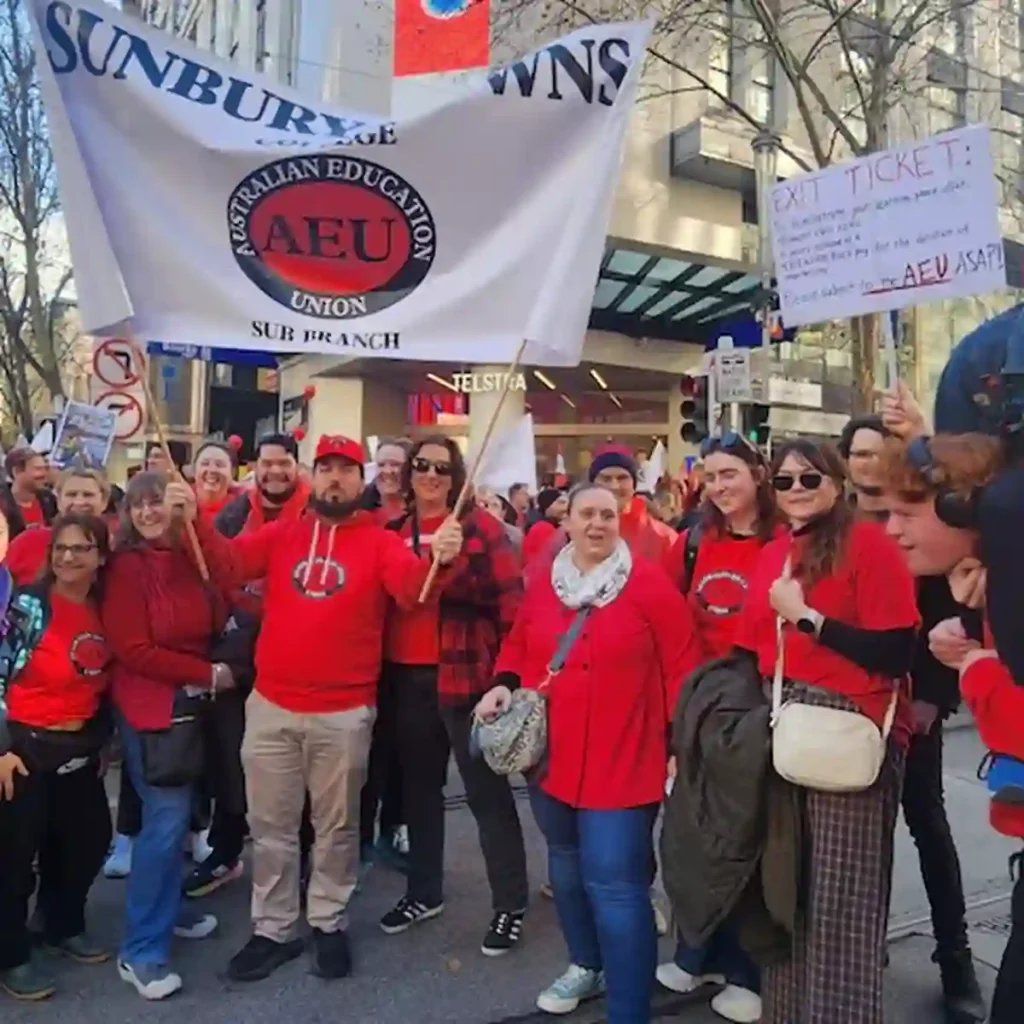

Victoria’s long-running public school pay dispute has moved closer to settlement after Australian Education Union (AEU) members backed the state government’s revised offer, cancelling the 24-hour statewide strike that had been scheduled for Wednesday, August 19.
The proposed Victorian Government Schools Agreement covers teachers, principals, assistant principals and education support staff. It offers salary increases of between 28.3% and 32.4% over four years for teachers and school leaders, a $2,000 lump-sum payment and changes aimed at reducing workload pressure.
When voting closed on August 17, 79% of participating AEU members supported the latest offer. That result ended the immediate threat of another statewide walkout, but the agreement still has to move through the formal endorsement and workplace approval process before the new conditions take effect.
Pay increases reach up to 32.4% over four years
The final increase will vary by role, classification and salary progression rather than applying as one flat percentage to every employee.
According to the Victorian government, an experienced teacher earning $118,063 would reach $151,419 by 2029. The same official update says an early-career teacher would receive a $12,343 increase by October 2026, bringing that salary into line with the comparable New South Wales rate.
Range 2 education support staff are set to receive a minimum increase of 29.8% over four years. The package also includes the $2,000 payment at the start of the agreement, with pro-rata arrangements applying where relevant.
The government set out the main salary and workload terms in its official update on the Victorian education agreement.
Workload changes were central to the final offer
The dispute was never only about wages. Teachers had repeatedly raised concerns about meetings, administrative work and the time available for lesson planning, assessment and other duties outside classroom teaching.
Under the revised package, required after-school meeting time would be cut from 80 hours to 40 hours a year.
The agreement would also secure maximum face-to-face teaching hours of 18.5 hours a week for secondary teachers and 21 hours for primary teachers. Four professional practice days each year are included to provide additional time for planning, assessment and professional development.
These provisions help explain why later ballots produced a different result even though earlier offers already contained sizeable wage increases.
Why the August 19 strike was cancelled
The August vote followed more than a year of bargaining and repeated industrial action. Earlier proposals failed to win enough support because many members remained dissatisfied with the combination of pay and working conditions.
The dispute had already led to the July 23 Victorian teachers strike and Melbourne rally, when public school employees stopped work while negotiations remained unresolved.
A later ballot on the government’s revised package was extremely close, with 51.18% voting against it and 48.82% in favour. The government then returned with another offer that added the $2,000 payment and strengthened several workplace provisions.
The change was enough to produce 79% support on August 17, allowing the union to call off the August 19 stoppage.
The accepted package remains below the original union claim
The AEU had initially sought a 35% salary increase over three years along with stronger measures on workload and school conditions. The accepted package instead delivers increases of 28.3% to 32.4% over four years, depending on classification.
The earlier rejection of Victoria’s teacher pay proposal showed that salary figures alone were not enough to settle the dispute. Workload protections and the structure of the agreement remained important to members throughout the bargaining process.
The latest vote therefore represents a significant shift from the narrow rejection of the previous offer, while still leaving the final legal steps to be completed.
Victorian Teachers Secure 32% Higher Pay in New Union Agreement
Victorian Teachers Strike: 30,000 Walk Out Across 500 Schools Over Pay Demand
Agreement still needs formal approval
As of August 20, the union vote should not be confused with the agreement becoming legally operative. The Victorian government says the agreement will now proceed to formal endorsement, while reporting on the deal says a ballot of covered employees is still required before Fair Work approval.
That means the higher salary rates and $2,000 payment should not yet be treated as already in effect. Their implementation depends on the remaining approval steps being completed.
For schools and families, the immediate impact is already clear: the August 19 statewide strike did not proceed. For public school employees, attention has shifted from industrial action to completing the formal agreement process.

Make Swikblog your go-to source on Google for reliable updates, smart insights, and daily trends.