
By James Carter
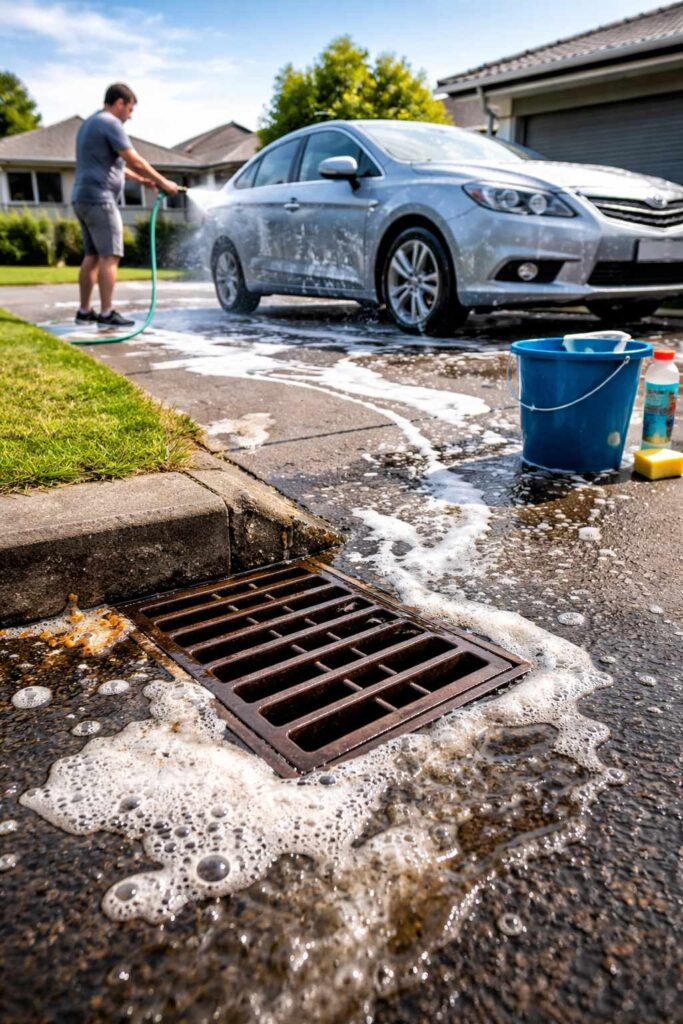
Washing your car at home might feel harmless, but across New Zealand it could now leave motorists facing a fine of up to $1,500. Authorities are reminding households that where car wash water ends up matters — and many people are unknowingly breaking the law.
The warning follows growing public attention after a social media post revealed an Auckland resident had been fined for washing a vehicle on a sealed driveway. The discussion quickly spread online, prompting councils and environmental groups to clarify the rules.
Why Washing Cars at Home Can Be Illegal
According to officials, the issue is not car washing itself — it’s the run-off. When vehicles are washed on concrete driveways or roads, the water flows directly into stormwater drains.
Unlike wastewater from toilets and sinks, stormwater is not treated. It flows straight into streams, rivers, and coastal waters.
Auckland Council says wash water often contains detergents, oil residue, fuel traces, metals, and dirt — all of which can damage waterways.
Even biodegradable detergents can pollute waterways, particularly when they enter streams and marine environments in large volumes.
The Law Behind the Fines
Stricter penalties were introduced in September following amendments to New Zealand’s environmental laws aimed at protecting waterways.
- $1,500 fine for individuals who discharge contaminants into stormwater systems
- $3,000 fine for companies
Previously, individuals faced fines of $750. Authorities say the increase reflects growing concern about declining water quality nationwide.
What Environmental Groups Are Saying
Environmental organisations warn many households don’t realise stormwater drains are designed only for rainwater.
Stormwater flows untreated into rivers and the sea, meaning any pollutants can harm fish, shellfish, and coastal ecosystems.
Polluted waterways can also make popular swimming spots unsafe and damage food sources relied upon by local communities.
Safe Ways to Wash Your Car Without Breaking the Rules
Car owners are not banned from washing vehicles — but they must do so responsibly.
- Wash vehicles on grass or gravel where water can soak into the ground
- Use sandbags to redirect water away from storm drains
- Use a commercial car wash where wastewater is treated
- Dispose of dirty water through toilets or indoor sinks, not outdoor drains
Commercial car wash facilities are built to safely treat contaminated water before it is released.
Community Car Washes Also Under Scrutiny
Councils are also warning organisers of charity and community car washes that large volumes of wash water can trigger enforcement action.
Organisers are advised to block stormwater drains, divert water to unsealed ground, or obtain permission to discharge water into sewer systems.
If suitable locations are unavailable, councils recommend partnering with self-service car wash businesses instead.
What Homeowners Should Do Next
Households unsure about local rules are encouraged to check council guidelines before washing vehicles at home.
Authorities stress that protecting waterways is a shared responsibility — and small actions at home can make a big difference.
The Bigger Picture
New Zealand’s rivers, beaches, and marine environments face increasing pressure from urban runoff. While one driveway car wash may seem minor, thousands of similar discharges can quickly add up.
For many drivers, the safest option is also the simplest: avoid washing cars on sealed surfaces and think carefully about where wash water flows.
Source: Radio New Zealand (RNZ)

Make Swikblog your go-to source on Google for reliable updates, smart insights, and daily trends.