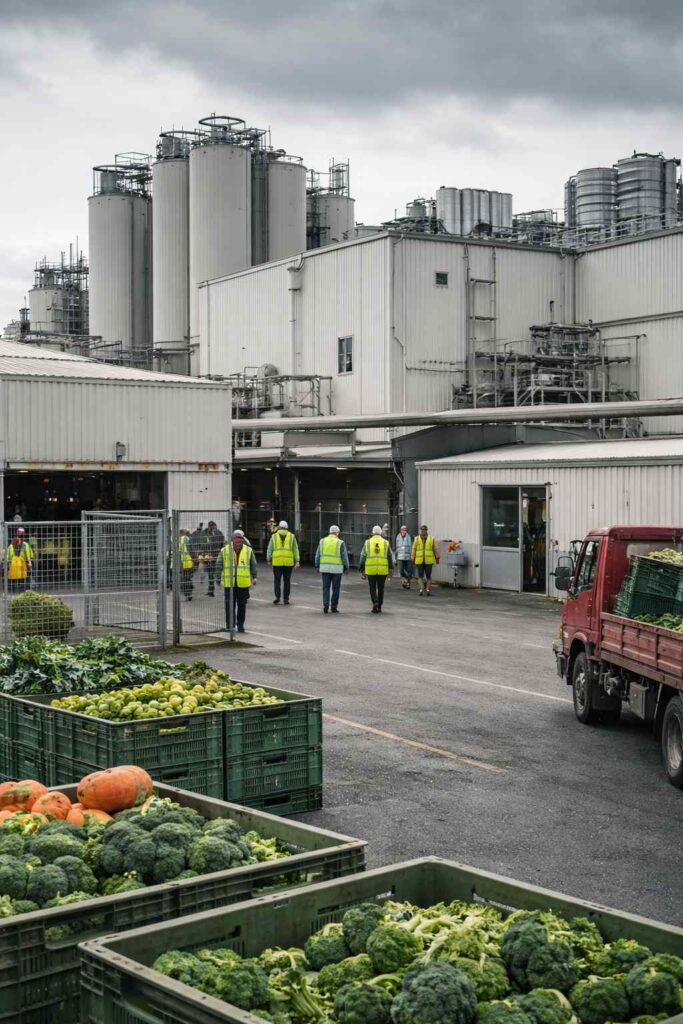

Heinz Wattie’s has proposed a sweeping restructuring of its New Zealand manufacturing operations, a move that could lead to the closure of three major facilities and place about 350 jobs at risk. The proposal, which affects plants in Auckland, Christchurch, and Dunedin, marks one of the most significant shake-ups in the country’s food manufacturing sector in recent years.
The company said it is considering shutting the three manufacturing sites while also ending packing operations tied to frozen product lines at its King Street facility in Hastings. The proposal forms part of a broader plan to discontinue several product categories, including frozen vegetables, Gregg’s coffee, and dips sold under the Mediterranean, Just Hummus, and Good Taste Company brands.
If the changes proceed following consultation, those product lines would gradually be phased out over the course of the year, significantly reducing the company’s local production footprint.
Three factories and multiple product lines affected
The proposed closures would impact manufacturing operations in Auckland, Christchurch, and Dunedin. In addition, Heinz Wattie’s said packing operations connected to frozen vegetable lines in Hastings would cease.
In total, about 350 roles are expected to be affected by the plan, although the final number of job losses will be confirmed after the consultation process concludes. The company said it will explore possible redeployment opportunities for affected workers where feasible.
The products slated to be discontinued include frozen vegetable ranges, Gregg’s coffee products, and dips sold under several brands. These categories have long been familiar to New Zealand consumers, making the proposal particularly notable in a market where Wattie’s has been a household name for decades.
Economic pressures behind the decision
Heinz Wattie’s managing director Andrew Donegan said the company faced increasing challenges operating in New Zealand’s manufacturing environment. According to Donegan, rising global inflation and industry-wide pressures have made it more difficult to sustain certain production lines domestically.
“The decision to start this process was not taken lightly,” Donegan said, adding that multiple alternatives had been explored before reaching this stage. The company believes the proposed restructuring is necessary to position the business for the future.
The move reflects broader pressures across food manufacturing, where companies must balance local production costs against global supply chains and increasingly competitive import markets. For multinational-backed food brands, the decision about whether to produce domestically often comes down to cost efficiency and long-term margin sustainability.
Impact spreads beyond factory workers
While the immediate focus has been on the 350 jobs potentially affected, industry observers say the economic ripple effects could extend much further.
For example, around 220 growers in the Canterbury region supply produce to the Christchurch facility. If that plant closes, those growers could lose a key processing partner, forcing them to seek new buyers or adjust their crop planning.
Local communities that rely on manufacturing employment could also experience wider economic consequences. Workers spending wages locally support retail businesses, services, and contractors, meaning plant closures can weaken regional economies well beyond the immediate workforce.
Union response highlights worker concerns
Union representatives have reacted strongly to the proposal, describing it as a major blow to both workers and the broader food industry.
E tū union delegate Kathy Perrin, who has worked for the company for 46 years, said many staff members have spent decades building careers with Heinz Wattie’s or its predecessor operations. According to Perrin, the average length of service among some workers is around 30 years.
She said the financial and emotional impact could be severe for employees, particularly those approaching retirement age or dealing with rising living costs.
E tū director Finn O’Dwyer-Cunliffe also criticized the way the announcement was delivered, saying unions received only around 45 minutes’ notice before workers were informed at multiple sites. He described the proposal as a “huge blow” for employees and warned the ripple effects could spread across the wider food production sector.
A sector already facing pressure
The restructuring proposal comes at a time when parts of New Zealand’s food manufacturing industry are already under strain. Rising production costs, competition from cheaper imported products, and shifting consumer demand have forced companies to rethink traditional supply chains.
Heinz Wattie’s itself has made several adjustments in recent months. In October, the company announced it would reduce the amount of fruit and vegetables sourced from Hawke’s Bay, citing difficulties competing against imported alternatives. A month earlier, it also revealed plans to cut production of canned peaches.
Taken together, those earlier moves suggest the current proposal is part of a broader strategy to reshape the company’s operations in response to structural pressures in the food processing market.
Consultation process underway
The company emphasized that the proposal remains subject to consultation with employees and unions. During this period, Heinz Wattie’s will gather feedback, evaluate alternatives, and assess potential redeployment options.
The final number of job losses and operational changes will only be confirmed once that consultation process is complete. In the meantime, the company said it would continue working with staff, unions, growers, and retail partners as discussions progress.
For a brand that has been closely tied to New Zealand’s food industry for generations, the proposal represents a significant turning point. The outcome of the consultation process will determine whether the country’s manufacturing landscape loses three more major food processing sites.
More details about the proposal and its potential impact were reported by NZ Herald and RNZ, both of which highlighted the scale of the job losses and the potential ripple effects across growers and regional communities.

Make Swikblog your go-to source on Google for reliable updates, smart insights, and daily trends.