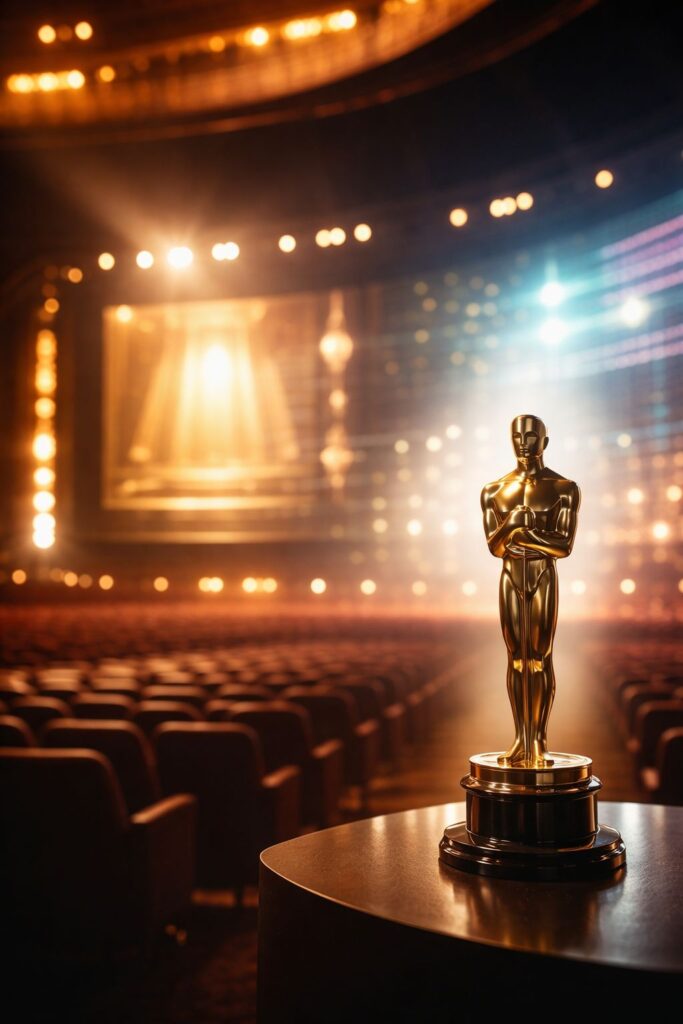

The Academy Awards, long considered one of television’s most prestigious live events, are preparing for a fundamental transformation. Beginning in 2029, the Oscars will stream exclusively on YouTube, ending their decades-long presence on traditional broadcast television.
The move marks a historic break from the ceremony’s partnership with ABC, which has aired the event since the 1970s. More broadly, it reflects a shift in how global audiences consume live entertainment — and how Hollywood is adapting to an era in which digital platforms increasingly define cultural relevance.
Why the Oscars Could No Longer Rely on Broadcast Television
For much of its history, the Oscars thrived as appointment television, drawing tens of millions of viewers to a single night of live programming. In recent years, however, that model has weakened. Ratings have fluctuated, younger viewers have drifted away, and the ceremony’s long runtime has struggled to compete with on-demand viewing habits.
While award shows still generate headlines and social media buzz, fewer people now watch them from start to finish. Instead, audiences increasingly engage through short clips, viral speeches, red-carpet moments, and real-time reactions shared online. Broadcast television, once the center of that experience, has become only one of many viewing options.
Why YouTube Offers What TV No Longer Can
YouTube’s appeal lies in its scale and flexibility. The platform reaches more than two billion logged-in users each month, across nearly every country, without requiring a cable subscription or regional broadcaster. For the Academy, that global reach solves a long-standing challenge: how to make the Oscars truly accessible to international audiences.
Unlike traditional television, YouTube also allows content to live beyond the broadcast window. Acceptance speeches, performances, and backstage moments can be published instantly, extending the ceremony’s life well beyond Oscar night. As CNBC has reported, this long-tail engagement has become increasingly valuable to advertisers and event organizers alike.
What Viewers Can Expect to Change in 2029
For viewers, the shift is expected to simplify access. The Oscars will likely be free to watch on YouTube, removing geographic restrictions and pay-TV barriers that have limited audiences in the past. Viewers will be able to tune in on smartphones, tablets, smart TVs, or computers — wherever they already consume video.
Interactivity is also expected to play a larger role. Live chat, real-time polling, and creator-led commentary streams could exist alongside the main broadcast, offering viewers multiple ways to experience the event. Rather than a single, linear program, Oscar night may become a broader digital ecosystem.
How the Ceremony Itself Could Evolve
The move to YouTube does not necessarily mean abandoning tradition, but it may allow for experimentation. Shorter segments, alternative camera angles, and behind-the-scenes feeds could complement the main ceremony. The Academy has previously faced criticism for trying — and sometimes failing — to modernize the show within the limits of broadcast television.
Digital distribution offers more freedom to test formats without the rigid time constraints of network schedules. Whether that leads to a leaner ceremony or simply a more layered experience remains to be seen.
What the Move Means for ABC and Broadcast Networks
For ABC, losing the Oscars is a symbolic moment. Award shows were once among the most reliable sources of live, mass audiences — a key advantage in an era of fragmented viewing. Their gradual migration to streaming platforms highlights the shrinking role of broadcast networks in entertainment programming.
According to media analysts cited by CNN, networks are increasingly concentrating on sports, live news, and major events that still draw real-time viewers. Entertainment ceremonies, by contrast, are proving more adaptable — and arguably better suited — to digital platforms.
A Sign of a Broader Cultural Shift
The Oscars’ move to YouTube reflects more than a change in distribution. It underscores how cultural moments are now shaped by digital platforms, where viewers expect immediacy, participation, and shareability. In that environment, relevance is measured not only by ratings, but by engagement.
By 2029, the Academy is betting that the Oscars can remain a global event by meeting audiences where they already are — online. Whether the move reinvigorates the ceremony or simply redefines it, one thing is clear: the era of award shows as purely television events is coming to an end.
You may also like:
How Social Platforms Are Replacing Traditional TV Moments
Written by Swikblog Desk

Make Swikblog your go-to source on Google for reliable updates, smart insights, and daily trends.