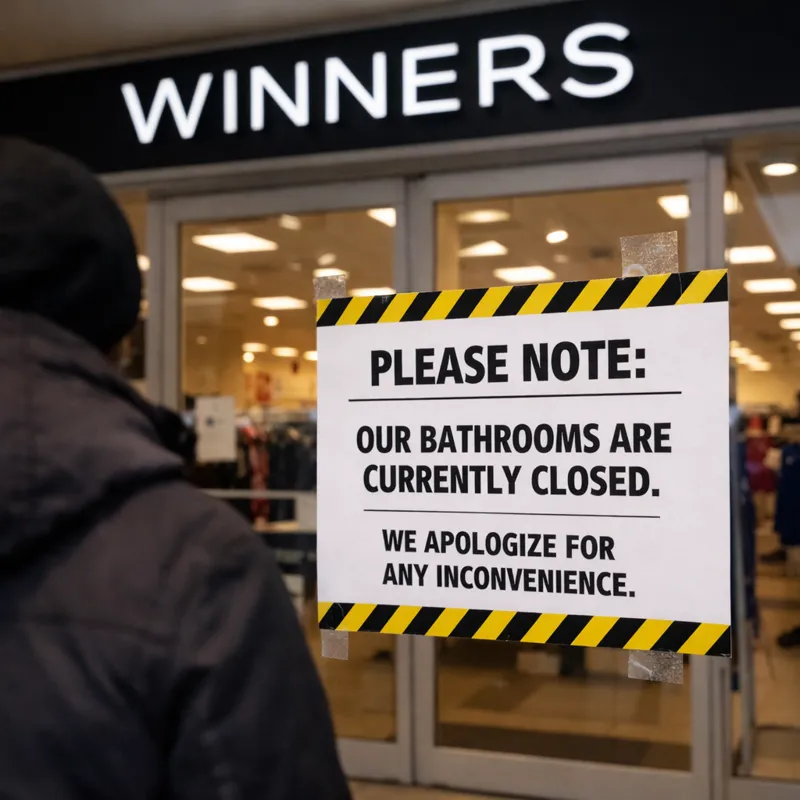

Winners, HomeSense and Marshalls are facing growing scrutiny across Canada after shoppers reported that bathrooms in several locations have been closed or restricted, sparking confusion and frustration over access to basic facilities inside large retail stores.
The issue gained traction in mid-April after customers in cities including Toronto, Montreal, Ottawa, Thunder Bay and Dartmouth said washrooms were taped off, locked or unavailable. In some cases, shoppers said they were told facilities were permanently closed, while others were advised to ask a manager for access — highlighting inconsistent practices across locations.
The retailer’s parent company, TJX, has pushed back on claims of widespread closures, saying only a small number of washrooms are currently unavailable and that closures are typically temporary. The company added it has no plans to shut bathrooms nationwide. Still, on-the-ground experiences appear to vary significantly, with some stores reportedly operating without accessible facilities for years, while others continue to offer them.
The debate has quickly moved beyond inconvenience. For customers with medical conditions such as inflammatory bowel disease, access to a nearby washroom is essential. Some shoppers say the lack of facilities has made it difficult — or even impossible — to spend time browsing in stores designed for longer visits.
At the same time, retail employees and industry experts point to a different reality behind the scenes. Store bathrooms have increasingly become difficult to manage, with reports of vandalism, drug use, discarded needles and damage to plumbing systems. In some cases, staff have described dealing with hazardous waste or unsafe situations, responsibilities that go far beyond their training or job expectations.
Retail industry groups say these challenges are part of a broader shift. Bathrooms are often unmonitored spaces, making them vulnerable to misuse and, in some cases, theft-related activity such as removing security tags. Maintaining these facilities also adds to operational costs and staffing pressures at a time when retailers are already navigating rising crime and tighter margins.
Confusion and inconsistent access fuel backlash
Much of the public reaction has been driven by uncertainty rather than a single clear policy. While some stores continue to provide bathroom access, others have signs indicating closures, and in certain locations staff have told customers the facilities are no longer available. This lack of consistency has made it difficult for shoppers to know what to expect before visiting.
Social media posts and customer forums have amplified the issue, with shoppers questioning why large stores — where people often spend significant time — would not offer basic amenities. Parents with young children, seniors and those with health conditions have been among the most vocal, arguing that access to washrooms is not optional but necessary.
Retailers, however, are not legally required in most cases to provide customer bathrooms unless specific regulations apply. That legal position has done little to ease criticism, as expectations for large-format stores remain high, particularly those designed around extended browsing.
A wider issue beyond retail
The controversy has also drawn attention to a broader gap in public infrastructure. In many Canadian cities, publicly accessible washrooms are limited, inconsistent or poorly maintained, leaving private businesses to fill the void. When those businesses begin restricting access, the impact is felt immediately by the public.
Experts say this overlap is where the tension lies. Retail stores are not designed to function as public facilities, yet in practice they often do. When safety concerns, maintenance issues or social challenges increase, businesses may scale back access — but that decision can expose wider systemic problems.
The situation mirrors similar actions elsewhere, where transit authorities and businesses have temporarily closed bathrooms due to vandalism or safety risks. Some locations have even introduced measures such as blue lighting to deter drug use, underscoring the complexity of managing these spaces.
As the debate continues, the focus is shifting toward finding balance — between customer access and employee safety, between convenience and operational reality. The growing attention around Winners and its sister brands suggests the issue is unlikely to fade quickly, especially as cities continue to struggle with limited public washroom availability, a challenge highlighted in ongoing discussions around access in major urban areas.
For now, shoppers are left navigating a patchwork system, where bathroom access may depend not just on the brand, but on the specific store — and even the day they visit.
You may also like Washington Commanders 2026 uniforms reveal sparks Super Bowl-era buzz with Hail Raiser look.

Make Swikblog your go-to source on Google for reliable updates, smart insights, and daily trends.