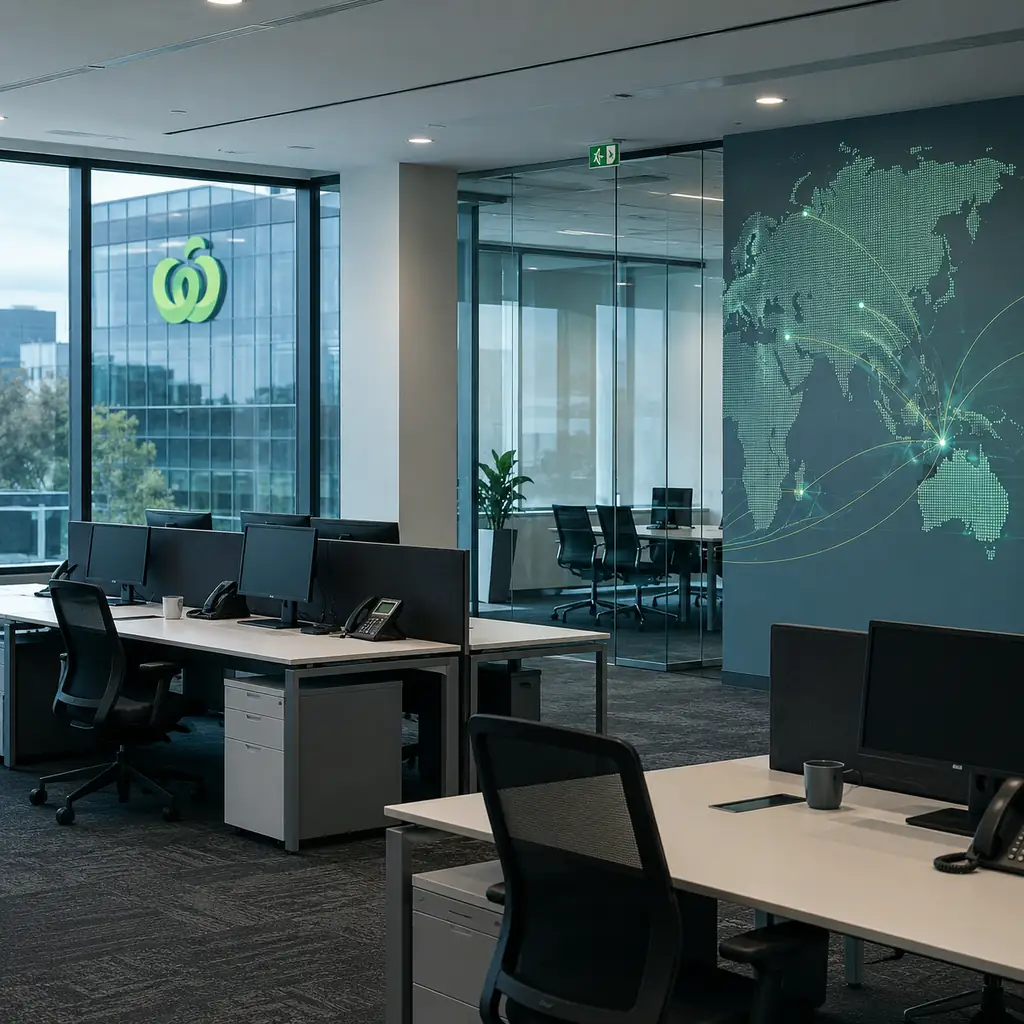

Woolworths is moving into another sensitive phase of its cost-cutting agenda, with the supermarket giant beginning consultation with thousands of corporate workers over plans to outsource head office roles to Asia.
The company has confirmed it is consulting with its corporate workforce, but the final number of Australian jobs that could be outsourced has not been publicly confirmed. ABC reporting says Woolworths has around 10,000 corporate employees, with hundreds of roles understood to be under review across teams including People, IT and Finance.
The proposal is still subject to consultation, meaning the final scale of any role changes may shift before Woolworths makes a final decision.
The decision lands at a difficult moment for Australia’s white-collar workforce. Large employers are under pressure to reduce costs, increase productivity and keep pace with global competitors, but the shift of corporate roles offshore is also raising sharper questions about local job security, especially in functions once seen as stable head office careers.
According to ABC News, Woolworths said the move forms part of a broader effort to remove complexity, lift productivity and keep prices competitive for customers. The company also said it has long had teams located across Asia and managed service arrangements in place.
Woolworths frames the move around efficiency and lower costs
Woolworths’ explanation points to the same pressure facing much of the Australian retail sector: shoppers remain highly price-sensitive, international competitors are expanding, and major supermarket chains are trying to protect margins while still promising better value.
For Woolworths, the outsourcing plan appears focused on support office work rather than store operations. That distinction matters. The supermarket’s public brand is built around checkout teams, fresh food departments, warehouse logistics and customer-facing roles, but the modern retail machine also depends heavily on finance systems, payroll, technology platforms, data teams, HR operations and back-office administration.
Those are the areas increasingly exposed to global service models. Companies can centralise corporate functions in offshore hubs, use managed service providers, and shift repeatable work into lower-cost markets. For investors, that can look like a productivity gain. For Australian workers, it can feel like another sign that even skilled office roles are no longer protected from global labour competition.
Woolworths has not confirmed the final number of roles that may be moved, and consultation could still shape the outcome. But the fact that hundreds of roles are understood to be affected makes the decision significant, not only for the workers involved but for the wider debate about where major Australian companies choose to base critical business functions.
Australian office jobs face a broader offshoring shift
The Woolworths move follows growing scrutiny of white-collar offshoring across corporate Australia. Retailers, banks, telcos and service companies have increasingly looked to offshore service models for technology, analytics, finance, customer operations and administrative work.
The argument from business is usually straightforward: offshore teams can provide scale, specialist skills and lower operating costs. The counterargument is just as clear: when major Australian companies shift skilled jobs overseas, the local economy loses career pathways, institutional knowledge and corporate capability.
That tension is particularly sharp for Woolworths because of its scale. The group is one of Australia’s most recognisable employers, with a huge national footprint and a central role in household spending. Any decision involving its Australian workforce tends to attract close attention, especially during a cost-of-living period when supermarkets are already under pressure over prices, competition and public trust.
The company’s position is that efficiency is necessary to remain competitive and deliver better value. But for workers in affected corporate teams, the immediate concern is more personal: whether their role remains in Australia, whether redeployment is available, and whether consultation leads to meaningful changes or simply confirms a decision already in motion.
For customers, the impact may be less visible at first. Store shelves, checkouts and online orders are unlikely to change overnight because this is a head office and corporate support issue. But over time, changes in technology, finance, HR and operational support can affect how quickly a retailer moves, how well it supports frontline teams, and how much of its decision-making capability remains close to the Australian market.
The outsourcing plan also adds a new layer to the supermarket sector’s wider reset. Woolworths and its rivals are under pressure to simplify ranges, sharpen pricing, invest in digital systems and respond to competition from discount and international players. Cutting corporate costs may help the balance sheet, but it also risks deepening concern among workers who have already seen large employers use restructuring as a routine response to margin pressure.
For now, the most important detail remains unresolved: the final number of Australian jobs affected. Until Woolworths completes consultation, the scale of the change remains unconfirmed. What is already clear is that one of Australia’s biggest retailers has placed corporate offshoring firmly back in the national business conversation.

Make Swikblog your go-to source on Google for reliable updates, smart insights, and daily trends.