
Updated: July 3, 2026
A 12-year-old child was taken to hospital after being injured by a bison in Yellowstone National Park, prompting officials to remind visitors that the park’s iconic wildlife can become dangerous if people get too close. The incident happened near the popular Mud Volcano geothermal area, one of Yellowstone’s busiest stops during the summer travel season.
According to the National Park Service (NPS), the encounter occurred at about 9:15 a.m. on Friday, June 26, north of Fishing Bridge. Emergency medical personnel responded at the scene before transporting the child to a nearby hospital. Authorities have not released details about the child’s condition or the events leading up to the encounter while the investigation continues.
Victim: 12-year-old child
Location: Mud Volcano area, north of Fishing Bridge
Date: Friday, June 26
Time: Around 9:15 a.m.
Response: Emergency crews transported the child to hospital
Status: Investigation remains ongoing
What Park Officials Have Confirmed
Investigators have confirmed only the basic facts of the incident. They have not said how close the child or others were to the animal before the attack, whether the bison was moving through the area, or what immediately triggered the encounter.
Officials often limit public details during active investigations while reviewing witness accounts, photographs, video footage and the location of everyone involved. That process helps determine how the encounter unfolded and whether park safety guidelines were followed.
Why The Mud Volcano Area Can Bring People And Wildlife Together
The Mud Volcano section of Yellowstone attracts large numbers of visitors because of its steaming vents, bubbling mud pots and boardwalk trails. At the same time, the surrounding landscape is natural habitat for bison, elk and other large mammals that regularly move through developed visitor areas.
Wild animals do not avoid roads, parking areas or walking paths simply because people are nearby. During busy periods, that creates situations where animals and visitors may find themselves sharing the same space.
Why Bison Are Responsible For More Visitor Injuries
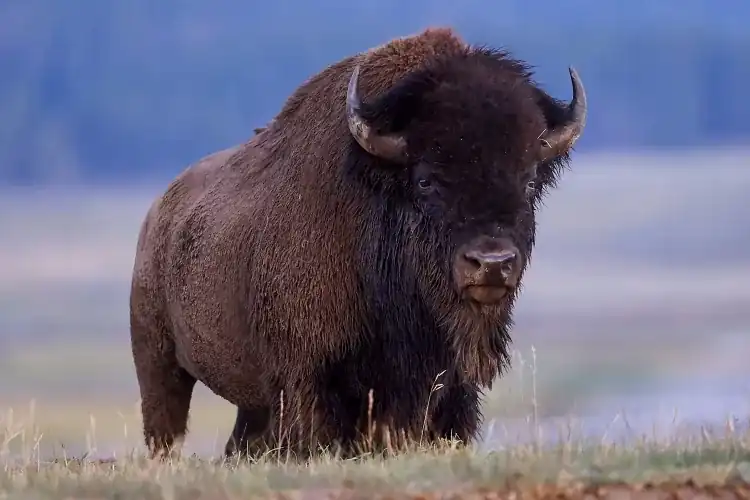
Bison are among Yellowstone’s most recognizable animals, but they are also involved in more visitor injuries than any other wildlife species in the park.
An adult bison can weigh more than 2,200 pounds and is capable of running roughly three times faster than a person. Although they often appear calm while grazing, they can react with little warning if they feel threatened, crowded or unable to move away.
Because of their size and speed, even a brief close encounter can quickly become dangerous.
Recent Incidents Show A Consistent Pattern
The latest case follows other bison-related injuries reported in Yellowstone during 2025.
In May, a 47-year-old visitor from Cape Coral, Florida, was gored near Lake Village after authorities said he approached a bison too closely. A month later, a 30-year-old visitor from New Jersey suffered minor injuries near Old Faithful after a crowd gathered around another animal.
Those incidents reinforce the same message issued by park officials every year: wildlife should always be viewed from a safe distance, even when animals appear relaxed.
Why Summer Is The Highest-Risk Season
Summer brings Yellowstone’s largest crowds, with thousands of visitors stopping at popular viewpoints throughout the park each day. Wildlife sightings often attract additional people within minutes, making it easier for animals to become surrounded.
When multiple people move closer for photographs or block an animal’s path, a bison may respond defensively instead of continuing to graze or walk away.
Families visiting the park should remember that the required 25-yard distance is much farther than it may appear in an open landscape. Giving wildlife extra space remains the safest approach.
Simple Steps That Help Prevent Dangerous Encounters
Park officials recommend using binoculars or zoom lenses instead of walking toward wildlife. If a bison changes direction toward people, stops grazing, raises its tail or begins moving closer, visitors should slowly create more distance without running or surrounding the animal.
People should never attempt to feed wildlife, touch animals or position themselves between an animal and its natural route of travel.
Anyone planning a trip to national parks during peak travel season may also find it useful to review recent emergency updates, including the Oyster Cove bushfire warnings in Port Stephens, where changing conditions affected both local communities and visitors.
The National Park Service provides additional wildlife safety guidance through its official Yellowstone visitor safety page.
Read More
The investigation into the Yellowstone incident remains active, and officials have not released additional information about the child’s injuries. Until the review is complete, the confirmed facts remain limited to the time, location and emergency response.
For anyone visiting Yellowstone, the incident serves as another reminder that wildlife should always be observed from a respectful distance. Following park guidance helps protect both people and the animals that make Yellowstone one of North America’s most visited national parks.

Make Swikblog your go-to source on Google for reliable updates, smart insights, and daily trends.