
Updated: July 3, 2026
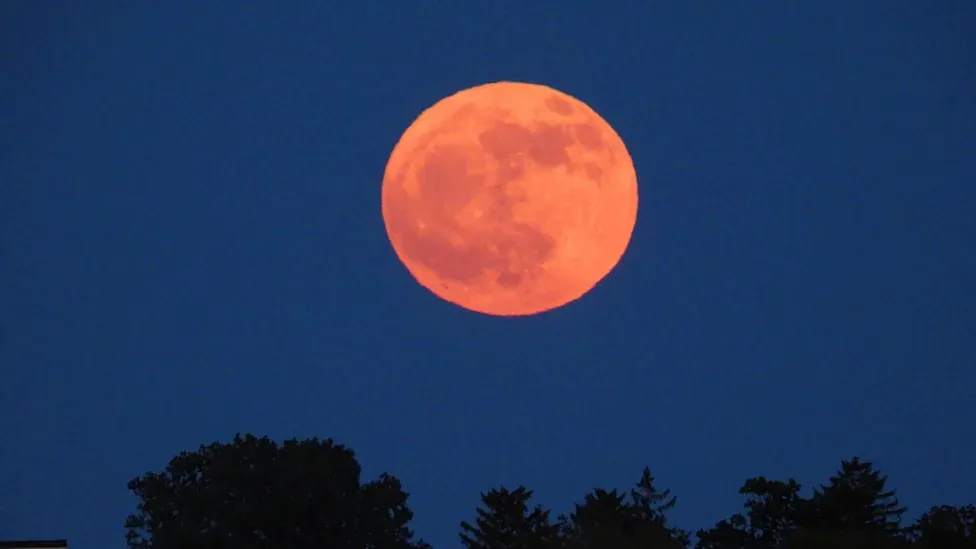
The June Strawberry Moon 2026 will reach full phase on Monday, June 29, giving skywatchers one of the standout lunar events of early summer. This full moon is notable because it occurs close to the Moon’s farthest point from Earth, making it the final full micromoon of 2026.
The exact full moon moment comes at about 8:00 p.m. EDT on June 29. For viewers in India, that is around 5:30 a.m. IST on Tuesday, June 30. The Moon will still appear nearly full for several nights, so cloudy skies on the peak night will not necessarily ruin the view.
Why this Strawberry Moon is unusual
June’s full moon is always closely watched because it arrives near the start of summer in the Northern Hemisphere. In 2026, it has added interest because of the Moon’s position in its orbit.
The Moon travels around Earth in an oval-shaped path rather than a perfect circle. At times it is closer to Earth, and at other times it is farther away. The farthest point in that orbit is called apogee.
When a full moon occurs near apogee, it is often called a micromoon. For this event, lunar apogee falls on June 28, just before the full moon peak on June 29.
That means the Strawberry Moon will appear slightly smaller and dimmer than an average full moon. The difference will be subtle to the naked eye, but it is part of what makes this year’s event stand out.
What the name Strawberry Moon means
The name Strawberry Moon does not mean the Moon will turn red, pink, or strawberry-colored. The name is linked to the time of year when strawberries traditionally ripen in parts of North America.
The term is widely associated with the lunar calendar traditions of the Anishinaabe and other Indigenous peoples of the Great Lakes region and northeastern North America. These seasonal Moon names helped mark harvests, weather shifts, food gathering, and natural changes through the year.
Later, almanacs helped popularize these full moon names for wider audiences, blending Indigenous seasonal knowledge with European and Colonial naming traditions.
Why June has the seventh full moon of 2026
In many years, June’s full moon is the sixth full moon on the calendar. In 2026, the count is different because the year includes an extra full moon.
A Blue Moon on May 30 added another full moon to the year’s lunar calendar. As a result, 2026 has 13 full moons instead of the usual 12.
That extra May full moon pushes the June Strawberry Moon into the seventh position. The May 30 Blue Moon was also close to apogee, making it the smallest full moon of the year. June’s event follows as another micromoon, but it is expected to be the last one of 2026.
Micromoon vs supermoon
| Moon type | Meaning |
|---|---|
| Micromoon | A full moon or new moon that occurs near apogee, when the Moon is farther from Earth. |
| Supermoon | A full moon or new moon that occurs near perigee, when the Moon is closer to Earth. |
| Strawberry Moon | The traditional name for June’s full moon, connected to strawberry harvest season. |
A micromoon does not look dramatically smaller to most people. Without another full moon beside it for comparison, the size change is easy to miss.
Brightness can be easier to understand. The June 29 micromoon is expected to be dimmer than an average full moon and much less bright than the December 23, 2026 Full Cold Supermoon, which is expected to be the year’s largest and brightest full moon.
The 13-moon calendar connection
The Strawberry Moon also reflects a deeper tradition of tracking time through lunar cycles. In some Anishinaabe teachings, the turtle shell is used as a natural calendar.
The 13 large plates on a turtle’s back represent the 13 lunar months of the year. The 28 smaller plates around the shell’s edge reflect the approximate number of days in a lunar cycle.
This connection shows that full moon names were more than poetic labels. They helped communities follow planting, harvesting, fishing, gathering, and weather patterns across the seasons.
Best time to see the Strawberry Moon
The best view usually comes shortly after moonrise, when the Moon is low above the eastern horizon. At that point, the Moon Illusion can make it appear larger than it really is.
This illusion happens because the brain compares the Moon with objects near the horizon, such as buildings, trees, hills, or mountains. Even though this full moon is technically a micromoon, it can still look impressive as it rises.
For a clearer view, choose a spot with an open eastern horizon. Parks, beaches, lakesides, rooftops, and open fields usually work better than streets blocked by tall buildings.
If you want more context on why 2026 has an unusual full moon calendar, the rare Blue Moon and micromoon earlier in the year helps explain the sequence.
Read More
If clouds block the view
You do not need to see the Moon at the exact peak to enjoy the event. The Moon will appear almost fully illuminated for several nights around June 29, giving viewers a wider viewing window.
If Monday night is cloudy, Sunday evening or Tuesday night may still offer a strong view. Checking local weather and moonrise times before heading outside can help you choose the best moment.
Photographers may get the most dramatic images when the Moon is close to the horizon. Framing it with trees, water, hills, buildings, or an open landscape can make the scene look more striking.
What comes after the June micromoon
The June 29 Strawberry Moon is expected to be the third and final micromoon of 2026. After this event, full moons will gradually occur closer to Earth.
That shift means later full moons in 2026 should appear larger and brighter. The trend builds toward the Full Cold Moon on December 23, 2026, which is expected to be a perigee supermoon.
For official lunar science, Moon orbit information, and observation resources, visit NASA’s Moon science page.

Make Swikblog your go-to source on Google for reliable updates, smart insights, and daily trends.