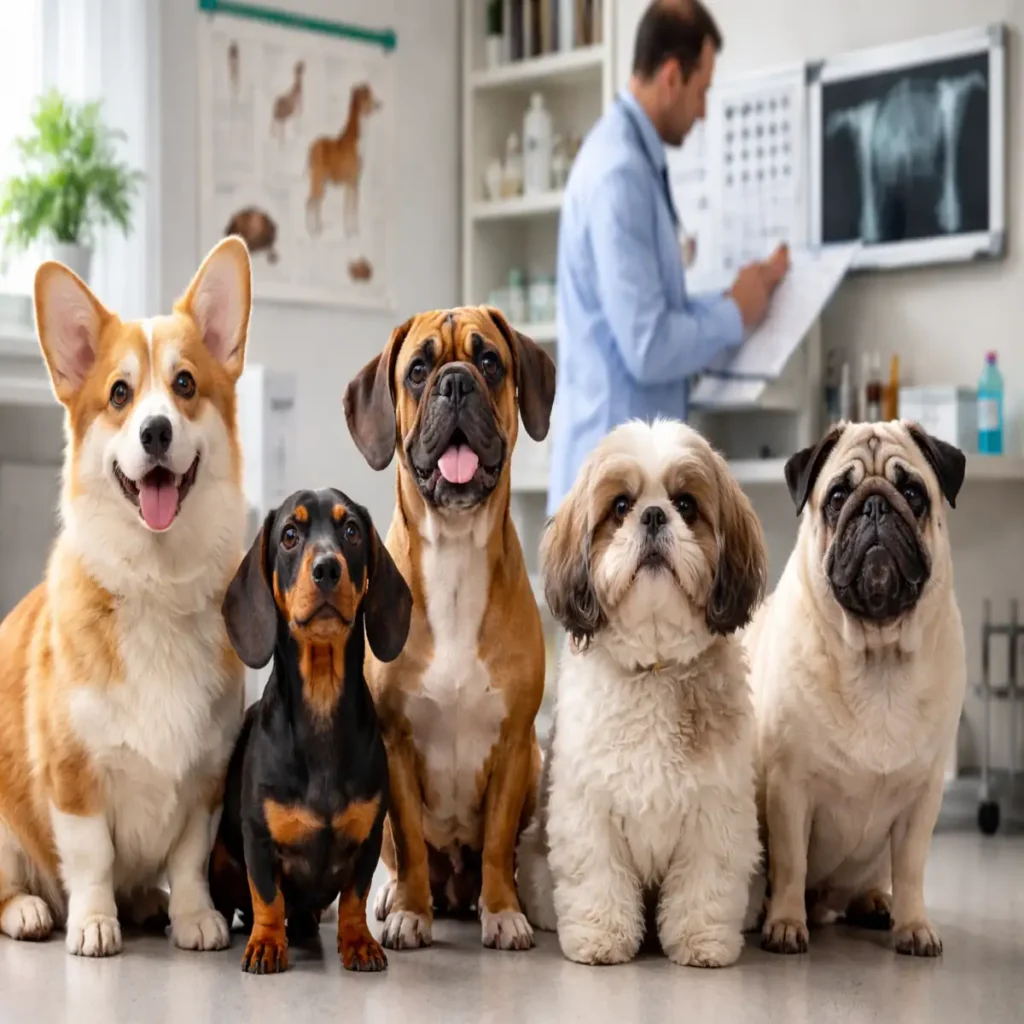

Britain could be heading toward one of its biggest dog breeding policy shifts in years, with a proposed health-law framework that may affect 67 dog breeds if it is eventually written into animal welfare legislation. The debate has drawn widespread attention because the breeds discussed are not obscure ones at the edges of the pet world, but some of the most recognisable dogs in the country, including shih tzus, Welsh corgis, dachshunds, pugs, French bulldogs and Cavalier King Charles spaniels.
The proposal is not about criminalising families who already live with these dogs. Instead, it is focused on future breeding and whether dogs with body shapes linked to chronic pain, breathing difficulty, spinal stress and other inherited problems should continue to be produced by licensed breeders. Supporters argue that for too long, dogs have been selectively bred to satisfy human preferences for appearance while the animals themselves are left to live with the consequences.
The health test at the centre of the debate
The proposed framework is tied to the Innate Health Assessment, developed by the All-Party Parliamentary Group for Animal Welfare. The assessment includes 10 visual health checks designed to judge whether a dog’s structure supports normal function and healthier movement, breathing and comfort. Under the model, a dog must meet at least eight of the 10 checks to pass. Dogs that do not pass should not be bred under the proposed approach.
The checklist is already being used by some councils when they decide whether to grant breeding licence applications. At the moment, its use is voluntary, but campaigners want it folded into law within the next five years, which would mean licensed breeders across Britain would be expected to apply the same standard before breeding and selling puppies.
A summary of the welfare debate and the proposed assessment has been outlined by PETA UK, which backs a much broader end to dog breeding and sees mandatory health testing as an important step toward reducing suffering caused by appearance-driven breeding.
The 10 checks that could decide whether a dog is bred
The Innate Health Assessment focuses on visible physical traits that supporters say reveal whether a dog has been bred for function or for fashion. The checklist states that a healthy dog should have a muzzle measuring at least one-third of the skull length, a tail long enough to wag, and a spine that can flex normally. It also says a dog should have natural leg length without dwarfism, smooth skin without folds, and straight legs without bowing.
Other checks focus on eye and jaw structure. A dog should have eyelids that do not droop or turn inward, a jaw that closes correctly without an overbite or underbite, and eyes that sit deeply in the socket rather than bulging outward. The assessment also states that dogs should not have merle colouring, a marbled coat pattern that in some cases has been linked to inherited health problems when badly managed in breeding.
Why supporters say the assessment matters
Backers of the proposal say these checks matter because many pedigree dogs have been shaped by generations of selective breeding that exaggerate certain features for visual appeal. Flat-faced dogs are among the clearest examples. Breeds such as pugs and French bulldogs often struggle to breathe because their shortened muzzles and compressed airways reduce airflow. For some of these dogs, things that should be joyful and routine, such as running, chasing a ball or walking on a warm day, can become difficult or even dangerous.
The concerns do not stop with flat faces. Cavalier King Charles spaniels, also widely discussed in welfare debates, have been linked to serious skull and brain issues. Critics of current breeding practices point to the fact that some dogs in the breed can suffer because their brains are too large for their skulls, leading to pain, sudden yelping and repeated scratching caused by underlying neurological distress.
Dogs with very short legs and long spines, including dachshunds and Welsh corgis, are another focus of concern. Their exaggerated build may look distinctive, but it can also place intense strain on the spine and joints. Supporters of reform argue that these dogs are more vulnerable to arthritis, mobility problems and severe back issues. In dachshunds, up to a quarter of the breed is said to be affected by intervertebral disc disease, a painful condition that can cause recurring spinal damage, major suffering, paralysis and the need for surgery.
The full list is broad and includes many familiar breeds
If the assessment becomes law, the effect would spread across dozens of breeds rather than a small handful. The list discussed around the proposed rules includes Affenpischer, American Cocker Spaniel, Australian Cattle Dog, Australian Shepherd, Basset, Basset Bleu, Basset Fauve, Beagle, Beauceron, Bergamasco, Bloodhound, Border Collie, Boston Terrier, Boxer, Bracco, Brittany, Brussels Griffon, Bullmastiff, Bulldog, Cairn Terrier, Cardigan Welsh Corgi, Cavalier King Charles Spaniel, Cesky Terrier, Chihuahua, Chow Chow, Clumber Spaniel, Dachshund, Dandie Terrier, Dogue de Bordeaux, French Bulldog, Glen of Imaal Terrier, Grand Basset, Great Dane, Japanese Chin, King Charles Spaniel, Lancashire Heeler, Lhasa Apso, Mastiff, Mudi, Neapolitan Mastiff, Newfoundland, Norfolk Terrier, Norwich Terrier, Old English Sheepdog, Pekingese, Pembroke Welsh Corgi, Petit Basset, Polish Lowland, Pug, Pyr Mastiff, Pyr Shep, Rough Collie, Schipperke, Scottish Terrier, Sealyham Terrier, Shar Pei, Shetland Sheepdog, Shih Tzu, Skye Terrier, Smooth Collie, Spanish Water Dog, St Bernard, Staffordshire Terrier, Sussex Spaniel, Swedish Vallhund, Tibetan Mastiff and West Highland White Terrier.
The list shows just how wide-ranging the discussion has become. Some of the breeds named are associated with breathing issues, some with spinal or joint problems, and others with skin, eye or structural complications. The proposed law would not mean every dog in every breed suddenly disappears from Britain. It would mean breeders would face much tighter scrutiny over whether the dogs they are using can pass a defined health threshold.
What a ban would really mean for owners and breeders
The most important practical detail is that the proposed change would not make existing dogs illegal. Guardians would still be able to live with these dogs, care for them and adopt them from shelters. The proposal is aimed at licensed breeding, not at taking animals away from the people who already love them.
If the assessment is turned into law, breeders planning litters from dogs that fail the test would not be issued licences. In simple terms, licensed breeders would no longer be able to sell dogs that do not meet the required health standards. Over time, that could shrink the market for puppies bred with exaggerated traits and force a major reset in what responsible dog breeding is expected to look like in Britain.
Britain is under pressure as other countries move faster
Supporters of reform say Britain is already behind other European countries in tackling breeds that are seen as having been bred to suffer. The Netherlands has taken action against the breeding of flat-faced dogs and dogs with folded ears, while Norway has moved against the breeding of the Cavalier King Charles spaniel. Those examples have become part of the pressure on British lawmakers to decide whether welfare concerns should finally outweigh breed tradition and market demand.
The wider cruelty debate goes beyond a single checklist
The policy discussion has also reopened the broader argument over dog breeding itself. Campaigners say breeding is inherently exploitative because animals are treated as products, with appearance and sale value often taking priority over comfort and long-term wellbeing. They argue that the female dogs used for breeding can be forced through repeated pregnancies until their bodies are worn down, even when the physical demands are especially harsh for the breeds involved.
French bulldogs are often used as one of the starkest examples. Because of their body shape and narrow hips, many cannot reproduce naturally and may require forced manual impregnation. They can also require caesarean sections to give birth. Similar concerns are raised about breeds such as Boston terriers and chihuahuas, where pregnancy and delivery can place extraordinary strain on already altered bodies.
Critics of the current system say these are not isolated complications but the predictable result of breeding dogs into forms that no longer function naturally. That concern is one reason the debate has widened from narrow breed standards to a larger question about whether profit and fashion should continue to shape the future of companion animals.
The rescue crisis adds even more pressure
The breeding debate is landing at a time when Britain is also facing a rescue crisis. Animal welfare groups say tens of thousands of dogs are already in shelters because previous guardians were no longer willing or able to care for them. Reform advocates argue that every time another litter is bred and sold into the market, a dog already waiting in rescue loses another chance at finding a home.
That has made the issue bigger than pedigree rules or breeder licensing alone. For many campaigners, the proposed law is also about changing public expectations and moving demand away from dogs bred for appearance-driven trends and toward adoption, long-term care and welfare-first choices.
The political fight is only starting
For now, the Innate Health Assessment remains a voluntary tool in some parts of the licensing system, not a binding national law. But the push to include it in future animal welfare legislation means the issue is unlikely to fade quickly. If ministers and lawmakers move ahead, Britain could be forced into a difficult but increasingly unavoidable conversation about whether the country should continue allowing the routine breeding of dogs whose most defining features are also tied to suffering.
That is why this proposal has drawn such a strong reaction. It is not simply about breed names on a list. It is about whether the next generation of dogs in Britain will still be shaped by extreme looks, or by the basic health and comfort every animal should be able to enjoy.
Animal welfare concerns around selective dog breeding have intensified in Britain, with campaigners pointing to the proposed Innate Health Assessment and the list of dog breeds that could be affected if stricter breeding rules are eventually written into law.

Make Swikblog your go-to source on Google for reliable updates, smart insights, and daily trends.