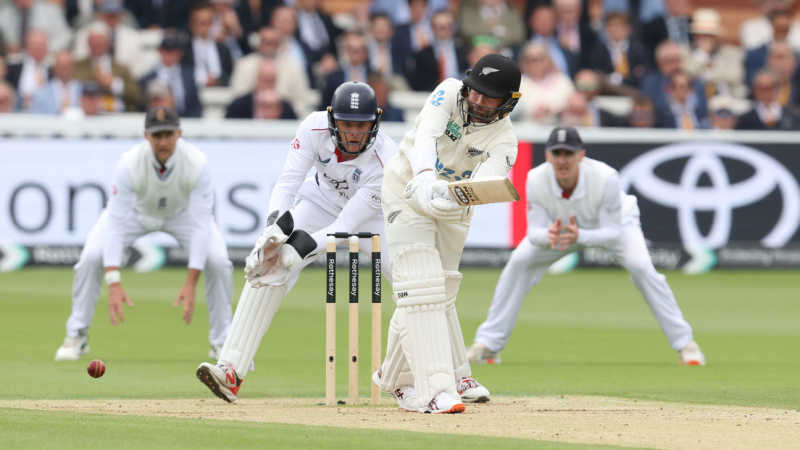
Travis Head has once again stamped his authority on the Ashes, producing a commanding century against England in the Third Test at the Adelaide Oval that has reignited debate about his place among Australia’s modern greats. In a series defined by momentum swings and pressure moments, Head’s innings stood apart — not just for its quality, but for the history it quietly rewrote.
Australia entered the decisive phase of the Test with an opportunity to seize control after dismissing England for 286 in their first innings. What followed was a performance of composure and controlled aggression from Head, who once again looked completely at home on the surface he knows better than any visiting bowler. From the moment he settled at the crease, the tempo of the match shifted.
Head’s century was built on clarity of intent rather than reckless force. He rotated the strike fluently, punished width without hesitation, and repeatedly pierced the off-side field with precision. England attempted to slow him with short spells of spin and a packed off-side field, but Head’s footwork and shot selection ensured the pressure remained firmly on the bowlers.
There was drama along the way. On 99, Head survived a clear chance when England spilled a catch that could have altered the course of the innings. The reprieve was costly. Moments later, Head reached his hundred, lifting his bat to an Adelaide crowd that has become accustomed to watching him dominate at this venue.
This century carried weight far beyond the immediate match situation. It marked Head’s fourth consecutive Test hundred at the Adelaide Oval — a statistical rarity that places him in the company of a select group of players who have forged extraordinary records at a single ground. The achievement has inevitably drawn comparisons with Sir Donald Bradman, whose name remains inseparable from Adelaide’s cricketing folklore.
While Head’s overall career numbers are still evolving, his Adelaide record tells a compelling story. Few modern players have shown such consistency at one venue, particularly in high-stakes contests like the Ashes. It is not simply that he scores runs here — it is the authority with which he controls matches, bending sessions and days to his rhythm.
Technically, the innings reflected a batsman at the peak of his understanding. Head’s balance against pace was assured, his use of the crease against spin decisive. Where earlier in his career he was sometimes accused of being overly aggressive, this knock showcased patience, discipline, and a growing ability to absorb pressure before striking decisively.
For Australia, the impact was immediate. Head’s innings allowed the lower order to bat with freedom and pushed England further onto the defensive. In an Ashes series where small windows can define entire Tests, this was a performance that may ultimately shape the direction of the contest.
The Adelaide Oval crowd sensed the significance of what they were witnessing. With each boundary, the atmosphere grew more charged, the familiarity of Head’s dominance at this ground turning expectation into belief. Adelaide has become his stage, and this century only deepened that bond.
As the Ashes moves on, attention will inevitably turn to whether Head can maintain this form away from his favoured conditions. But for now, his Adelaide record stands as one of the most remarkable venue-specific achievements of the modern era — a run of performances that has earned its place alongside some of Australian cricket’s most enduring legends.
For full match statistics and detailed scorecards from the Adelaide Test, readers can follow coverage via ESPNcricinfo, one of cricket’s most authoritative data sources.
You may also like:
Ashes 2025 Ticket Price Breakdown: Cheapest Tests, Fees, and Fan Tips

Make Swikblog your go-to source on Google for reliable updates, smart insights, and daily trends.