
The final episode of Stranger Things closes with a question that refuses to settle quietly: is Eleven alive, or did the show just say goodbye to its most powerful hero forever? The answer, by design, is complicated — and that ambiguity is the point.
At first glance, the finale appears to deliver a devastating sacrifice. As the bridge between Hawkins and the Upside Down threatens to tear both worlds apart, Eleven steps into danger knowing she may not return. A bomb detonates, the gate collapses, and her friends are left believing she has spent the last of her strength to end the nightmare once and for all.
But the show immediately resists a simple, definitive death.
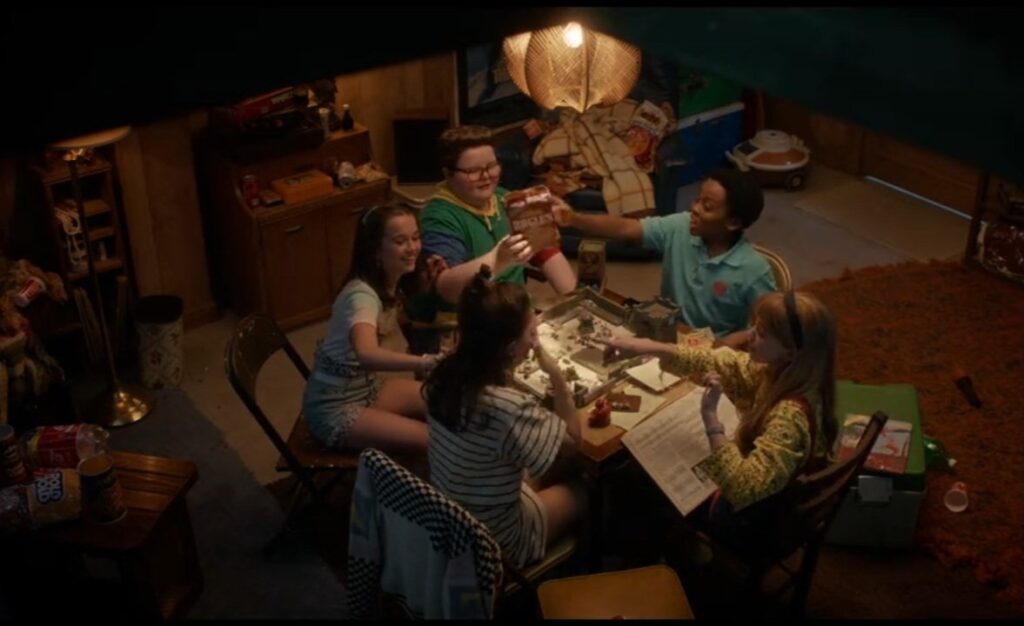
Eighteen months later, during a quiet Dungeons & Dragons game that mirrors the group’s own coming-of-age journeys, Mike introduces a different possibility. He suggests that Kali — Eleven’s sister — cast an illusion spell in the chaos of the explosion. What everyone thought they saw may not have been real. In this version, Eleven escaped through tunnels beneath the Upside Down, vanishing not in death, but in secrecy.
That theory is never confirmed on screen. Instead, the series lets it linger.
The ambiguity deepens when Hopper, manipulated by Vecna inside the Upside Down, believes he has accidentally killed his adoptive daughter after smashing the sensory deprivation tank. It’s one of the finale’s most brutal emotional turns — not because Eleven is definitively gone, but because grief arrives before certainty. The show asks viewers to sit with that pain rather than resolve it neatly.
By the end, the group talks about Eleven in the past tense, yet without finality. Mike openly chooses to believe she is alive, somewhere far away, finally free from laboratories, soldiers, and monsters. The others don’t challenge him. Hope, in this universe, becomes an act of survival.
The creators have been clear about why the ending refuses closure. In interviews following the finale, the Duffer Brothers explained that there were always two possible paths for Eleven: a darker, tragic interpretation, and a hopeful one rooted in belief rather than proof. Mike, they note, represents optimism. The story ends by aligning with his choice, not by confirming his facts.
Crucially, there was never a version of the finale where Eleven returned to Hawkins to resume a normal life. Taking away her powers or reintegrating her into the group would have undercut what she represents — the magic, danger, and loss of childhood itself. For Hawkins to heal, Eleven had to go away.
This is why the final image of the show matters so much. The torch passes to younger kids beginning their own D&D campaign, echoing the opening of the series years earlier. Life goes on. Stories repeat. The world keeps turning, even after something extraordinary disappears from it.
So, is Eleven alive or dead?
Textually, the show never confirms her death. The illusion theory is plausible, repeatedly emphasized, and never contradicted. Thematically, however, Eleven is both gone and alive at once — absent from Hawkins, but present in the characters’ futures. The finale asks viewers to choose which truth they want to live with.
That choice mirrors growing up itself. Childhood ends not with certainty, but with belief. You don’t always know what happened to the people who shaped you — only that they mattered, and that you carry them forward.
In that sense, Eleven survives exactly as she was meant to.
For deeper reporting on the finale and creator commentary, you can read additional coverage from Variety and Netflix’s official hub at TUDUM.

Make Swikblog your go-to source on Google for reliable updates, smart insights, and daily trends.