
By Swikriti • Updated Jan 22, 2026
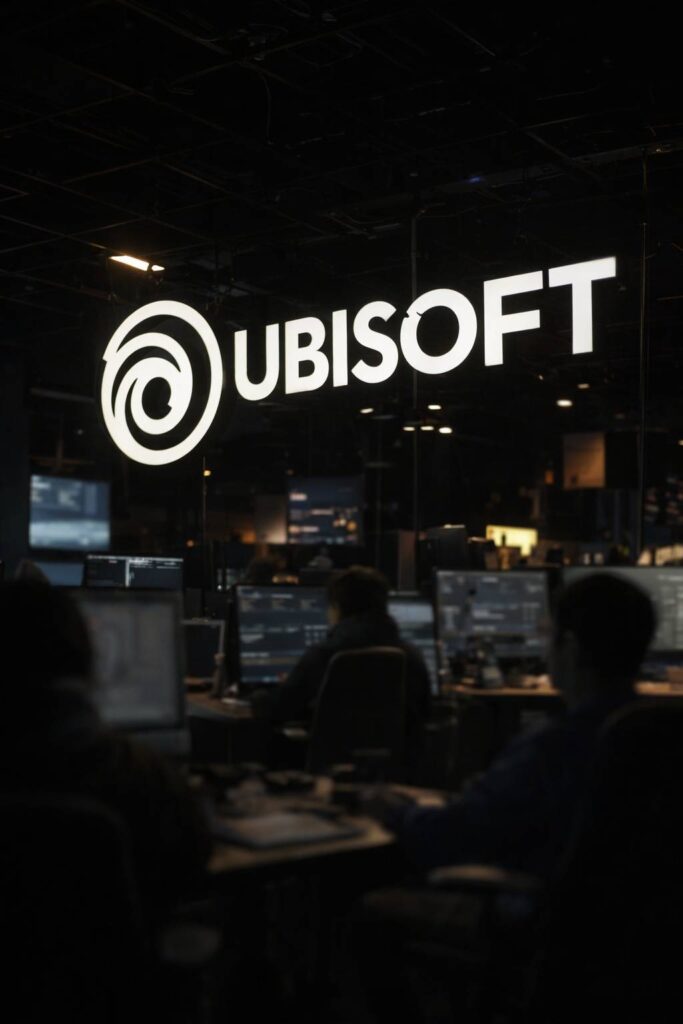
A wave of cancellations and studio changes has put one of gaming’s biggest publishers back under the microscope — and raised new questions about how blockbuster games are made, funded, and kept on track.
When a company as large as Ubisoft hits the reset button, it rarely comes down to a single bad decision. It’s usually a stack of pressures — creative, financial, technical, and cultural — landing at the same time. That’s why news that Ubisoft has cancelled multiple projects and reshuffled parts of its development pipeline is reverberating well beyond one studio. For players, it means fewer releases in the short term and more uncertainty around long-awaited titles. For the industry, it’s another sign that the old “bigger, longer, louder” model is straining under its own weight.
So what tends to go wrong behind the scenes when a publisher reaches this point? Start with the economics of modern AAA games. Big open-world titles now take years to build, require thousands of staff-hours across multiple teams, and often depend on expensive technology stacks that change mid-development. If schedules slip by months, budgets can balloon — and the opportunity cost becomes brutal. A project that looked like a safe bet in year one can feel like a risky sinkhole by year four.
Then there’s the invisible factor: pipeline congestion. Ubisoft runs several marquee franchises and has experimented heavily with live-service models over the last decade. But when too many games are in production at once — especially if several share tech, tools, or internal expertise — the entire system becomes fragile. One delay forces another. One engine change ripples across teams. A key feature that doesn’t come together can suddenly require a rework that knocks the whole timeline sideways.
The public usually sees delays as a simple calendar shift. Internally, a delay can mean the difference between a clean launch and a game that never makes financial sense. Publishers look at milestones: is the build stable, is the core loop fun, is the content pipeline delivering, is performance acceptable on target platforms? If a project repeatedly misses those gates, leadership eventually has to choose between pouring in more time — or cutting losses. That “cut” is what players hear as cancellation.
Ubisoft’s situation also highlights a more human problem: creative drift. Large teams can lose the thread of what a game is supposed to be when leadership changes, market trends shift, or the original pitch no longer fits the company’s priorities. A project can accumulate features that sound great on a slide deck but don’t cohere in a controller. Once that happens, the fix isn’t a patch — it’s a rethink. And a rethink, in a giant production, is expensive.
The timing matters, too. The past few years have been full of whiplash: pandemic-era production challenges, rising costs, talent competition, and the hard reality that not every live-service game can survive. Players have become more selective, and the bar for “worth your time” is higher than ever. That’s especially true when audiences already have long-running comfort franchises, free-to-play staples, and backlog fatigue. In that environment, even respected brands can struggle to guarantee a hit.
One title that keeps surfacing in conversations is Prince of Persia: The Sands of Time remake — a project that has already endured a long, complicated road. When a company starts pruning its slate, games with extended development histories often feel the heat, because leadership wants clearer timelines and fewer “unknown unknowns.” That doesn’t automatically mean any specific game is doomed; it does mean projects must prove their progress, fast, and in a way that leadership can confidently sign off on.
Another frequent driver of a “reset” is pressure to simplify. Publishers often respond to turbulence by narrowing focus to proven pillars — franchises with reliable audiences, predictable production methods, and a clearer marketing story. That can mean fewer experimental projects, fewer mid-budget risks, and a stronger push toward sequels or familiar formulas. For players, that can feel like safety over surprise. For the company, it’s risk management.
What happens next is usually less dramatic than the headlines suggest. A reset often includes reassigning teams, consolidating technology, and changing how projects are approved. It can also mean shorter milestones, clearer accountability, and a renewed emphasis on polishing fewer releases rather than stretching to ship many. Ubisoft has hinted in the past at sharpening priorities and improving efficiency across its studios, and you can read more about the company’s background and structure on its official corporate pages at Ubisoft’s website.
For readers tracking the story, the most useful question isn’t “How many games were cancelled?” — it’s “Why did the cancellations become necessary now?” The answer tends to be the same across the industry: development is getting harder, expectations are higher, and the margin for error is thinner. When those forces collide, even the biggest publishers have to pause, reassess, and choose what they can realistically ship — and what they can’t.
Also read: More trending explainers on Swikblog • About our newsroom

Make Swikblog your go-to source on Google for reliable updates, smart insights, and daily trends.