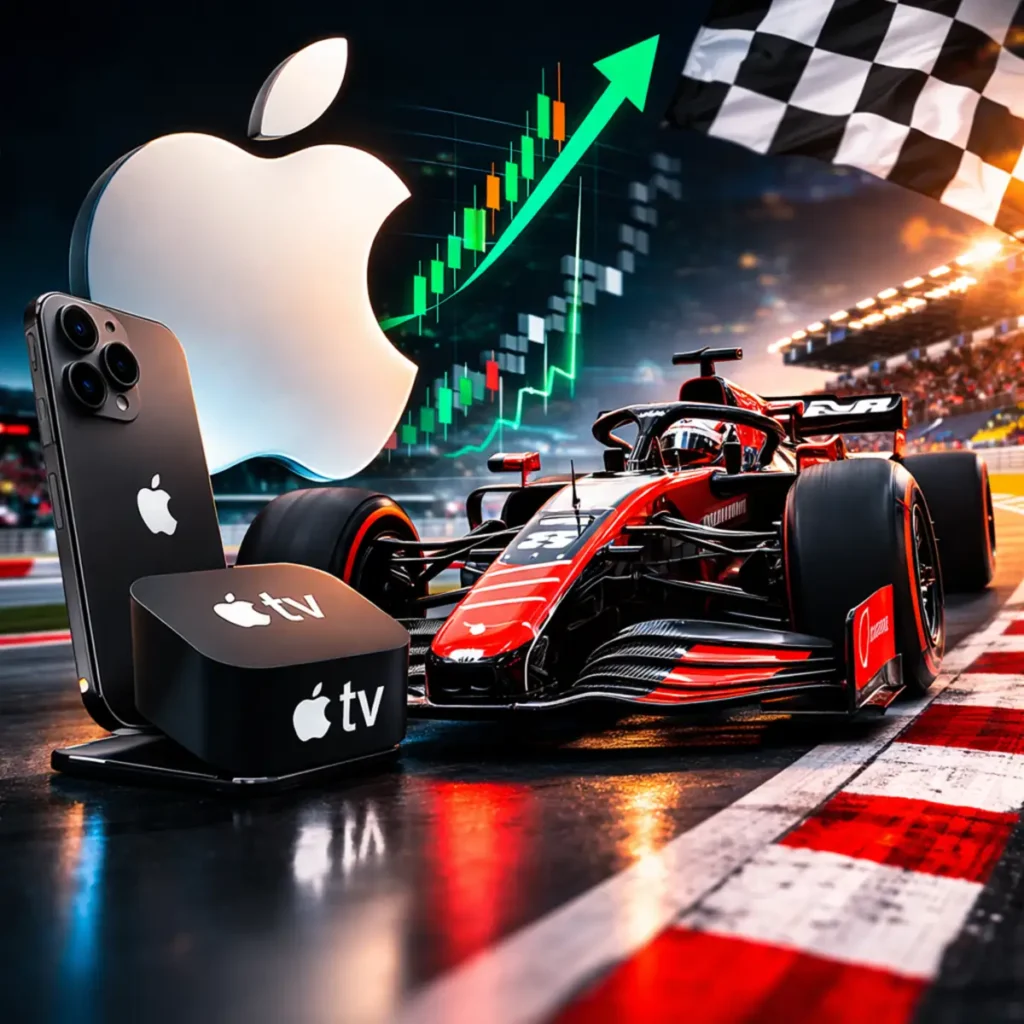

Apple Inc. stock is back in focus after a new sports-media bet put the company at the center of one of the fastest-growing global racing brands. Apple shares closed at $257.46 on March 6, down 1.09% for the day, while after-hours trading showed the stock near $256.65. At the same time, Formula One Group’s tracking stock FWONK closed at $83.77, with after-hours trading around $84.49, as investors weighed the start of the 2026 Formula 1 season and Apple’s new exclusive U.S. streaming rights deal.
The headline number is hard to ignore. Apple reportedly committed about $150 million per year for U.S. Formula 1 rights, replacing ESPN and making Apple TV the main home for live F1 races, replays, and related coverage in the United States. For Apple, that is a relatively small check compared with its enormous financial base. For Formula 1, it is a major strategic shift that could either deepen fan engagement or slow the momentum the sport has built in America over the last several years.
Apple adds another premium asset to its services push
Apple’s investment in Formula 1 fits a much broader shift inside the company. Investors have long associated Apple with hardware, especially the iPhone, but the company has spent years expanding its higher-margin services business through subscriptions, streaming, payments, and content. Apple TV has already pushed into prestige entertainment and live sports, and Formula 1 gives it another premium property with global recognition, affluent fans, and a younger demographic than many traditional sports.
The company is not entering this relationship cold. Apple had already increased its visibility around the sport through the release of “F1: The Movie”, which became a notable hit and helped strengthen the connection between the Apple brand and Formula 1 culture. Now Apple is moving from storytelling around the sport to controlling a key part of the live viewing experience itself.
That experience is central to Apple’s pitch. Apple TV viewers can use a Multiview feature with up to four live feeds at once, giving fans a more immersive race-day setup than a standard broadcast window. Apple is also in a position to distribute Formula 1 content across a much wider ecosystem that includes iPhone, Apple Watch, Apple Music, Apple News, Maps, and retail touchpoints. For a company built around device loyalty and recurring subscriptions, Formula 1 is not just content. It is ecosystem fuel.
Formula 1 leaves ESPN as U.S. growth becomes more valuable
The bigger debate is not about Apple’s ability to pay. It is about distribution. ESPN helped expand Formula 1’s U.S. audience significantly, taking average viewership from about 554,000 viewers per race in 2018 to around 1.3 million in 2025, an increase of roughly 135%. The 2025 season also produced 16 races with audience records, showing just how much momentum the sport had built after the pandemic-era surge in popularity.
That makes the move away from traditional television more complicated than it looks. A casual fan could once flip on ESPN and stumble into a race. Under the new setup, many viewers now need an Apple TV subscription priced at $12.99 per month to watch. That creates a friction point, especially for a sport that is still expanding in the United States and still trails larger domestic properties in raw audience. For perspective, average NASCAR race viewership remains around 2.7 million, although that audience has been trending down while Formula 1’s has been moving up.
Still, Formula 1’s appeal to advertisers remains powerful. Its U.S. audience is seen as more affluent, more diverse, and increasingly female, which gives the sport strategic value that goes beyond headline ratings. That helps explain why Formula 1 management appears comfortable sacrificing some traditional reach in exchange for a stronger digital partner.
Key market snapshot: AAPL closed at $257.46 and traded near $256.65 after hours, while FWONK closed at $83.77 and moved to about $84.49 after hours as investors assessed the early impact of the Apple streaming launch.
Apple stock gets a brand win even if the near-term revenue impact is modest
For Apple shareholders, the Formula 1 agreement is unlikely to transform earnings overnight. Apple generated roughly $112 billion in profit in its latest fiscal year, so a $150 million annual rights fee is financially manageable. The near-term significance lies less in direct profit and more in strategic positioning. Apple continues to show investors that it is willing to spend on premium, sticky content that can support subscriber growth, device engagement, and long-term brand value.
That helps explain why the Formula 1 deal matters for Apple stock even with shares sitting near the middle of their recent trading range. At around $257, AAPL remains one of the market’s most closely watched mega-cap names, and investors are looking for evidence that Apple can keep building its services business while defending pricing power across hardware. Formula 1 does not solve every growth question surrounding Apple, but it reinforces the company’s ability to use cash, brand prestige, and platform control to enter new categories on its own terms.
FWONK investors are split, but Wall Street still sees upside
Formula One Group stock is also in a fascinating position. Some investors have worried that the Apple TV arrangement could reduce reach compared with ESPN, especially because ESPN still benefits from a much broader distribution base. Apple reportedly had about 45 million subscribers by the end of 2025, while ESPN had roughly 60 million pay-TV subscribers and another 25 million ESPN+ digital-only subscribers. On the surface, that makes the move look risky for a sport that is still building casual fandom.
Yet others on Wall Street are less worried. Wolfe Research analyst Peter Supino argued that the Apple deal is not the negative some fear, partly because a global sport like Formula 1 often races at odd hours for U.S. viewers and may not be ideally suited to linear television anyway. Supino has described FWONK as still attractive at current levels and maintained an Outperform view, framing the stock as inexpensive relative to future cash flow expectations.
There is also another important twist. Apple and Netflix reached a rare cross-platform arrangement that will allow the new season of Drive to Survive to stream on both services in the U.S. That is a highly unusual move in streaming and underlines how much value both companies now see in Formula 1’s cultural pull. Apple is not just buying races. It is buying entry into the sport’s wider media universe.
Formula 1 executives have made clear that they are thinking beyond old definitions of television reach. The company sees value in all the different places Apple can surface the sport, from content discovery to personalized engagement. Investors will now get the first real test of that thesis as the 2026 season opens and the market watches whether Apple can convert premium racing into subscription momentum without choking off audience growth.
For now, the setup is clear. Apple stock near $257 reflects a company still using its balance sheet and ecosystem to expand into high-value experiences, while Formula One Group stock near $84 reflects a media-rights bet that could redefine the sport’s U.S. future. If the partnership works, Apple gets another durable services asset and Formula 1 gets a deeper digital home. If it stumbles, both stocks could face sharper questions about whether exclusivity came at too high a cost.
Fans and investors alike will get their first live answer as the 2026 season begins. The official Formula 1 platform now sits at the center of a much larger Apple-led media experiment, and the market is watching every lap.

Make Swikblog your go-to source on Google for reliable updates, smart insights, and daily trends.