
Twelve years after Malaysia Airlines Flight MH370 vanished, the latest deep-sea mission to solve one of aviation’s most enduring mysteries has ended without a breakthrough. The renewed search in the southern Indian Ocean closed with no wreckage found, no fresh debris identified, and no definitive answers for the families still waiting for closure.
The missing Boeing 777 disappeared on 8 March 2014 after taking off from Kuala Lumpur for Beijing. There were 227 passengers and 12 crew members on board. Since then, MH370 has remained one of the most haunting unsolved cases in modern aviation, with repeated search efforts failing to establish the aircraft’s final resting place.
Latest MH370 search ends without finding wreckage
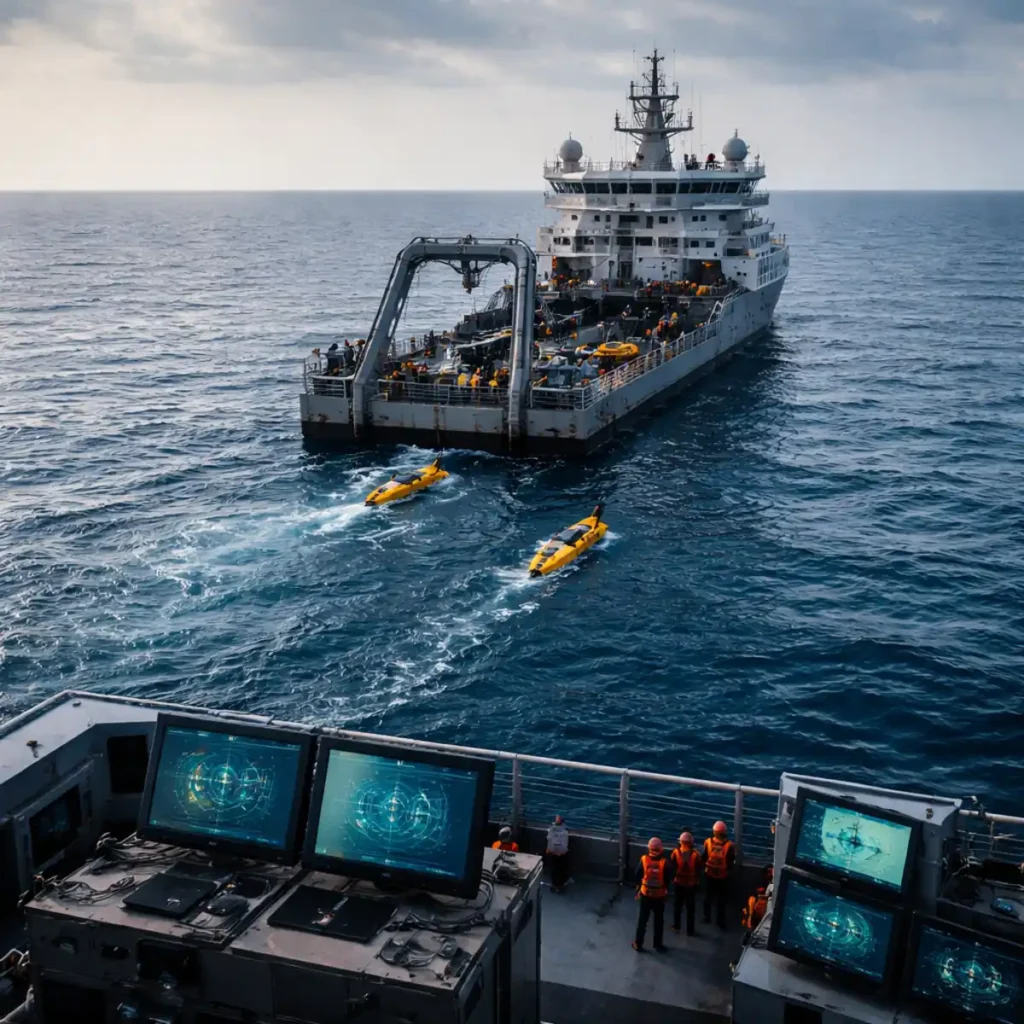
Malaysia’s Air Accident Investigation Bureau said the latest operation lasted 28 days and covered more than 2,900 square miles, or roughly 7,500 square kilometres, of seafloor in the Indian Ocean. Despite the scale of the effort and the use of advanced subsea technology, the search did not uncover any new evidence linked to the aircraft.
The mission was carried out by marine robotics company Ocean Infinity, which had been allowed to return to the search zone under a no find, no fee arrangement. Under that deal, the company would only receive payment if it successfully located the aircraft wreckage. The agreed success fee was reported at $70 million, or about £52 million.
Key detail: The latest search officially concluded on 23 January 2026, after difficult sea and weather conditions repeatedly disrupted progress during the mission.
Ocean Infinity says technology and data still were not enough
Ocean Infinity said this latest campaign was built on every major piece of evidence and technical data currently available. Chief executive Oliver Plunkett said the company deployed its most advanced search capabilities yet, combining robotics, automation, precision mapping and improved operational experience to examine the target area more efficiently than in earlier missions.
According to the company, it has now spent more than 150 days at sea since first joining the MH370 effort in 2018 and has mapped over 140,000 square kilometres of seafloor. Even so, the aircraft was not found. Ocean Infinity said that while the result was deeply disappointing, the mission still narrowed the possibilities by confirming that the plane is not in the areas that were searched.
Readers looking for the company’s official statement can find it through Ocean Infinity’s published update on the conclusion of the MH370 search, which outlines the scope of the effort and the company’s continuing willingness to return if conditions allow.
Families push Malaysia to keep the search alive
Families of those on board are once again urging Malaysian authorities not to let the search stall. Voice370, the group representing relatives of passengers and crew, has called on the government to extend Ocean Infinity’s contract rather than allow momentum to fade after the latest phase ended.
The group believes a simple extension could allow work to restart quickly without changing the core commercial terms. Campaigners are worried that if another phase is not approved soon, the next realistic search window may not open until June, once seasonal conditions in the southern hemisphere become more favourable again.
Voice370 has also argued that if Ocean Infinity is unable to continue immediately, other qualified firms should be invited to search under similar performance-based agreements. For families, every delay increases the fear that the world could drift further away from the mystery rather than closer to solving it.
Aviation mystery remains unresolved after 12 years
MH370 vanished less than an hour after departure, and investigators have never been able to confirm exactly what happened in the cockpit or where the jet ultimately came down. A Malaysian investigative report released in 2018 did not reach a final conclusion. It also did not rule out the possibility that the aircraft may have been deliberately diverted from its planned route.
Over the years, debris believed to be linked to the plane has washed ashore along parts of the western Indian Ocean, but the main fuselage and the flight recorders have never been recovered. Without those crucial pieces of evidence, the disappearance has continued to generate theories, technical studies and repeated search proposals.
For the families, the emotional toll remains immense. Each new search brings a renewed sense of hope, but each ending without answers reopens the same grief that began in March 2014. Malaysian officials have said they remain committed to keeping relatives informed and will provide updates if there are fresh developments.
The latest mission may be over, but the search for MH370 has not fully ended. Ocean Infinity says its commitment remains in place, and the company is continuing to work with the Malaysian government in the hope of returning when circumstances allow. Until that happens, one of the world’s most baffling aviation mysteries remains unsolved.

Make Swikblog your go-to source on Google for reliable updates, smart insights, and daily trends.