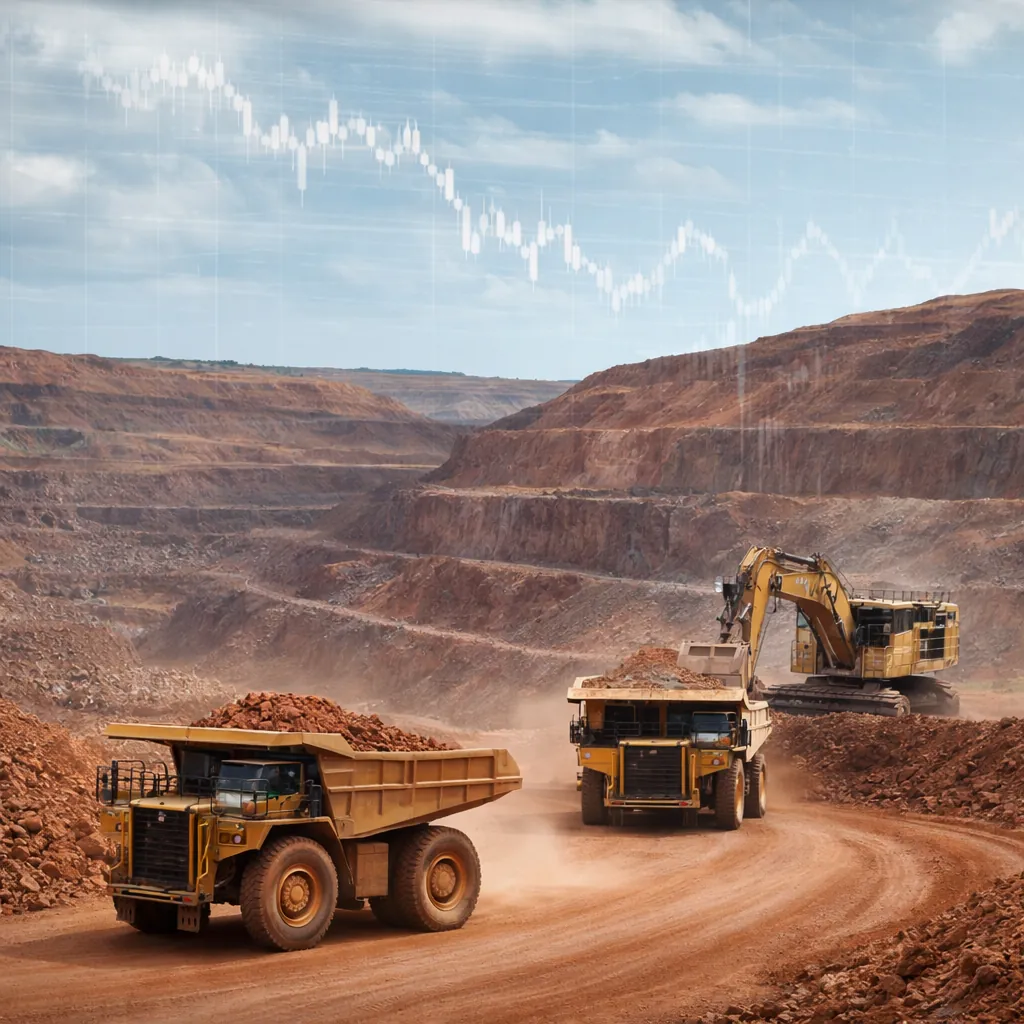

BHP’s sharp drop back below the AUD 50 mark captured the mood of an Australian market that looked badly split by midday Monday. On one side, energy names found support as oil prices surged and traders rotated into companies with direct exposure to higher crude. On the other, the heavyweight materials complex came under broad pressure, and BHP was one of the clearest symbols of that weakness. With BHP (BHP.AX) at AUD 49.61, down 6.06% in recent trade, investors were staring at one of the miner’s toughest sessions in weeks just as sentiment around the broader ASX turned increasingly defensive.
The immediate market picture was hard to miss. While energy stocks managed to stay in positive territory, the materials sector slid heavily, dropping nearly 6% by midday in a sell-off that weighed on the index. BHP’s decline mattered more than most because it is not just another mining stock on the board. It is one of the ASX’s defining heavyweight names, so a move of this size sends a message far beyond one ticker. When BHP falls this sharply, it often reflects broader anxiety about the outlook for commodities, China-linked demand, inflation pressure, and risk appetite across the market.
Market snapshot: BHP traded at AUD 49.61, down 3.20 points or 6.06%. The stock opened at AUD 50.16, moved in a day’s range of AUD 49.27 to AUD 50.69, and sat well below its previous close of AUD 52.81.
That weakness in materials stood in sharp contrast to what happened in energy. Woodside and Santos both moved higher as oil prices pushed up and the market recalibrated earnings expectations for producers that benefit more directly from a higher crude environment. The divergence created a striking ASX narrative: investors were not buying the market, they were buying protection where they could find it. In practical terms, that meant oil-linked names rose while mining giants such as BHP were sold down.
The broader backdrop helps explain why. Rising oil prices feed directly into inflation worries, and that makes equity markets nervous even before company-specific concerns come into play. A fresh energy shock tends to tighten financial conditions, raise cost expectations, and pressure cyclical stocks tied to global growth. For miners, that is a difficult combination. The sector needs confidence in industrial demand, resilient commodity pricing, and stable global trade flows. Instead, Monday’s tape reflected the opposite mood, with traders bracing for higher volatility and less tolerance for economically sensitive names.
BHP is also especially exposed to the market’s reading of the global growth story. Investors still view the company through its iron ore engine, even as copper becomes more central to the long-term investment case. That creates a push and pull in the stock. Over the medium term, BHP remains attractive to bulls who see copper as a structural winner tied to electrification, power grid build-outs, and the energy transition. But in the short term, when traders turn cautious, the stock can quickly be treated like a liquid proxy for selling the materials sector. That is part of why drops can become so pronounced in a single session.
There is also a technical element to a move like this. Falling from above AUD 52 to the high AUD 49 zone in one trading session shifts the tone of the chart. It puts psychological attention on the AUD 50 level, and once that level breaks, traders often look for whether bargain buyers step in or whether momentum continues to drag the stock lower. For short-term market participants, the question is no longer just whether BHP is cheap after a sell-off. It is whether the market is finished repricing risk in miners while oil and geopolitics dominate the macro conversation.
Why energy rallied while BHP fell
The session’s split reflected one of the market’s simplest but most powerful rotations. Higher oil prices improved sentiment around Australian energy producers, while the same macro shock made investors more cautious on economically sensitive miners. That is why Woodside and Santos found buyers even as BHP and the materials sector struggled. For more on the oil-driven backdrop, see Reuters’ report on the latest crude surge and supply fears.
None of that automatically changes BHP’s longer-term fundamentals. The company still sits on a diversified mining base, major scale advantages, and a balance sheet that keeps it central to Australian and global resource portfolios. But markets do not trade only on long-term logic from one session to the next. On a day when oil surged, inflation worries intensified, and the ASX’s materials sector was dumped, BHP became a pressure point for traders looking to reduce exposure fast.
That leaves the stock at an important moment. A close near these levels would underline just how aggressively investors marked down the materials trade. A rebound, by contrast, would suggest some buyers are already seeing value after the slide. Either way, Monday’s move was significant because it highlighted a market that is becoming more selective, more defensive, and more sensitive to macro shocks. BHP is still one of the ASX’s defining resource names, but today’s price action showed that even leaders can get hit hard when the sector tide turns against them.
For now, the message from the board is straightforward. Energy is getting the benefit of the oil rally. Materials are absorbing the pain of global uncertainty. And BHP, at AUD 49.61, is sitting right at the center of that divide.

Make Swikblog your go-to source on Google for reliable updates, smart insights, and daily trends.