
Goldman Sachs has lifted its fourth-quarter 2026 crude oil forecasts after the ongoing U.S.–Israeli war with Iran triggered one of the most severe disruptions to global oil flows in years.
The investment bank now expects Brent crude to average $71 per barrel and West Texas Intermediate (WTI) to average $67 per barrel in the final quarter of 2026. That marks a clear upgrade from its previous outlook of $66 for Brent and $62 for WTI.
The revised forecast comes as the conflict in the Middle East has effectively shut down cargo movement through the Strait of Hormuz, one of the most critical oil shipping routes in the world. The war began on February 28 and has since escalated with attacks on energy infrastructure and commercial shipping across the Persian Gulf.
Markets have responded dramatically. Brent crude has surged more than 36% since the conflict began, while WTI has jumped around 39%. Earlier this week, both benchmarks briefly climbed above $119 per barrel, their highest levels since mid-2022, highlighting the scale of the supply shock.
Goldman Sachs models longer disruption to Hormuz flows
Goldman analysts now believe the disruption in the Strait of Hormuz will last much longer than previously expected. In their updated model, oil flows through the chokepoint fall to just 10% of normal levels for 21 days, followed by a 30-day gradual recovery in shipping activity.
The bank’s earlier scenario assumed only a 10-day disruption, but recent developments in the region — including attacks on shipping and energy infrastructure — forced analysts to revise their assumptions.
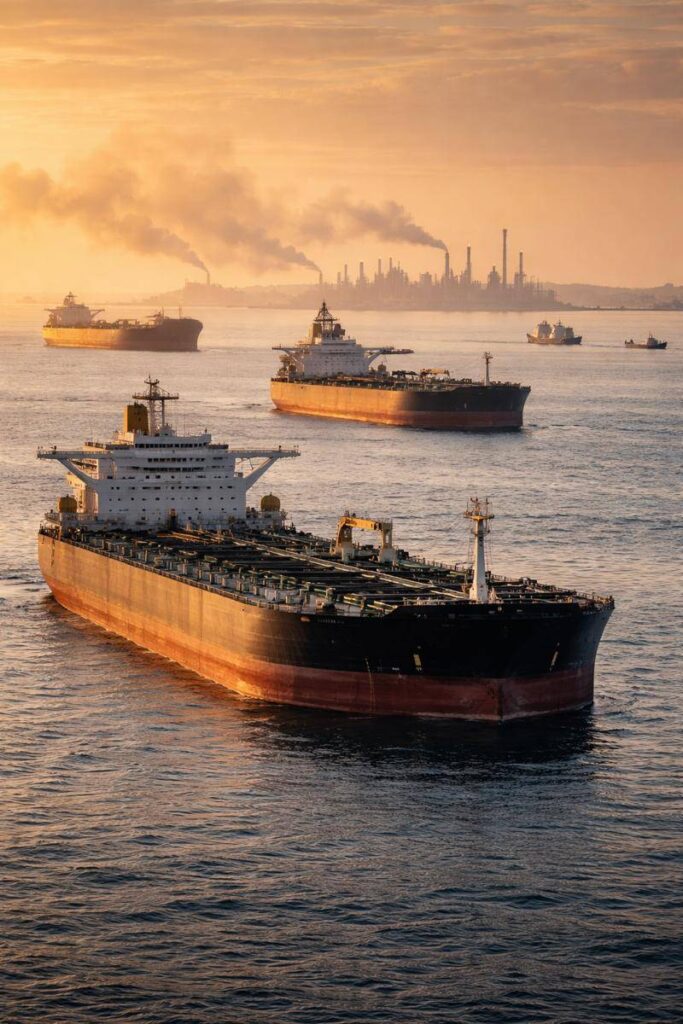
The Strait of Hormuz handles roughly one-fifth of all globally traded oil, making it the most strategically important oil transit route in the world. With tanker traffic effectively halted for more than a week, many vessels have been stranded while producers in the Gulf have been forced to suspend output as storage facilities approach capacity.
Goldman warned that if flows remain heavily restricted throughout March, daily oil prices could potentially exceed the historic peak reached during the 2008 oil crisis.
War-driven supply fears push oil above $100
The geopolitical shock intensified this week after Iranian forces escalated attacks on commercial shipping in the Gulf. Oil prices initially jumped more than 9% in response to worsening supply concerns.
Brent crude briefly crossed $100 per barrel before settling around $97, while the U.S. benchmark WTI rose about 4.5% to roughly $91 per barrel.
Iran’s strategy appears aimed at creating global economic pressure by targeting energy flows through the Gulf. The country has reportedly attacked oil fields, refineries and commercial shipping routes in Gulf Arab nations as part of its response to U.S. and Israeli military operations.
The U.S. air campaign against Iran had entered its 13th day when oil markets experienced the latest surge in volatility.
Emergency oil reserves deployed to contain the crisis
To stabilize markets, the International Energy Agency agreed to release a record 400 million barrels of oil from strategic reserves. It represents the largest emergency supply intervention in the organization’s history.
The United States will provide the largest share of the supply, with plans to release about 172 million barrels from the Strategic Petroleum Reserve beginning next week.
Goldman Sachs incorporated a strong policy response in its updated projections. The bank estimates that roughly 254 million barrels of global strategic petroleum reserve releases, combined with about 31 million barrels drawn from Russian crude inventories, could reduce the impact on global commercial oil inventories by nearly 50%.
However, the bank also believes the full 400 million barrels may not be released under its base-case scenario.
Logistical limits mean OECD countries can likely release reserves at a maximum rate of around 3 million barrels per day. Goldman also assumes the emergency releases would gradually phase out over four weeks, extending into early June.
Oil prices could moderate later in the year
Goldman’s base scenario assumes that shipping flows through the Strait of Hormuz begin recovering around March 21. Under that timeline, oil prices could gradually ease later in the year as supply chains normalize and emergency reserves stabilize inventories.
The bank expects WTI crude to eventually moderate toward the low $70 range once strategic releases and recovering flows bring additional barrels back to market.
Still, the outlook remains highly uncertain. Oil markets are now reacting primarily to geopolitical developments rather than traditional supply-demand indicators. Military escalation, tanker traffic data and reserve releases are likely to determine price movements in the coming weeks.
For investors and policymakers alike, the Strait of Hormuz has once again become the focal point of the global energy system. As long as shipping through the narrow passage remains constrained, crude oil will remain one of the most volatile and closely watched commodities in financial markets.
Energy traders continue to monitor developments reported by global outlets such as Reuters, with markets bracing for continued turbulence in crude prices.

Make Swikblog your go-to source on Google for reliable updates, smart insights, and daily trends.